This post contains affiliate links. If you use these links to buy something, we may earn a commission.
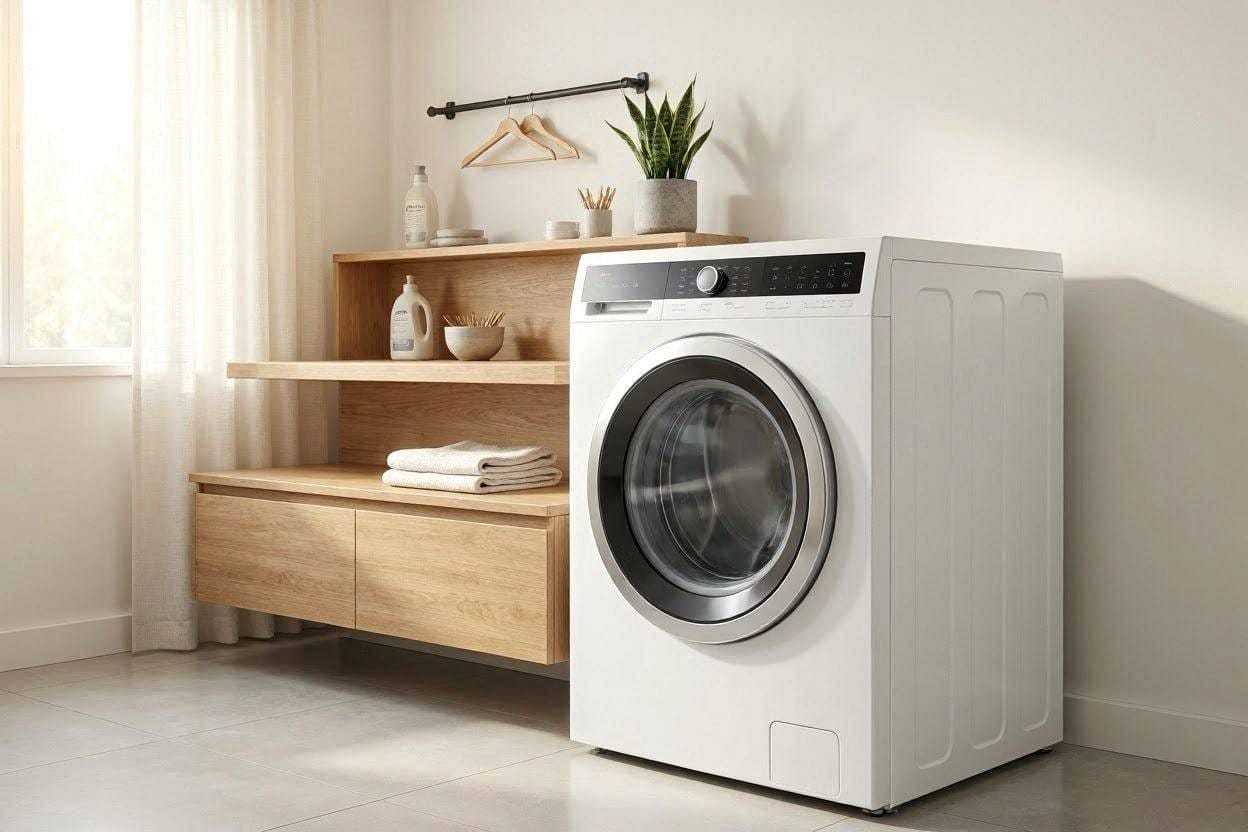
I know exactly what it is like to have a washing machine that sounds like a Boeing 747 preparing for takeoff in your laundry room. You start a load of towels, sit down to relax or focus on work, and suddenly the floorboards are vibrating, the walls are shaking, and you can’t even hear your own thoughts. It completely ruins the sanctuary of your home.
After testing, researching, and agonizing over appliance decibel ratings, I finally found the solution. You don’t have to live with the noise. The technology in 2026 has evolved, specifically with Direct Drive motors and advanced anti-vibration systems that keep these machines whisper-quiet, even during a high-speed spin cycle.
In fact, keeping your household noise levels low is critical for your health; as we discussed in our guide on how many decibels is too loud for sleep, continuous background appliances can actively ruin your sleep cycle.
🏆 Best Overall
Bosch 800 Series Washer
The undisputed champion of silence. Its EcoSilence brushless motor completely eliminates mechanical friction for whisper-quiet performance.
💎 Premium Choice
LG Signature Front Load
Equipped with LG’s proprietary TrueBalance Anti-Vibration system. You can literally balance a coin on top of this machine during a 1300 RPM spin cycle.
💰 Best Value
Samsung Smart Washer
Features VRT Plus (Vibration Reduction Technology) which uses liquid balancers to actively offset uneven, noisy loads on a budget.
The Science of Quiet: Direct Drive vs. Belt Drive
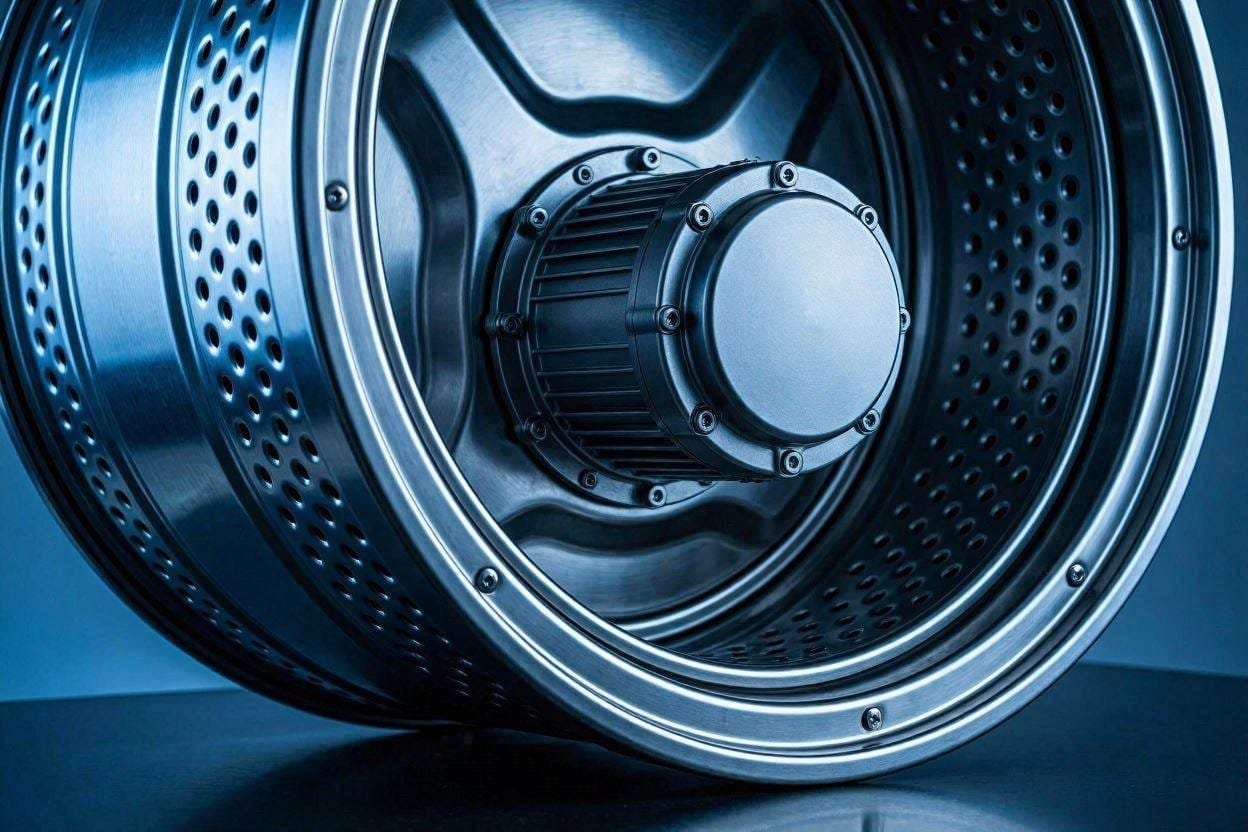
If you’ve ever peered inside a standard, budget-friendly washing machine, you’d find a system that has not changed much in decades. Traditional washing machines rely heavily on a belt-and-pulley design. The electric motor sits at the bottom, turning a rubber belt wrapped around the heavy wash drum.
Over months of heavy use, that belt stretches out, slips, cracks, and begins slapping violently against the internal chassis of the machine. The result? A grinding, high-pitched mechanical whine that echoes through your walls.
The premium models I recommend above combat this noise at its physical root by utilizing Direct Drive Motors.
In these advanced designs, the motor is mounted directly to the back of the steel drum. There are no belts, no pulleys, and no friction-heavy gearboxes. When you eliminate these moving parts, you eliminate the primary source of mechanical failure and noise.
Furthermore, many of these direct-drive models carry strict Energy Star certifications, meaning they are as highly efficient with electricity as they are with sound suppression.
But the innovations do not stop at the motor. Modern quiet machines also use internal 3D vibration sensors. During the spin cycle, if a heavy bath mat or wet pair of jeans clumps together and throws the drum off-balance, the machine’s internal computers detect the offset instantly.
Instead of letting the drum slam into the outer walls (creating that classic jackhammer noise), the machine micro-adjusts the rotation speed, shifting the water weight until the load is perfectly balanced again.
This drops decibel ratings from a chaotic 75 dB down to a gentle 48 dB—a level of quietness equivalent to light rainfall or a whisper-soft conversation.
Who These Machines Are NOT For
I am a firm believer that you shouldn’t spend hard-earned money on premium features you don’t actually need. If your laundry setup is located far away in an unfinished basement, a garage, or a completely detached outbuilding, you do not need to pay the premium for a whisper-quiet washing machine. In those environments, the kinetic energy of a standard washer is absorbed by solid concrete flooring, and the airborne noise won’t reach your primary living spaces.
However, if your laundry machine sits on a wooden second-story floor, is tucked inside a hallway closet near your master bedroom, or lives inside an open-concept apartment, an ultra-quiet machine isn’t a luxury—it is an absolute necessity for your mental peace and productivity.
Long-Term Maintenance to Prevent Rattling
Even the most advanced, expensive quiet washing machine will eventually begin to rattle if you don’t take care of it. To protect your investment and maintain that out-of-the-box silence, follow this monthly maintenance checklist:
- Check the Bubble Level: Washing machines can slowly “walk” out of alignment over time due to micro-vibrations. Place a bubble level across the top of your machine monthly. If it’s tilted even slightly, use a wrench to adjust the threaded leveling feet at the base until the unit sits completely flat.
- Never Overload the Drum: It’s tempting to cram a week’s worth of denim into one load, but packing a machine past its recommended weight capacity places extreme stress on the direct-drive bearings. Over time, this wears out the internal seals, leading to a permanent, low-frequency grinding hum that cannot be easily fixed.
- Clean the Drain Pump Filter: A clogged filter causes the internal drain pump to work twice as hard, creating a loud, rhythmic buzzing sound during every drain cycle. Twist open the small access door at the bottom front of your machine and clear out coins, hairpins, and lint every 4 to 6 weeks.
Frequently Asked Questions (FAQs)
How Many Decibels is Considered a Quiet Washing Machine?
A washing machine is considered exceptionally quiet if it operates under 50 decibels (dB) during the washing phase and under 65 decibels (dB) during its peak spin cycle. For comparison, a normal conversational voice is about 60 dB, meaning these machines will comfortably allow you to talk or watch TV without raising your voice.
Do Anti-Vibration Rubber Pads Actually Help Noise?
Yes, anti-vibration pads work wonderfully, but they only solve one specific type of noise: structural impact noise. If your washing machine is mechanically loud (loud motor hum, squeaking belt), rubber pads won’t help. But if your machine is shaking your floorboards and causing your walls to vibrate, placing heavy-duty rubber pads under the feet will decouple the machine from your floor, stopping the sound waves from traveling through your home’s framing.
Is a Front-Load or Top-Load Washing Machine Quieter?
Front-load washing machines are inherently quieter than top-load machines. Top-loaders use an agitator or impeller that vigorously sloshes clothes back and forth, often causing uneven water weight distribution. Front-loaders tumble clothes gracefully using gravity, which naturally reduces physical impact noise and allows the anti-vibration systems to work far more efficiently.

Ememobong is the lead researcher and editor at Quiet Dwelling. As a professional technical writer, he specializes in breaking down complex acoustic engineering concepts into simple, actionable steps. His goal is to help people build distraction-free environments for better sleep and deep work.