This post contains affiliate links. If you use these links to buy something, we may earn a commission.
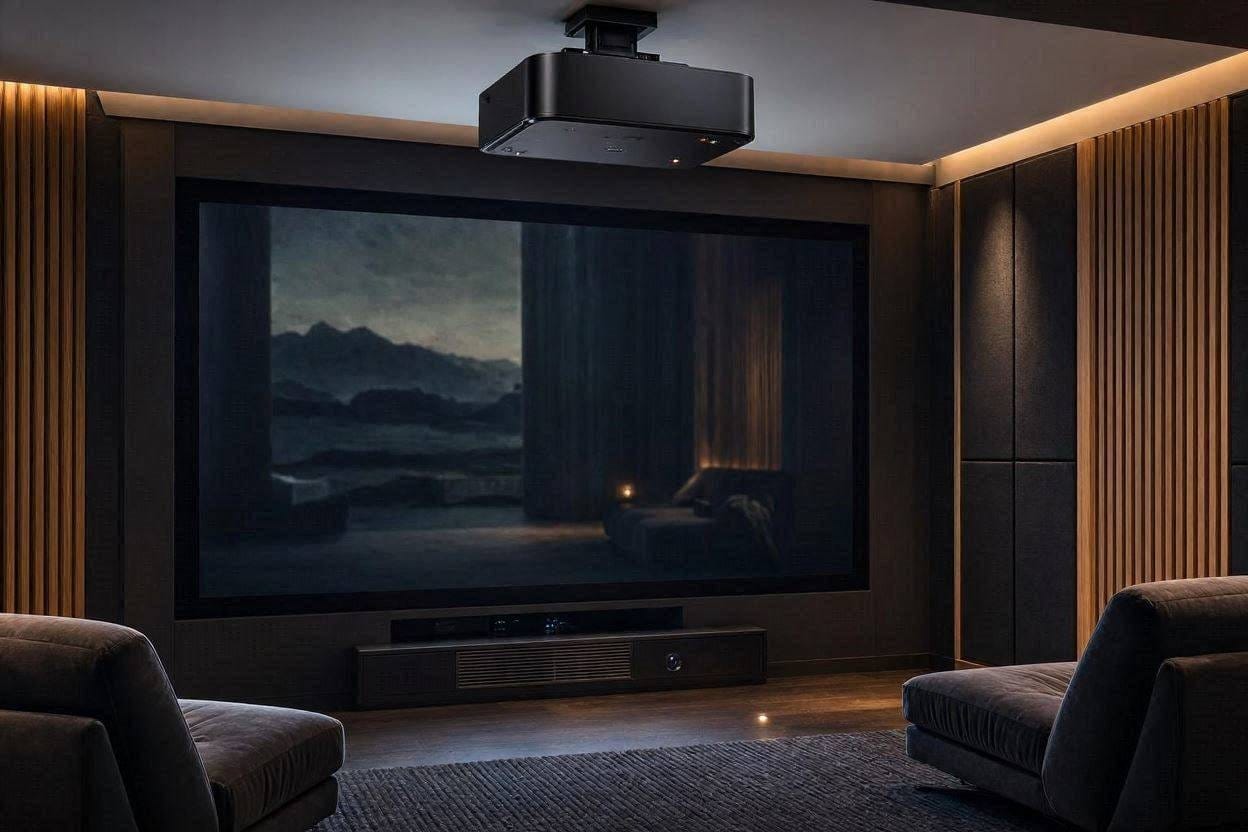
You have spent weeks perfecting your home theater. You bought the plush seating, painted the walls a dark matte gray, and installed acoustic treatments to ensure the audio is pristine. You dim the lights, pull up a tense, dead-quiet thriller, and wait for the movie magic to happen.
And then you hear it.
Whirrrrrrrrrrrr. It sounds like a cheap hotel hair dryer running directly above your head. Every quiet line of dialogue is completely ruined by the aggressive, high-pitched mechanical whine of your projector’s cooling fan.
I learned this lesson the hard way. Early in my home theater journey, I bought a highly-rated, super-bright 4K projector on a Black Friday deal. I didn’t even look at the acoustic specs. When I mounted it exactly three feet above my primary listening position, the fan noise completely ruined the immersive experience.
To get a genuinely cinematic experience, your visual equipment cannot interfere with your audio equipment. You need a projector that manages massive amounts of heat without relying on tiny, screaming fans. I’ve tested and researched the absolute best quiet projectors on the market that will give you a stunning 4K image while maintaining complete acoustic stealth.
🎯 The Quick Verdict
The Best Overall: Epson Home Cinema 3800. A phenomenal mid-range 4K PRO-UHD projector that drops to a whisper-quiet 24 dB in Eco mode.
The Premium Laser Pick: Sony VPL-XW5000ES. If you have the budget, this native 4K laser projector uses massive internal heatsinks rather than aggressive fans, making it practically silent.
The Best Budget Pick: BenQ HT2050A. A 1080p classic that manages to keep its fan noise under 27 dB, beating out almost every other cheap model on the market.
The Science of Silence: Why Are Projectors So Loud?
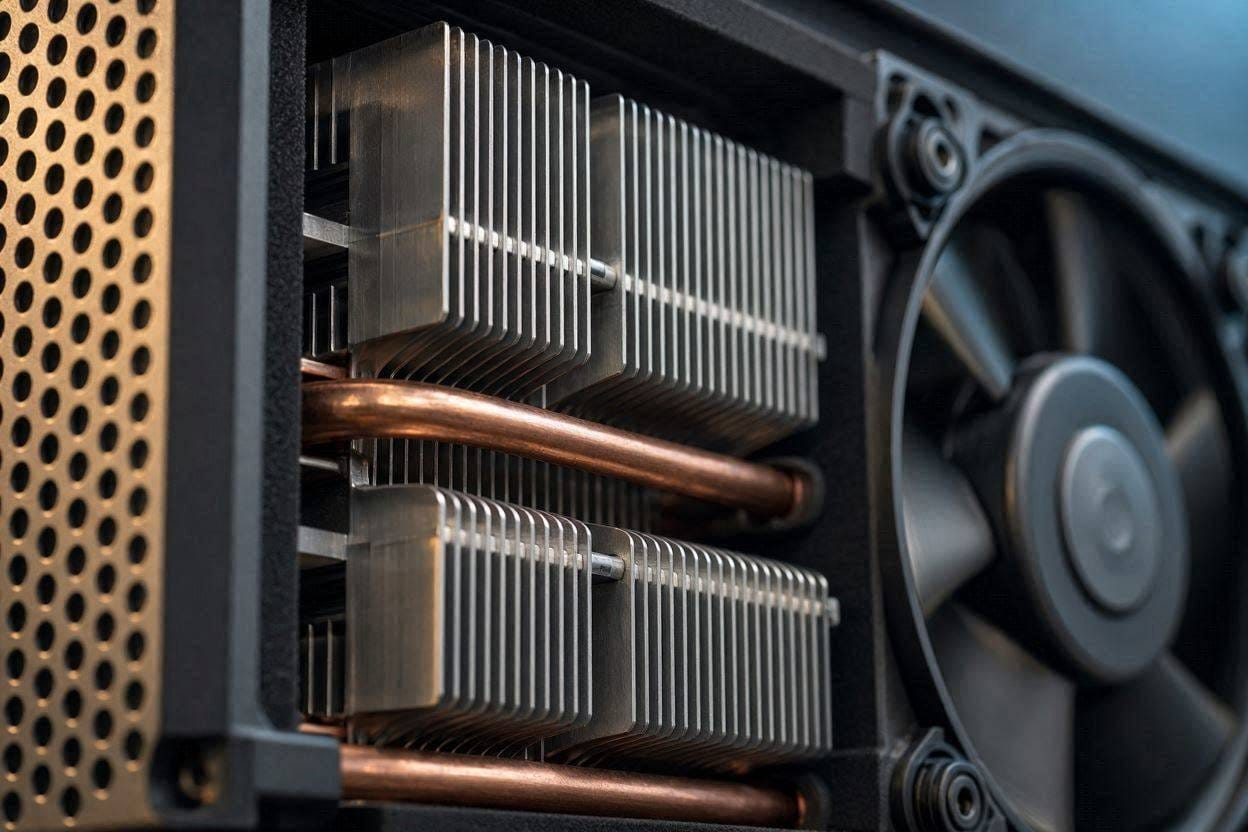
Before you spend thousands of dollars on home theater equipment, you have to understand exactly what you are paying for. Projector noise is a direct result of thermal management.
Projectors generate an immense amount of light, and where there is intense light, there is intense heat. To prevent the bulb or laser diodes from melting the internal circuitry, manufacturers install cooling fans. The laws of fluid dynamics dictate that to move the same amount of air, a small fan must spin significantly faster than a large fan. Fast-spinning small fans create terrible, high-frequency turbulence, otherwise known as “wind shear noise.”
This is why tiny, portable projectors are almost always the loudest. They have no room for massive heatsinks or large, slow-spinning fans.
Furthermore, if you buy a cheaper DLP (Digital Light Processing) projector, you aren’t just dealing with fan noise. DLP projectors use a physical “color wheel” that spins thousands of times per minute to create the image on your screen. This spinning glass wheel emits a distinct, high-pitched mechanical whine that cuts right through standard movie dialogue.
If you want a truly quiet dwelling, you need a projector with a massive chassis. A massive chassis allows for giant, slow-spinning fans and superior internal acoustic baffling. If you want to know how this decibel output actually translates to human hearing in a dark room, check our master guide on how to measure safe decibel levels.
1. Epson Home Cinema 3800 (Best Overall)
If you are building a dedicated media room and want the best balance of 4K-enhanced picture quality, brightness, and silence, the Epson 3800 is the undisputed sweet spot of the market.
Because Epson uses a 3LCD display system rather than DLP, there is no spinning color wheel inside this unit. You completely eliminate the high-pitched mechanical whining associated with cheaper projectors. When you run this projector in “Eco Mode” (which still provides plenty of brightness for a dark home theater), the fan noise drops to an astonishing 24 decibels (dB). At 24 dB, the projector is quieter than a person whispering, and the noise completely vanishes the moment your movie soundtrack starts playing.
The Reality Check (Drawbacks): If you are watching sports during the day with the curtains open, you will have to turn the lamp to “High” to combat the ambient sunlight. In High mode, the fan ramps up to 35 dB. It is still highly tolerable, but it is no longer invisible.
The Pros
- ✅ Operates at a whisper-quiet 24 dB in Eco Mode
- ✅ No color wheel means zero mechanical high-pitched whining
- ✅ Massive lens shift makes placement incredibly forgiving
The Cons
- ❌ Fan noise jumps significantly if you require “High” brightness
- ❌ It is a physically large and heavy unit
2. Sony VPL-XW5000ES (The Premium Laser Pick)
If you are building a dedicated, high-end screening room and have the budget to match, Sony’s native 4K laser lineup is an acoustic and visual masterpiece.
Standard lamps burn incredibly hot. By utilizing a laser phosphor light source instead of a traditional bulb, the Sony XW5000ES manages heat much more efficiently. Sony engineered a massive internal cooling system that relies heavily on passive heat sinks rather than aggressive fan spinning. The result is a native 4K projector that idles at roughly 24 to 26 dB regardless of what it is doing.
Because the acoustic profile is so incredibly smooth and low-frequency, it essentially acts as the faintest white noise in the background. Once your surround sound system engages, the projector sonically disappears.
The Pros
- ✅ Laser light source runs vastly cooler (and quieter) than bulbs
- ✅ Consistent low-frequency hum that easily blends into the room
- ✅ True, native 4K resolution (no pixel shifting)
The Cons
- ❌ Very expensive (premium pricing tier)
- ❌ Massive footprint; requires a heavy-duty ceiling mount
3. BenQ HT2050A (The Best Budget Pick)
If you are piecing together your first home theater on a strict budget, you might be looking at cheap $150 generic projectors. Do not buy them. Those cheap plastic boxes utilize tiny, aggressive PC-case fans that whine at an unbearable 45+ dB.
The BenQ HT2050A is a legendary entry-level 1080p projector. Yes, it is a DLP projector (which means it has a color wheel), but BenQ has housed the wheel in a thick, acoustically insulated shell. When run in “Economic” lamp mode, the fan drops to roughly 27 dB.
If you are watching movies in a basement or a dedicated dark room, Economic mode provides a gorgeous image while ensuring the projector stays out of the way of your sound system.
The Pros
- ✅ Incredibly quiet (27 dB) for an entry-level price point
- ✅ Excellent cinematic color accuracy
- ✅ Low input lag makes it fantastic for quiet gaming
The Cons
- ❌ Only 1080p resolution (Not 4K)
- ❌ Normal lamp mode bumps the noise up to 29 dB
How to Make Your Current Projector Quieter
If you already own a loud projector and cannot afford to upgrade, you still have options to tame the jet engine hanging from your ceiling. It comes down to proper acoustic management.
- Always Use Eco Mode: Dig into your projector’s settings menu and find the “Lamp Power” or “Light Source” setting. Change it from Normal/High to Eco. Your brightness will drop slightly (usually unnoticeable in a dark room), but the fan RPMs will plummet, instantly dropping the decibel output.
- Clean the Air Filters: A projector pulls cool air in through a mesh filter. If that filter is clogged with household dust, the internal temperature spikes, forcing the fan into overdrive. Pull the filter out and vacuum it every 60 days.
- Build an Acoustic Hush Box: This is the ultimate DIY hack. According to structural acoustic principles outlined in our four principles of soundproofing guide, you can build a heavy MDF wooden box lined with acoustic foam to house your projector.
Warning: You MUST install ultra-quiet PC exhaust fans (like Noctua fans) in the box to pull the hot air out, or you will melt your projector.
The Final Verdict: Securing Your Cinematic Silence
A home theater is supposed to be an escape from reality. When a character is creeping down a dark hallway in total silence, you shouldn’t be distracted by the appliance projecting the image.
If you want the absolute best 4K balance of price and acoustic stealth, the Epson Home Cinema 3800 is an incredible investment. By relying on larger chassis designs and avoiding the mechanical color wheels of cheap DLP units, these projectors ensure that the only audio you hear comes straight from your surround sound system.
Treating the Rest of Your Theater: Buying a quiet projector is only half the battle. If your home theater sounds echoey and muddy, no amount of equipment will fix it. Check out our guide to the best aesthetic acoustic panels to trap echoes and drastically improve your room’s audio quality!

Ememobong is the lead researcher and editor at Quiet Dwelling. As a professional technical writer, he specializes in breaking down complex acoustic engineering concepts into simple, actionable steps. His goal is to help people build distraction-free environments for better sleep and deep work.