This post contains affiliate links. If you use these links to buy something, we may earn a commission.
It is the most common and expensive mistake in the acoustics world: you buy a massive pack of cheap acoustic foam panels, stick them to your shared apartment wall to block out your neighbor’s loud TV, and… absolutely nothing changes. You can still hear every word.
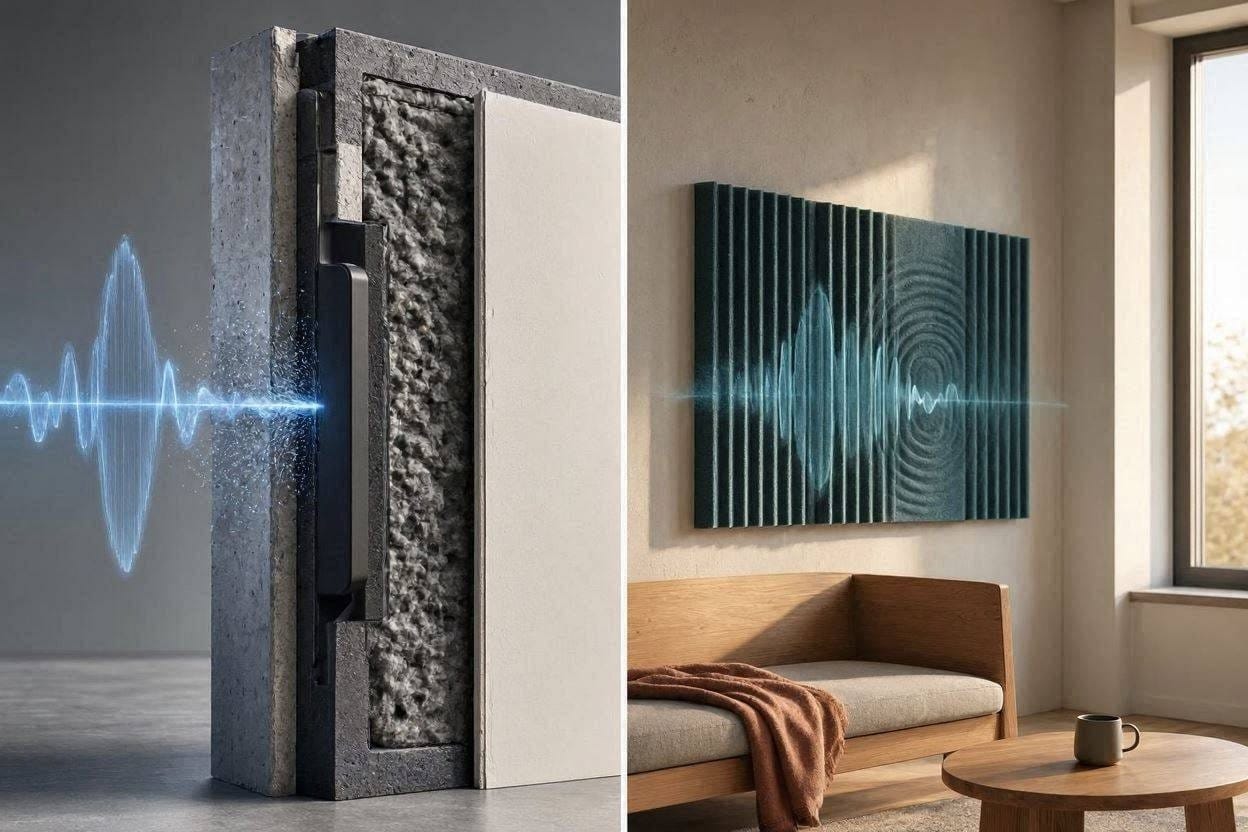
Why did this happen? Because you bought a sound absorption product when you actually needed a soundproofing product.
While these two terms are often used interchangeably by marketers and online sellers, they do completely different things. Upgrading your thin apartment walls requires a vastly different approach than fixing the echo in your home office.
The Quick Answer: The “Brick vs. Sponge” Analogy
If you only remember one thing from this guide, remember this analogy: Imagine sound is water.
- Soundproofing is like a thick brick wall. It stops the water from getting into the room, and it stops water from getting out. It acts as a heavy, solid, waterproof barrier.
- Sound Absorption is like a sponge. If you throw water at a sponge, it absorbs the splash and stops it from bouncing around the room. However, if you pour enough water on the sponge, it will eventually soak right through to the other side.
What is Soundproofing? (Blocking Sound)
Soundproofing (technically known as sound isolation) is the process of containing noise. The goal is to physically stop soundwaves from traveling through walls, floors, ceilings, doors, and windows.
Because soundwaves contain physical energy, stopping them requires heavy, dense materials and airtight construction. To truly soundproof a room, you have to add mass, introduce damping compounds, or create dead air space (also known as decoupling).
The Rating to Look For: STC (Sound Transmission Class)
When shopping for soundproofing materials like doors, windows, or drywall, look for the STC rating. According to standard acoustic measurements, this number tells you how well a building material stops airborne sound.
- A standard interior home wall has an STC of around 33 (loud speech can be heard clearly).
- A well-soundproofed wall will have an STC of 50 or higher (loud speech is completely blocked).
Common Soundproofing Materials:
- Mass Loaded Vinyl (MLV): Heavy, dense rubber-like sheets placed inside walls or over doors to block airborne noise.
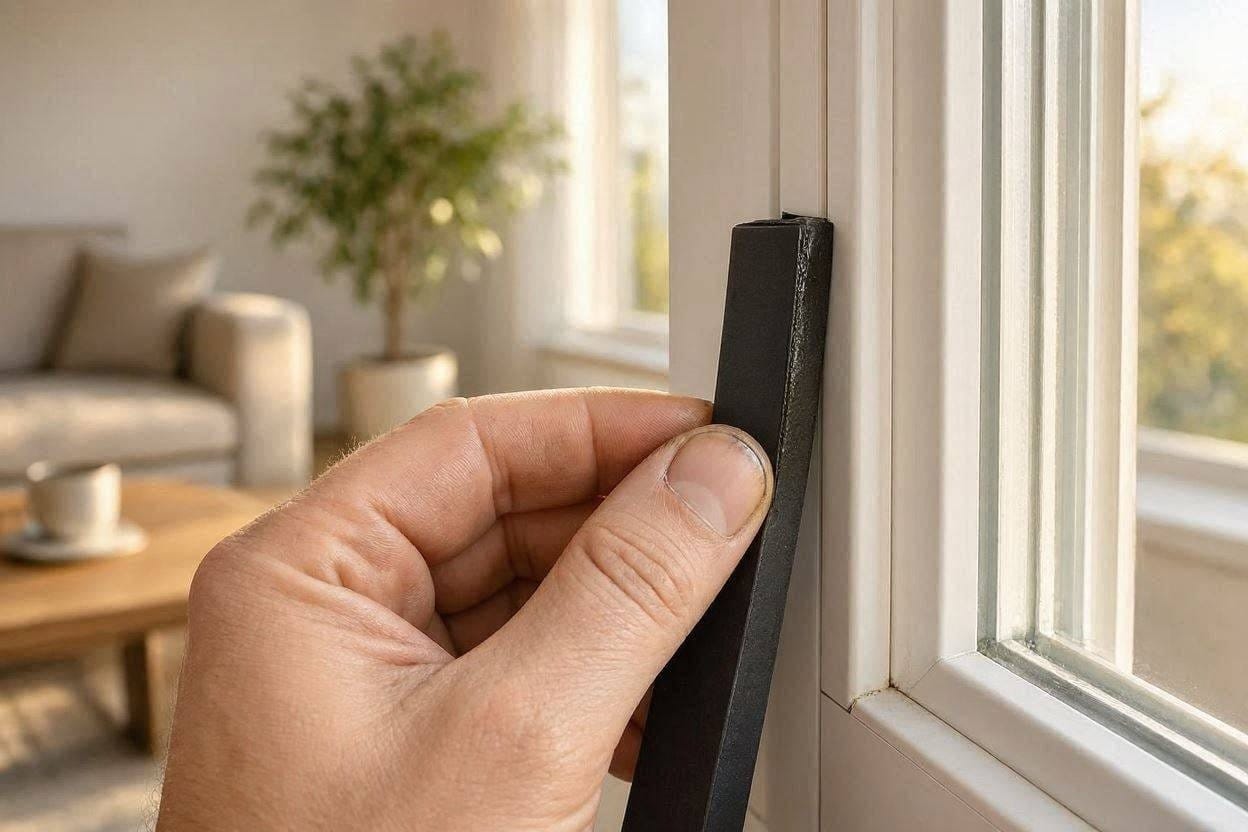
- Acoustic Caulk & Weatherstripping: Used to seal airtight gaps around windows, doors, and baseboards. If air can get in, sound can get in.
- Solid Core Doors: Replacing a hollow builder-grade door with a heavy, solid wood or MDF door to block noise transfer between rooms.
What is Sound Absorption? (Improving Sound)
Sound Absorption (also known as acoustic treatment) is the process of improving the sound quality inside a specific room by reducing echo, reverberation, and bounce.
When you speak or play music in an empty room with hardwood floors and bare drywall, the sound waves bounce off those hard surfaces endlessly, creating a chaotic, muddy echo.
Sound absorbing materials are soft, porous, and fluffy. They trap those bouncing soundwaves, turning the acoustic energy into a microscopic amount of heat, which instantly kills the echo. However, they do not stop the sound from leaving the room.
The Rating to Look For: NRC (Noise Reduction Coefficient)
When shopping for acoustic panels or foam, look for the NRC rating. This rating ranges from 0.0 to 1.0 and measures the amount of sound energy a material absorbs upon impact.
- An NRC of 0.0 means the material absorbs no sound (like a glass mirror).
- An NRC of 0.85 means the material absorbs 85% of the sound that hits it, reflecting only 15% back into the room.
Common Sound Absorption Materials:
- Acoustic Foam Panels: The classic “egg crate” style foam used by streamers and podcasters to catch high and mid-frequency echoes.
- Fabric-Wrapped Fiberglass Panels: High-end panels that look like canvas art but absorb sound beautifully without looking like a recording studio.
- Bass Traps: Thick, dense wedges placed in the corners of a room to absorb low, booming bass frequencies.
Soundproofing Vs. Sound Absorption: Side-by-Side
| Feature | Soundproofing (Blocking) | Sound Absorption (Treating) |
|---|---|---|
| Primary Goal | Stop sound from entering or exiting. | Improve sound quality inside the room. |
| The Science | Reflects or dissipates energy using mass. | Traps bouncing sound waves using friction. |
| Key Metric | STC Rating (Higher is better) | NRC Rating (Closer to 1.0 is better) |
| Material Types | Heavy, dense, airtight, rigid. | Soft, porous, lightweight, fluffy. |
Which One Do You Actually Need? (Real-Life Scenarios)
Still not sure which route to take? Find your exact scenario below:
- Scenario 1: “I live on a busy street and cars keep waking me up.”
The Fix: Soundproofing. You need to seal the air gaps. Look into weatherstripping your windows, applying acoustic caulk, or installing heavy window inserts. - Scenario 2: “I am starting a podcast, but my bedroom sounds like a public bathroom on mic.”
The Fix: Sound Absorption. Buy a pack of acoustic foam panels and place them on the walls directly behind your monitor and on the side walls to catch the bounce. - Scenario 3: “I am building a home theater. I want the movie to sound amazing, but I don’t want the bass to shake the whole house.”
The Fix: Both! This is the ultimate quiet dwelling setup. You will need soundproofing (like Green Glue and extra drywall) to stop the bass from traveling through the studs, and sound absorption (like acoustic panels on the walls) to make the movie dialogue crisp and clear.
Final Thoughts
The golden rule of acoustics is simple: Mass blocks noise, while fluff absorbs echo. Before you spend a single dollar, clearly identify your problem. If the noise is coming from outside your room, focus on heavy, dense soundproofing materials and sealing air gaps. If the noise is being created inside your room and sounds echoey, soft sound absorption is your answer.

Ememobong is the lead researcher and editor at Quiet Dwelling. As a professional technical writer, he specializes in breaking down complex acoustic engineering concepts into simple, actionable steps. His goal is to help people build distraction-free environments for better sleep and deep work.