This post contains affiliate links. If you use these links to buy something, we may earn a commission.
Let us be brutally honest: hollow core doors are an acoustic nightmare. If you live in a newer build or an apartment, chances are your interior doors are basically two thin sheets of wood veneer wrapped around some cardboard honeycomb. They are great for builders trying to save a buck, but terrible if you are trying to work in your home office while someone is blasting the TV in the living room.
The standard advice online is almost always, “Just replace it with a solid core door!” But let us face it, doors are expensive (often $150 to $300+), replacing them requires tools and carpentry skills you might not have, and if you are renting, your landlord will definitely not allow it.
Fortunately, you don’t need a trip to the lumber yard. Here is exactly how to soundproof a hollow core door without replacing it, using affordable, renter-friendly DIY methods.
Why Hollow Core Doors Leak So Much Noise
To fix the problem, we need to understand it. Sound behaves like water; it will find the path of least resistance. With a hollow door, you are fighting two distinct battles:
- Lack of Mass: Soundwaves easily penetrate lightweight objects. Because the door is hollow, it actually acts like a drum, vibrating and transferring the sound right into your room.
- Air Gaps: Take a look at the edges of your closed door. If you can see light coming through the bottom or the sides, sound is pouring through those gaps. In fact, acoustics experts note that even a 1% air gap can let up to 50% of the sound through!
Here is your step-by-step battle plan to tackle both issues.
Step 1: Seal the Perimeter (The “Quick Win”)
Before you even think about putting things on the door, you have to seal the gaps around it. If you skip this step, nothing else you do will matter.
Weatherstripping the Door Jambs
The easiest way to seal the sides and top of your door is with high-density foam weatherstripping. You want a peel-and-stick foam tape that is thick enough to compress slightly when the door closes, creating an airtight (and sound-tight) seal.
🛠️ Top Pick: High-Density Acoustic Weatherstripping
Don’t use the cheap, porous foam. Look for closed-cell neoprene or high-density silicone strips. They block soundwaves significantly better and won’t degrade over time.
Check Price on AmazonBlock the Bottom Gap with a Door Sweep
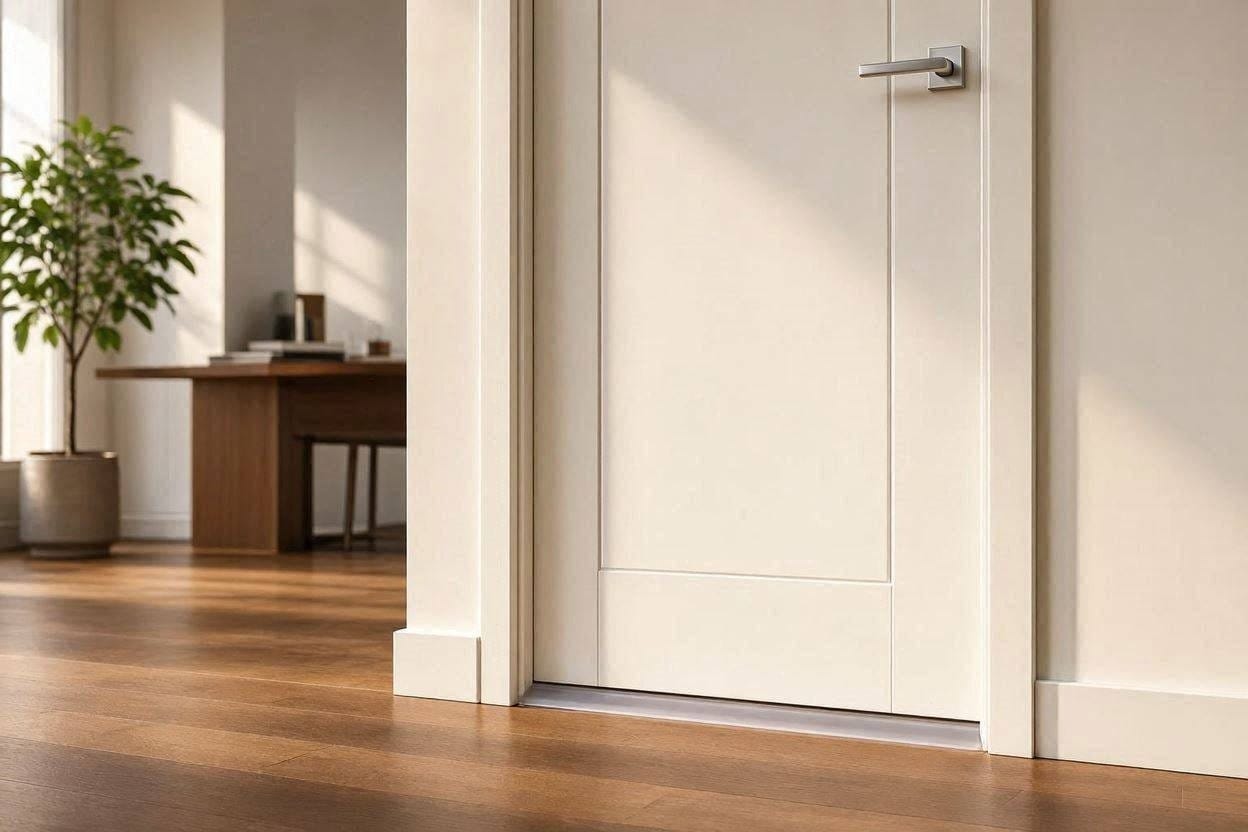
The gap at the bottom of an interior door is usually massive, sometimes up to an inch, to accommodate thick carpets. To block this, you need a heavy-duty door sweep.
If you are renting, get a slide-on fabric draft stopper (the kind with two foam tubes that hug both sides of the door). If you own the home, screw on a commercial-grade rubber door sweep with an aluminum carrier. It will drag slightly on the floor, completely sealing off the hallway noise.
Looking for more room-wide solutions? Check out my complete guide to Solid Core VS. Hollow Core Doors.
Step 2: Add Mass to the Door Surface
Once the gaps are sealed, you need to stop the hollow core from vibrating. We do this by adding mass.
The Renter-Friendly Option: Fiberglass Soundproof Blankets
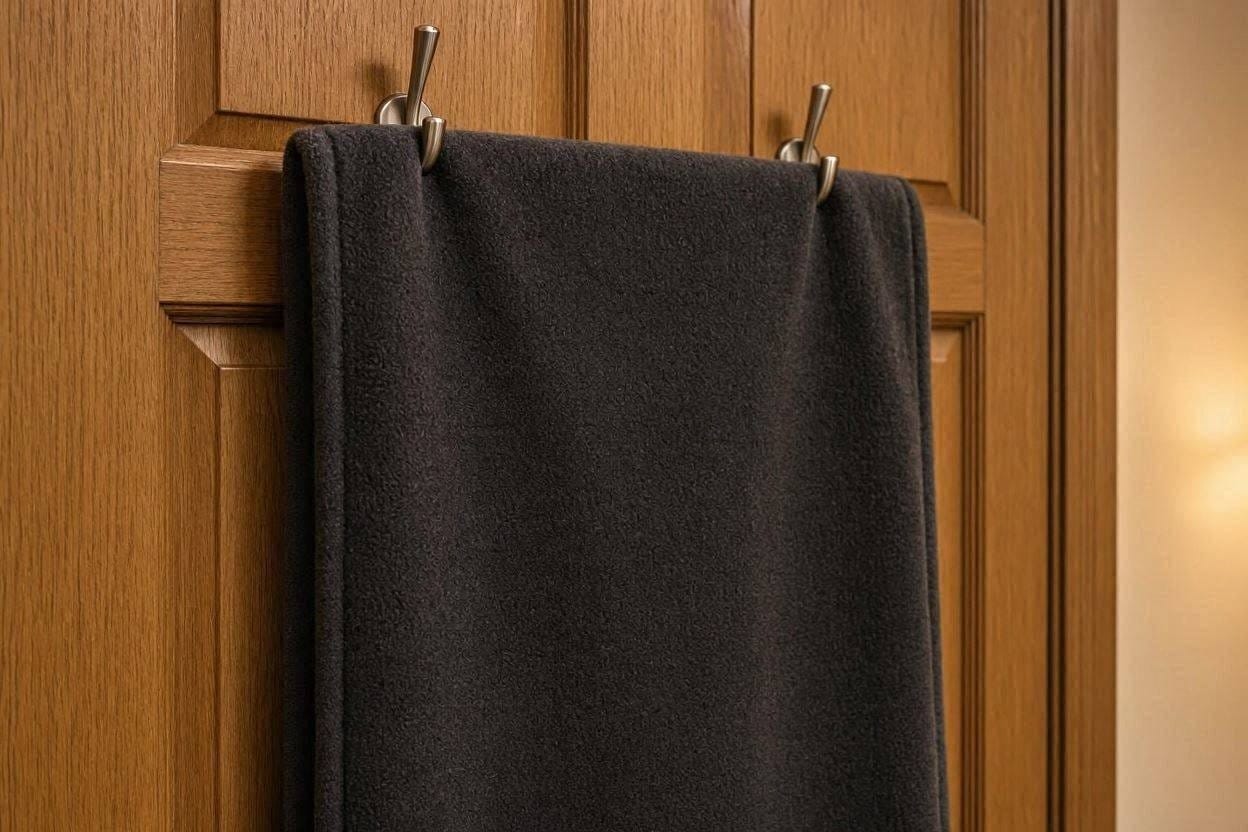
This is my favorite trick. Acoustic blankets (like those made by Audimute or Sure-Max) are incredibly heavy—often weighing 10 to 15 pounds. They are packed with dense fiberglass and designed specifically to absorb and block sound.
You can install a few heavy-duty adhesive hooks (like Command Hooks) on the back of your door and simply hang the blanket over it. It completely dampens the “drum effect” of the hollow wood. When you move out, you just take it down.
💡 Pro Tip: Don’t Use Moving Blankets
A lot of DIY blogs tell you to use cheap moving blankets. Don’t waste your time. Moving blankets are designed to stop scratches, not sound. They lack the sheer mass and density required to block decibels. Always invest in a dedicated acoustic or soundproofing blanket.
The Heavy-Duty Option: Mass Loaded Vinyl (MLV)
If aesthetics aren’t a huge concern (like for a basement studio or a laundry room door), Mass Loaded Vinyl is the ultimate sound blocker. MLV is a thin, flexible material that is impossibly heavy. You can cut a sheet to the exact size of your door and attach it using construction adhesive or heavy-duty staples.
A word of warning: MLV is so heavy that adding it to a cheap hollow door might cause your door hinges to sag. If you go this route, you may need to upgrade your hinge screws to longer, 3-inch wood screws to handle the extra weight.
Step 3: Introduce Sound Masking
Even with the best DIY methods, a hollow door will never perform exactly like a solid, $300 oak door. If you have sealed the gaps and added a blanket, but you can still hear muffled voices, your final step is sound masking.
By raising the ambient noise floor inside your room, you make the invasive noises outside much less noticeable. A dedicated white noise machine works great, but I highly recommend checking out my list of the Best Quiet Air Purifiers. Running one of these on a medium setting provides a fantastic, deep “pink noise” hum that masks hallway chatter while simultaneously cleaning your air.
Final Thoughts
You do not have to live with the stress of a noisy house just because you have hollow doors. Start with the weatherstripping and a door sweep; for under $30, you will likely cut the noise transmission in half. If that is not enough, step up to an acoustic blanket. Your sanity (and your wallet) will thank you.

Ememobong is the lead researcher and editor at Quiet Dwelling. As a professional technical writer, he specializes in breaking down complex acoustic engineering concepts into simple, actionable steps. His goal is to help people build distraction-free environments for better sleep and deep work.