*This post contains affiliate links. If you use these links to buy something we may earn a commission at no extra cost to you.
We have all experienced that moment of sheer panic as parents. You take your child to a fireworks show, a busy airport, or a loud movie theater, and suddenly it happens—the hands cover the ears, the tears start, and a full-blown sensory meltdown begins.
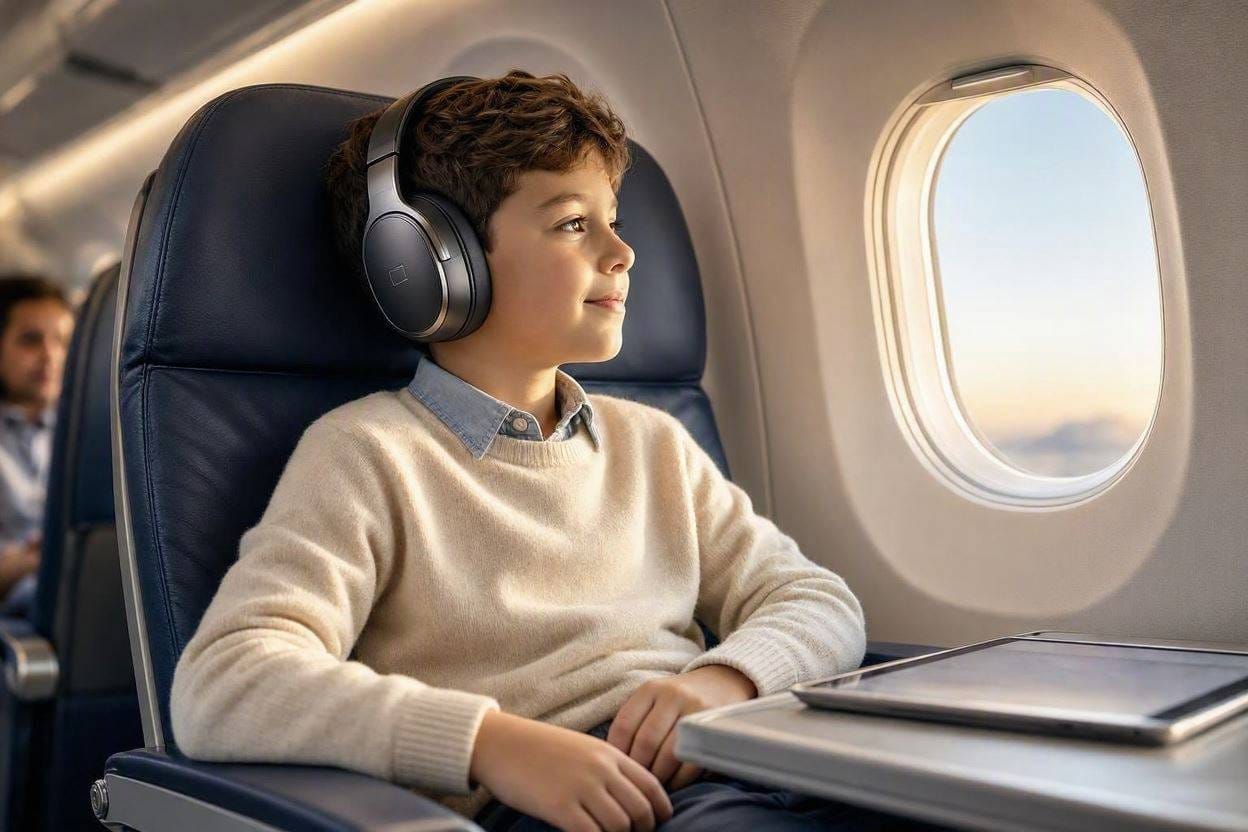
Children’s ears are significantly more sensitive than ours. A volume level that feels “a little loud” to an adult can actually be physically painful—and permanently damaging—to a young child. Whether you are trying to protect their developing eardrums from a loud concert, or you just want them to quietly watch an iPad on a cross-country flight without blasting the volume to 100%, you need specialized acoustic gear.
You cannot just hand a child a pair of adult headphones. You need technology that actively limits dangerous volume spikes while providing deep acoustic isolation. I have researched and tested the absolute best noise-canceling headphones for kids that prioritize safety, durability, and sensory comfort above all else.
The Golden Rule: The 85-Decibel Limit
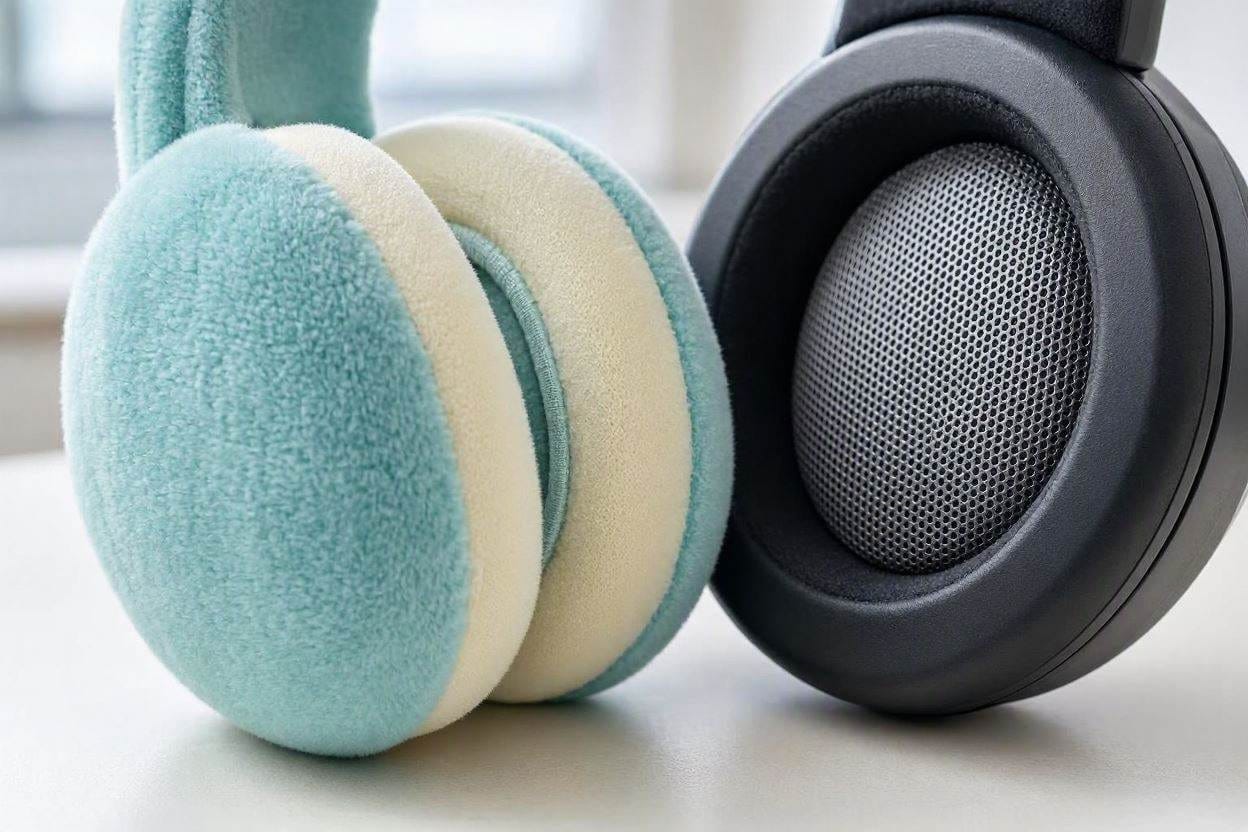
Before you buy any electronic headphones for a child, you must look for one specific feature: Volume Limiting Technology.
According to the American Speech-Language-Hearing Association (ASHA), exposure to sounds over 85 decibels for prolonged periods can cause permanent, irreversible Noise-Induced Hearing Loss (NIHL). Standard adult headphones can easily reach 105 to 110 decibels at max volume.
If your child is watching a movie on a noisy airplane, their natural instinct is to keep turning the volume up until it drowns out the jet engine. If they are wearing adult headphones, they will blast their eardrums with over 100 decibels of sound just to hear Peppa Pig. Premium kids’ headphones are hard-wired with an internal resistor that physically prevents the audio from ever crossing the safe 85dB threshold, no matter how high they turn up the iPad.
(Related Reading: Want to know more about the safety of daily noise? Read our deep-dive on understanding safe decibel levels in your home).
1. Puro Sound Labs PuroQuiet (The Best Overall)
If you want the absolute safest, highest-quality audio experience for your child, Puro Sound Labs is the industry gold standard. They are one of the few brands actually certified by hearing health organizations.
The PuroQuiet combines strict 85dB volume limiting with excellent Active Noise Cancellation (ANC). By turning on the ANC switch, the headphones electronically neutralize up to 22 decibels of outside background noise (like airplane drone or car rumble). Because the background noise is erased, your child doesn’t want to turn the volume up high. They can hear their movie perfectly at a whisper-quiet, incredibly safe volume level.
The Pros
- Studio-grade audio quality that protects young eardrums.
- Active Noise Canceling eliminates the need for high volumes.
- Durable aluminum frame survives being tossed in backpacks.
The Cons
- Premium price tag compared to plastic competitors.
- The ANC switch can be accidentally left on, draining the battery.
Active Canceling vs. Passive Isolation (The Sensory Difference)
When shopping for “noise canceling,” you need to know exactly what you are trying to achieve.
If your child is flying on a plane and wants to listen to a movie, you need Active Noise Cancellation (ANC) like the PuroQuiets above. ANC uses microphones to create “anti-noise” waves that destroy the low-frequency drone of an engine. You can read exactly how this wave physics trick works in our guide to Active Noise Cancellation.
However, ANC is useless against sudden, sharp noises like fireworks, loud cheering at a stadium, or a dog barking. If your child has sensory processing issues or autism, and you need to protect them from chaotic, overwhelming environments, you do not want electronic headphones. You need Passive Earmuffs. These have no batteries and play no music; they simply use thick acoustic foam and heavy plastic to physically block sound waves from entering the ear.
2. Alpine Muffy Kids (Best for Sensory Protection)
If you are taking your child to a monster truck rally, a concert, or a loud parade, you need the Alpine Muffy. These are not electronic headphones; they are professional-grade acoustic earmuffs designed specifically for small heads.
They offer a certified SNR (Single Number Rating) of 25 decibels. This means they physically block massive amounts of dangerous, high-frequency sound waves. They are incredibly lightweight, and the headband is lined with plush, hypoallergenic material so children with sensory sensitivities won’t immediately try to rip them off their heads.
The Pros
- Exceptional physical protection from genuinely dangerous noise levels.
- No batteries to charge or wires to tangle.
- Highly comfortable for children with sensory aversions.
The Cons
- They do not play audio or connect to tablets.
- Can get sweaty around the ears in hot summer weather.
3. JLab JR310NC (The Best Budget Pick)
Kids lose things. If you are terrified of your child leaving a $100 pair of premium headphones on an airplane, the JLab JR310NC provides fantastic safety features at a much more palatable budget price.
They feature the mandatory 85dB volume limiter to protect their hearing, Bluetooth connectivity for wireless freedom, and a surprisingly effective Active Noise Canceling mode. They are made entirely of plastic, which makes them incredibly lightweight on a small child’s neck, though slightly less durable than the aluminum PuroQuiets.
The Pros
- Highly affordable price point for ANC technology.
- Strictly limits volume to safe pediatric levels.
- Folds up very compactly for easy travel.
The Cons
- All-plastic build quality is slightly fragile.
- The noise cancellation is good, but not as isolating as premium models.
Frequently Asked Questions (FAQ)
Are Noise-Canceling Headphones Safe For Toddlers?
Yes, Active Noise Cancellation (ANC) is completely safe. It simply uses microphones to play an inverted sound wave that cancels out background hums. It does not emit harmful radiation. However, if your child is under 2 years old, it is usually recommended to stick with passive acoustic earmuffs (like the Alpine Muffy) simply because young toddlers often struggle with the sensation of electronic audio being pumped directly into their ears.
Can My Child Wear Adult Noise-Canceling Headphones if I Turn the Volume Down?
It is highly unadvised. According to pediatricians, relying on manual volume control is dangerous because it only takes one accidental swipe on an iPad screen, or one loud app advertisement, to blast a 110-decibel noise into their ears. Always use hard-wired, volume-limiting (85dB) headphones to ensure permanent protection.
Do these Help With Autism and Sensory Overload?
Absolutely. For children with Autism Spectrum Disorder (ASD) or Sensory Processing Disorder (SPD), the inability to filter out background noise can lead to severe anxiety and meltdowns. Wearing passive earmuffs allows them to control their auditory environment, drastically reducing the physical stress caused by chaotic, loud spaces like grocery stores or cafeterias.

Ememobong is the lead researcher and editor at Quiet Dwelling. As a professional technical writer, he specializes in breaking down complex acoustic engineering concepts into simple, actionable steps. His goal is to help people build distraction-free environments for better sleep and deep work.