
*This post contains affiliate links. If you use these links to buy something we may earn a commission at no extra cost to you.
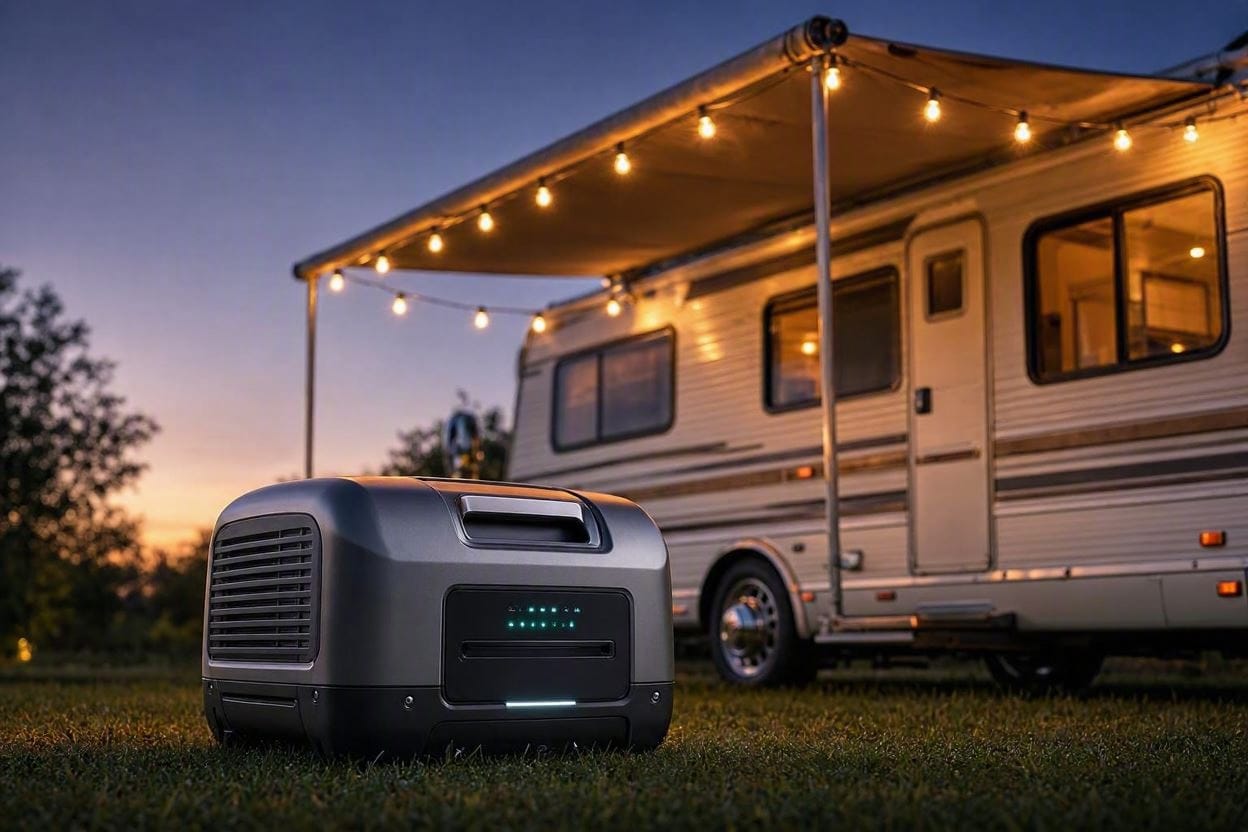
There are few things more frustrating than escaping to the great outdoors for a peaceful weekend of RV camping, only to have the serenity ruined by the deafening, jet-engine roar of a neighbor’s portable generator.
Whether you are trying to keep your refrigerator running during a neighborhood power outage, or you need off-grid power for your camper, you shouldn’t have to sacrifice your hearing to keep the lights on. Traditional generators are notoriously loud, often producing enough low-frequency acoustic energy to vibrate the windows of your home.
Fortunately, advances in acoustic casing and engine technology have revolutionized portable power. In this guide, we are reviewing the best quiet portable generators that will keep your electronics running without waking up the neighborhood.
The Science of Silence: Why Are Traditional Generators So Loud?
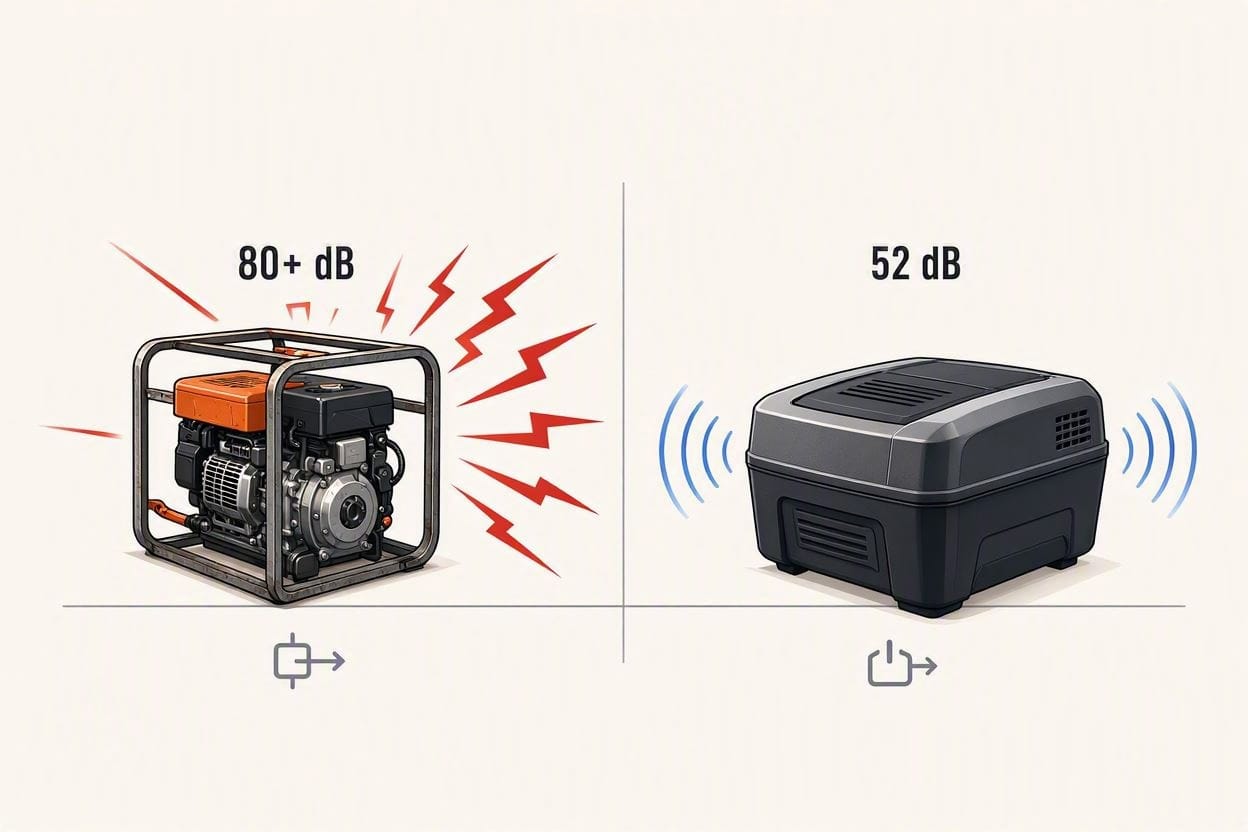
If you buy a cheap, traditional portable generator from a big-box hardware store, you are buying what the industry calls an “open-frame” generator. Acoustically, these are a nightmare.
Open-frame generators feature a large combustion engine bolted directly to a metal roll cage. Because there is no outer acoustic casing, the explosive sound of the engine block and the exhaust escapes directly into the air. Furthermore, the metal frame vibrates violently against the ground, creating heavy impact noise—a concept we cover extensively in our guide to airborne vs. impact noise—that travels through the earth and into your home’s foundation.
According to the Occupational Safety and Health Administration (OSHA), exposure to noise levels above 85 decibels (dBA) can cause permanent hearing damage. Many traditional open-frame generators routinely operate between 80 dBA and 90 dBA. To put that into perspective, running one outside your window is the acoustic equivalent of standing next to a loud lawnmower or a passing freight train for hours on end.
The Solution: Closed-Frame Inverter Technology
If you want a truly quiet dwelling, you must specifically look for an Inverter Generator. Inverters solve the noise problem using three distinct acoustic and mechanical principles:
- Acoustic Enclosures (Absorption): Unlike open-frame models, inverters are fully enclosed in thick, high-density plastic shells lined with specialized sound-absorbing foam, trapping the engine noise inside the casing.
- Variable Engine Speed: A traditional generator runs at 3,600 RPMs constantly. An inverter generator features a smart throttle. If you are only drawing a small amount of power, the engine throttles down to a low, quiet purr, massively reducing the decibel output.
- Rubber Dampers (Decoupling): The internal engines of high-quality inverters are mounted on viscoelastic rubber dampeners, separating the vibrating engine from the outer shell to stop structural vibrations.
1. Honda EU2200i (The Gold Standard)
If you ask any avid RV camper or off-grid contractor what the quietest generator on the market is, 99% of them will say Honda. Honda is the undisputed king of acoustic small-engine engineering, and their EU2200i is an absolute masterpiece.
Depending on the load you are pulling, this inverter operates at an astonishingly low 48 to 57 dBA. At its lowest idle, 48 dBA is roughly the volume of a quiet suburban street or a quiet conversation in your living room. The machine is so imperceptibly quiet from 20 feet away that you can easily hold a normal conversation standing right next to it.
It achieves this through its legendary Honda GXR120 engine, heavily insulated casing, and an Eco-Throttle system that provides incredibly clean power (perfect for sensitive electronics like laptops and CPAP machines).
The Pros
- Virtually undetectable to the human ear from more than 25 feet away.
- Produces clean, stable power safe for sensitive microchips.
- Legendary reliability; known to last for decades with basic maintenance.
The Cons
- High premium price tag.
- 2200 starting watts is not enough to power a whole house (best for RVs and essentials).
2. Champion Power Equipment 4500-Watt (The Heavy-Duty Pick)
If you need to power a full-sized refrigerator, a window AC unit, and a sump pump during a winter blackout, the Honda EU2200i simply won’t have the wattage. For heavy-duty home backup that won’t wake the neighbors, you need to step up to the Champion 4500-Watt Inverter.
Operating at 61 dBA from 23 feet away, it is slightly louder than the smaller Honda, but still incredibly quiet for the massive amount of power it produces (61 dBA is equivalent to normal background office noise). Furthermore, it is a Dual Fuel inverter, meaning you can run it on standard gasoline or attach a propane tank—which is a massive advantage during hurricane season when gas stations are empty.
The Pros
- Massive power output without the deafening noise of open-frame models.
- Dual-fuel capability (Gasoline or Propane).
- Features a convenient electric push-button start.
The Cons
- At nearly 100 lbs, it is heavy (though it does include a wheel kit).
- Slightly louder on startup before the inverter throttle kicks in.
3. WEN 56225i Super Quiet 2250-Watt (The Budget Pick)
Premium inverter generators can cost over a thousand dollars. If you only need a quiet generator for occasional weekend camping trips or tailgating, the WEN 56225i provides stunning acoustic performance at a fraction of the price of the Honda.
This ultra-compact, 39-pound inverter runs at an impressive 53 dBA at a quarter load. It features a fully enclosed body to absorb mechanical noise, and an Eco-Mode switch that allows the motor to automatically adjust its fuel consumption and noise output as items are plugged in and unplugged. It is the perfect affordable stealth generator.
The Pros
- Unbeatable price-to-performance ratio.
- Incredibly lightweight (39 lbs) and easy to carry with one hand.
- Very quiet 53 dBA rating is campground-approved.
The Cons
- Build quality of the plastic casing feels slightly cheaper than premium models.
- Small 1-gallon gas tank requires more frequent refueling.
How To Make Your Generator Even Quieter
Even if you purchase a premium inverter generator, there are a few acoustic tricks you can use to further reduce the noise profile around your home or campsite.
- Utilize Distance and Direction: Sound follows the inverse-square law. Every time you double the distance between yourself and the noise source, the decibel level drops by about 6 dB. Always position the generator as far away as your heavy-duty extension cord allows, and point the exhaust pipe away from your living area.
- Use Acoustic Deflectors: If you are running the generator near your home, place a heavy, dense object (like a piece of thick plywood or a temporary mass-loaded vinyl barrier) between the generator and your house. Ensure you leave plenty of breathing room for the exhaust so the generator does not overheat.
- Place It On A Soft Surface: Never run a generator directly on a wooden deck or a hollow concrete surface. The vibrations will turn the deck into a giant acoustic drum. Place the generator on grass, dirt, or a thick anti-vibration rubber mat to decouple it from hard surfaces.
By upgrading to an enclosed inverter generator and applying basic acoustic principles, you can keep your essential appliances running smoothly without sacrificing the peace and quiet of your environment.

Ememobong is the lead researcher and editor at Quiet Dwelling. As a professional technical writer, he specializes in breaking down complex acoustic engineering concepts into simple, actionable steps. His goal is to help people build distraction-free environments for better sleep and deep work.