
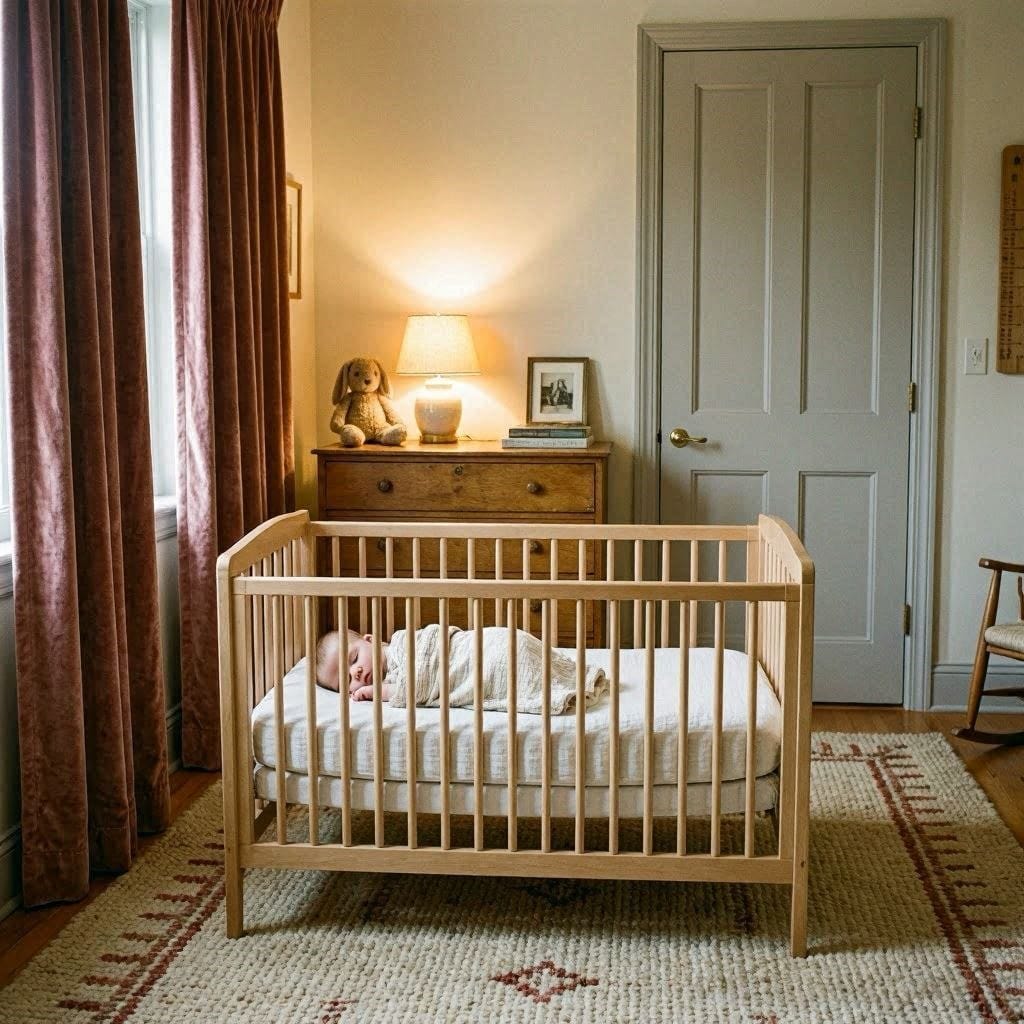
Bringing a newborn home is an incredibly joyful experience, but it quickly turns into a logistical challenge when you realize just how loud your house actually is. Suddenly, every creaking floorboard, passing delivery truck, and clicking door latch feels like a siren threatening to wake your sleeping baby.
In a desperate attempt to keep their babies asleep, many parents resort to walking on tiptoes or blasting white noise machines at maximum volume next to the crib. However, both of these extremes are detrimental. Walking on eggshells is unsustainable for your own sanity, and improperly used sound machines can actually damage an infant’s developing auditory system.
To truly solve the problem, you need to understand the concept of acoustic hygiene. By applying basic acoustic physics, you can successfully soundproof a nursery, block out disruptive household noise, and foster a healthy, deeply restorative sleep environment.
In this guide, we will break down the science of infant sleep cycles, establish safe decibel limits, and show you the exact structural steps to build a perfectly quiet nursery.
The Science: Why Babies Are So Sensitive to Noise
To understand why a slamming door wakes your baby instantly, we have to look at infant neurology. Babies are born with a highly active startle reflex, clinically known as the Moro reflex.
When an infant hears a sharp, sudden noise, their primitive brain interprets it as a physical threat. Their body releases a sudden spike of adrenaline, their arms flail outward, and they wake up crying. Because their nervous systems are still maturing, they cannot easily self-soothe and return to sleep after this adrenaline spike.
Furthermore, infant sleep architecture is different from adult sleep. Babies spend roughly 50% of their sleep time in REM (Rapid Eye Movement) sleep, compared to just 20% for adults. REM is a lighter, highly active sleep stage, making them significantly more vulnerable to being awakened by environmental noise.
If a baby’s sleep is chronically fragmented by noise, it can impact their cognitive development and emotional regulation. You can read more about how acoustic stress impacts the body in our comprehensive guide on the health effects of noise pollution.
Safe Acoustic Hygiene: Decibel Levels for Infants
The most common mistake parents make when trying to soundproof a nursery is turning a white noise machine up to the maximum volume to drown out the rest of the house. This is highly dangerous.
According to guidelines from the American Academy of Pediatrics (AAP), infant sleep machines can easily exceed safe hearing limits if placed too close to the crib. An infant’s ear canal is smaller and amplifies high-frequency sounds more intensely than an adult’s ear.
The Golden Rules for Nursery Sound Machines:
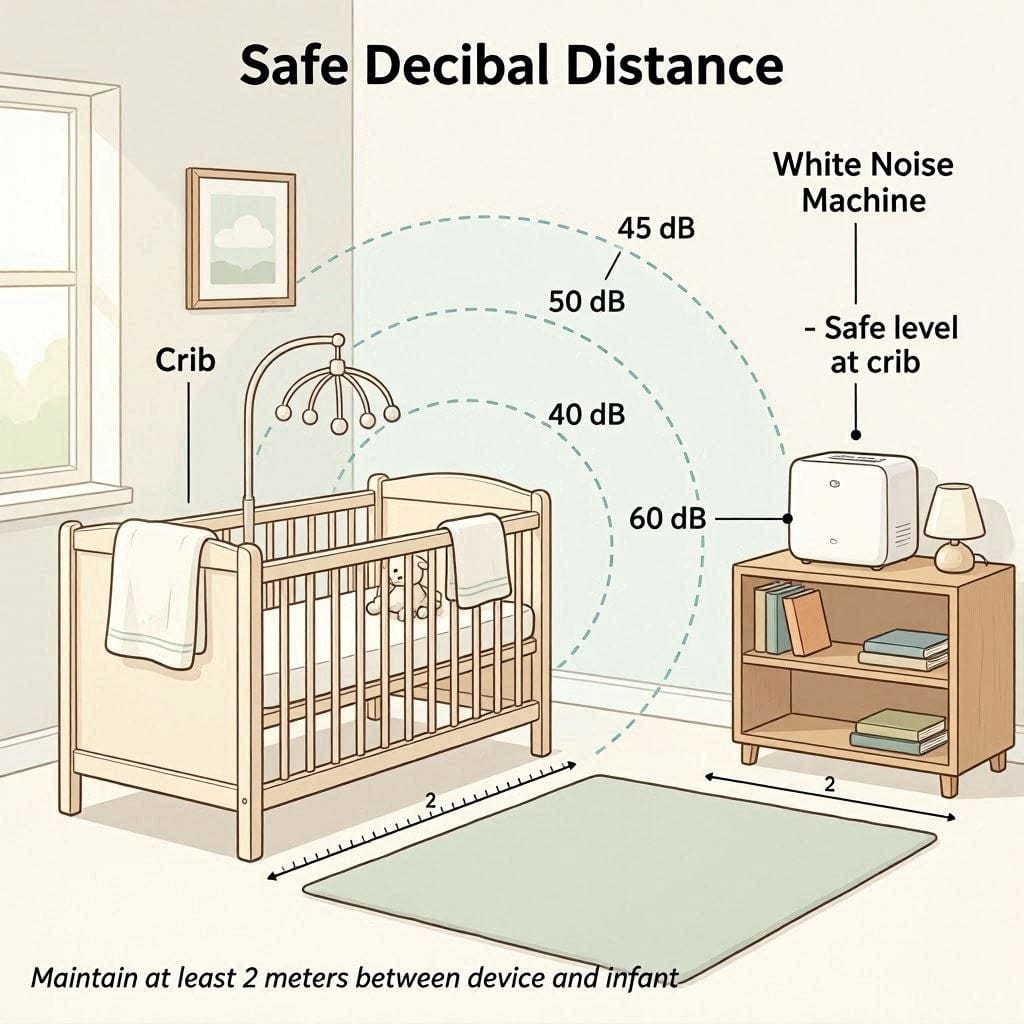
- The 50 Decibel Limit: The continuous background noise in a nursery should never exceed 50 dBA. To understand how loud this is, 50 decibels is roughly the volume of a quiet dishwasher or a gentle rain shower. Read our guide on understanding decibel levels to learn how to measure this in your home.
- The Distance Rule: Never attach a sound machine directly to the crib railing. It should be placed at least 7 feet (200 cm) away from the baby’s head, ideally near the door or window where the disruptive noise is entering.
- Volume Check: Use a free decibel meter app on your smartphone. Place your phone inside the empty crib where the baby’s head rests, turn on the sound machine across the room, and ensure the meter reads under 50 dBA.
How to Soundproof a Nursery (Structural Fixes)
Instead of relying purely on loud masking noises, you should physically block the sound from entering the room. By utilizing the four principles of soundproofing, you can drastically lower the volume of the outside world.
Step 1: The Door (Blocking Household Noise)
The nursery door is the weakest acoustic link in your home. Most interior doors are hollow-core, meaning they act like amplifying drums for hallway noise.
- Upgrade to a Solid Core Door: Replacing the hollow door with a heavy, dense MDF solid core door is the single best upgrade you can make. It adds massive density, blocking the sound of older siblings playing or the TV in the living room.
- Seal the Perimeter: Sound behaves like water. If air can slip under the door, sound will too. Install a heavy-duty silicone door sweep at the bottom of the door to seal the 1-inch gap above the flooring.
Step 2: The Windows (Blocking Street Noise)
If the nursery faces a busy street or a neighbor’s noisy yard, you must treat the windows.
- Acoustic Window Inserts: Press-fitting a custom acrylic insert into your window frame creates a deep air gap that traps low-frequency traffic noise before it enters the nursery.
- Heavy Curtains: While standard curtains do not block street noise, thick velvet curtains are excellent at absorbing internal room echoes, making the nursery sound softer and cozier. Read our guide to learn exactly how acoustic curtains function.
Step 3: The Floors (Softening Impact Noise)
If you have hardwood floors, every footstep you take while sneaking out of the nursery sounds like a loud thud. Hardwood floors are highly reflective. Covering the floor with a thick, high-pile rug paired with a dense acoustic rug pad will cushion your footsteps, preventing the structural impact vibration from waking the baby. It also significantly lowers the reverberation inside the room.
Pink Noise vs. White Noise for Babies
Once your room is structurally treated, you can add a sound machine for gentle acoustic masking. But which “color” of noise is best for a developing brain?
While “white noise” is the popular catch-all term, true white noise is actually very harsh and high-pitched (like TV static). It can be abrasive to a baby’s sensitive ears.
Instead, look for a machine that plays Pink Noise or Brown Noise. Pink noise (which sounds like heavy rain or a rushing river) has less high-frequency energy and deeper, softer bass. Scientific studies have shown that pink noise naturally synchronizes with human brain waves to encourage longer, deeper periods of slow-wave sleep. For a full breakdown of these frequencies, read our guide on the colors of noise explained.
A Note on Traveling with Children
As your child grows and begins traveling with you to noisy, uncontrolled environments like airports, fireworks displays, or crowded restaurants, structural soundproofing is no longer an option. To protect their highly sensitive, developing eardrums from permanent damage on the go, it is highly recommended to use the best noise-canceling headphones for kids, which actively cap volume limits at a pediatrician-approved 85 decibels.
Frequently Asked Questions (FAQ)
Should a Nursery be Completely Silent?
No! This is a very common misconception. The inside of a mother’s womb is actually quite loud (around 70 to 80 decibels) due to the rushing of blood and a beating heart. Absolute, dead silence is unnatural and can actually be unsettling to a newborn. A consistent, low-level ambient hum (under 50 dB) is highly comforting to them.
Is Acoustic Foam Safe to Use in a Nursery?
We highly recommend against using acoustic foam in a nursery. First, acoustic foam does not block sound; it only absorbs echoes. Second, cheap polyurethane foam is a massive fire hazard. Finally, if a toddler manages to pull a foam panel off the wall, it becomes a severe choking hazard. Stick to structural upgrades like doors and heavy rugs.
Will Soundproofing the Room Mean I Can’t Hear My Baby Cry?
No. Standard residential soundproofing will drastically muffle the sounds of the rest of the house, but a baby’s cry is an evolutionary, high-frequency sound designed to pierce through walls. Furthermore, you will still be using an electronic baby monitor, which is unaffected by the room’s acoustic treatment.

Ememobong is the lead researcher and editor at Quiet Dwelling. As a professional technical writer, he specializes in breaking down complex acoustic engineering concepts into simple, actionable steps. His goal is to help people build distraction-free environments for better sleep and deep work.