
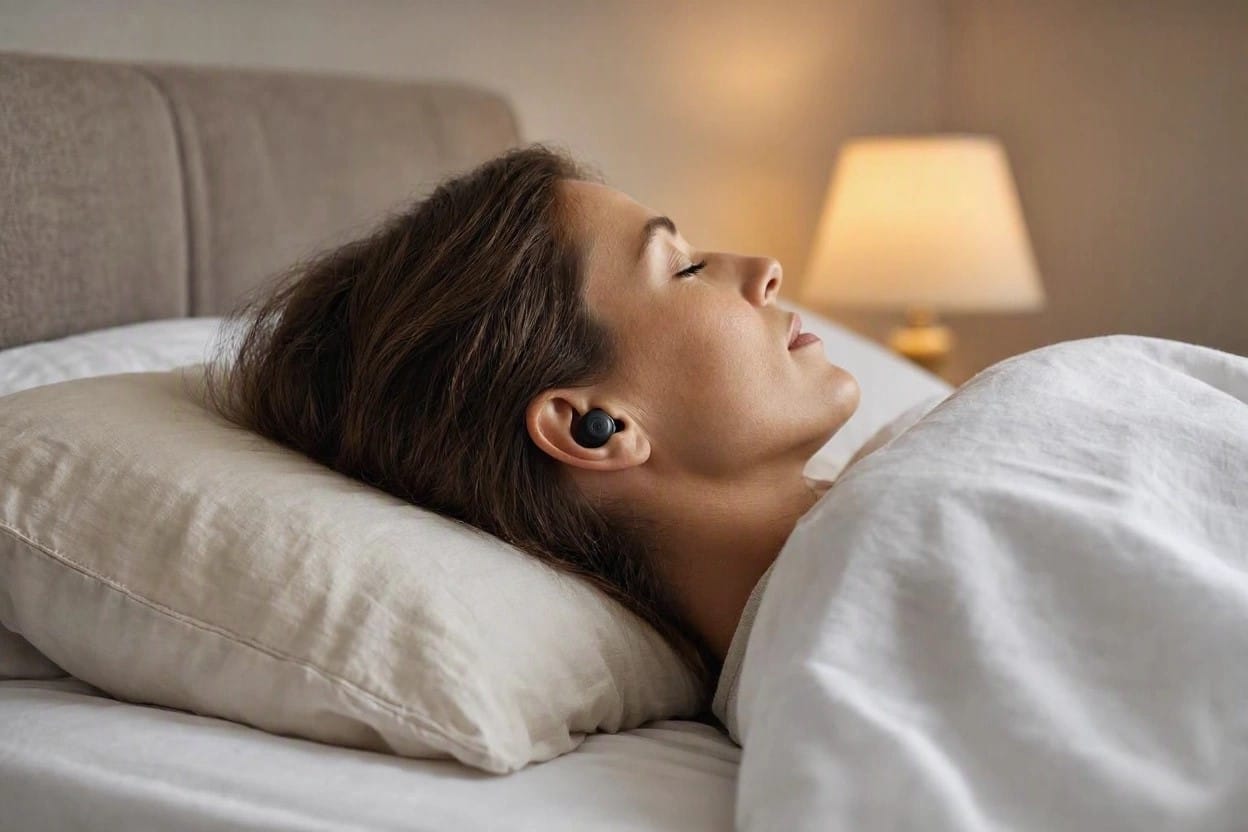
If you sleep on your side, you have probably already discovered the problem. You find a pair of earbuds that sounds good, that masks the noise you need masked, and that feels fine when you put them in — and then you roll onto your side, and the whole thing falls apart.
The earbud digs into your ear. The seal breaks. The sound changes. Or it simply hurts, and you spend the night shifting between two positions and getting neither comfort nor quiet.
This is not a matter of taste. It is a mechanical problem with a specific cause, and understanding it makes choosing a pair dramatically easier.
Why Side Sleeping Breaks Earbuds
When you lie on your side, your head is supported by a pillow and your ear is compressed against it. That applies continuous lateral load to whatever is in your ear canal.
There are two things happening at once.
First, physical pressure. A standard earbud protrudes from the ear canal. Lie on it and the pillow pushes that protruding body sideways, loading the ear canal unevenly. That is uncomfortable at best and genuinely painful after an hour at worst.
Second, seal failure. This is the part most people miss. Every earbud relies on a seal between the tip and your canal wall to isolate sound. Push the body sideways and you distort that seal — the tip no longer sits concentrically, isolation drops off, and the passive noise reduction you paid for stops working. In acoustic terms, you have introduced a leak, and a leak is the one thing isolation cannot tolerate.
This is the same mechanism behind the classic earbud problem of losing bass when they sit loose: a broken seal lets low-frequency energy escape, and low frequencies are exactly what you need blocked to sleep through traffic, machinery or a neighbour’s bass. If that behaviour is unfamiliar, our explainer on how to block low frequency noise covers why bass is the hardest thing to keep out. If the noise itself is the root problem rather than your sleep position, our apartment soundproofing guide is the place to start.
Sleep is not a trivial reason to solve this. The World Health Organization’s guidance on environmental noise identifies sleep disturbance as one of the documented consequences of chronic noise exposure, alongside cardiovascular and cognitive effects — which is why a solution you can actually wear all night matters more than a marginally better spec sheet. World Health Organization
What To Look For
Low profile above all else
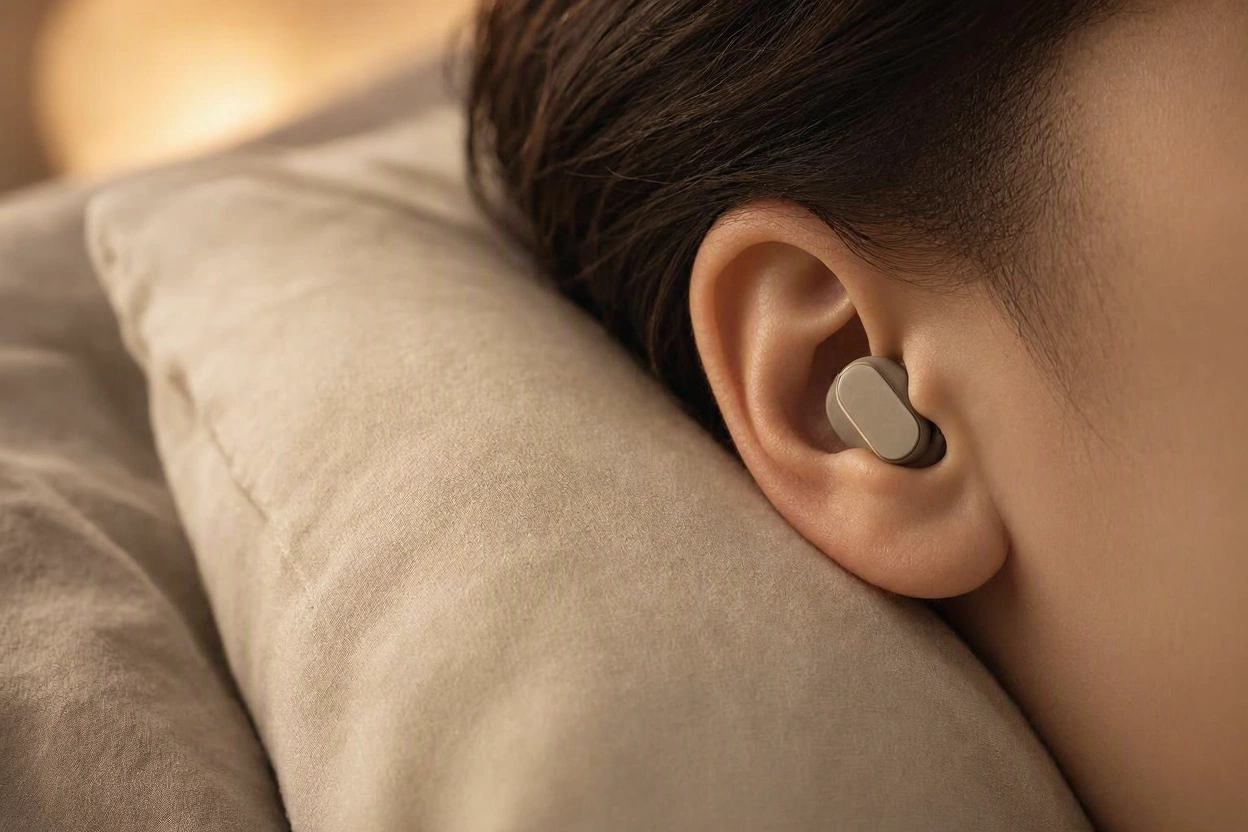
The single most important characteristic. You want a bud that sits as close to flush with your ear as possible, with nothing protruding to catch on the pillow. Every extra millimetre of body sticking out of your ear is a millimetre the pillow can push against.
This is why the category exists at all: a purpose-built sleep earbud is designed with a shallow, flat outer face, and a standard music earbud is not.
Soft, compliant tips
Firm silicone tips hold their shape, which is good for sports and bad for pillows. For sleep you want soft, memory-foam or low-durometer silicone that deforms under pillow pressure rather than transferring that force into your canal.
Foam tips have a second advantage worth knowing: they expand to fill the canal, which makes them more forgiving of head position than a rigid silicone tip that only seals at one exact angle.
Small and light
Mass matters more than people expect. A heavier earbud carries more momentum when your head moves against the pillow, so it shifts and unseats more readily. The lightest earbuds stay put.
Confirmation of what you actually need
Ask yourself which of two jobs you want done, because they are different products.
- Passive blockers — physical plugs with no electronics. Cheaper, no battery, no charging, and typically the highest raw noise reduction. Our guide to earplugs for sleeping covers this category, including side-sleeper-friendly low-profile designs.
- Active sleep earbuds — electronics with speakers, usually playing masking audio or noise cancellation. Better for masking specific sounds and for streaming, but they need charging, they are heavier, and they fail when the battery does.
What Usually Does Not Work
- Using your regular music earbuds. The most common mistake. They protrude, they are heavier than a purpose-built sleep bud, and they were designed for an ear under no lateral load at all. Some people get away with it; most do not.
- Buying on noise cancellation alone. ANC works on steady low-frequency sound such as engine drone, and it is genuinely useful for that. But it does nothing for a sharp intermittent noise, and passive isolation matters more for sleep. Our explainer on how active noise cancellation works covers where ANC applies and where it doesn’t.
- Choosing an oversize tip for a “better seal”. A tip that is too large will not seat properly, will create pressure hotspots, and will fail faster when you roll onto it. Correct size beats maximum size every time.
- Assuming a soft pillow will solve it. A softer pillow reduces peak pressure, which helps — but it also lets your head sink, which can push the ear more directly against the surface in some positions. It’s a supporting factor, not a fix.
- Sleeping with them in when they hurt. Discomfort is not a sign you will adjust. It is the sign that the geometry is wrong for your ear, and continuing to use them risks irritation in an area that is difficult to rest.
How To Get The Most From Whatever You Choose
- Test the fit standing, then lying down. Put them in, then lie on both sides in bed and hold each position for a couple of minutes. This is the only test that matters, and it takes five minutes at home rather than a night of regret.
- Try all the tip sizes you were given. Most people settle one size smaller than they expect. Then retest lying down — the correct size is the one that survives the pillow.
- Insertion angle matters. Many ears need the bud rotated slightly forward and downward to follow the canal’s natural direction. A bud seated at the wrong angle will feel fine standing and fail the moment you lie down.
- Consider your pillow separately. A pillow with a softer fill and a slight ear recess, or simply a slightly lower pillow, changes the pressure on your ear more than most people realise.
- Match the mask to the noise. If your problem is a steady hum — traffic, a fan, a fridge — pink or brown noise masks it better than white, because they carry more low-frequency energy. If the problem is intermittent, a broad mask works better. Our comparison of pink noise vs. white noise explains the difference, and white, pink and brown noise explained goes deeper.
- Have an alternative for the nights it fails. A quiet bedroom fan provides masking without anything in your ears at all, which is the right fallback when your ears need a rest.
The Honest Caveat
No earbud will be comfortable for every side sleeper, because ear geometry varies enormously from person to person. What fits one ear perfectly can be unbearable in another, and this is genuinely a category where you may need to try two or three pairs before finding the one — which is why fit is worth more than specifications.
If you experience continuing pain, soreness or irritation after use, stop using them rather than trying to push through. A sleep aid that damages your ears is not a sleep aid, and persistent discomfort in the ear canal is worth a conversation with a clinician rather than a longer tolerance period.
Frequently Asked Questions
Why Do My Earbuds Fall Out When I Sleep on My Side?
Because the pillow applies sideways pressure to the part of the bud that protrudes from your ear, pushing it out of position. Buds that sit flush with the ear survive this; buds with a protruding body do not. Weight is a factor too — heavier earbuds shift more readily when your head moves against the pillow.
Do Sleep Earbuds Actually Stay in For Side Sleepers?
Low-profile buds designed for sleep stay in far better than standard music earbuds, but no pair works for every ear, because ear geometry varies so much between people. The reliable test is to lie down on both sides for a few minutes with each tip size you were given, rather than judging the fit while standing.
Is it Safe to Sleep with Earbuds in Every Night?
Many people do, but comfort should be your guide rather than habit. If you experience ongoing pain, soreness or irritation, stop using them. Repeated pressure and occlusion in the ear canal is not something to push through — persistent discomfort is worth checking with a clinician.
What is Better For Side Sleepers, Earplugs or Earbuds?
It depends on the job. Simple foam or silicone plugs are lighter, need no charging and often block more sound passively, which suits plain noise reduction. Active sleep earbuds add masking audio and noise cancellation, which is better for specific sounds and for streaming, but they are heavier, they need charging, and they fail when the battery does. Side sleepers often find plain low-profile plugs more comfortable because there is no electronics housing to press against the pillow.
Will a Softer Pillow Help?
It reduces peak pressure on your ear, which genuinely helps with comfort. But it is a supporting factor rather than a fix: a very soft pillow also lets your head sink further, which can push the ear against the surface differently. The geometry of the bud matters more than the pillow.
Does Noise Cancellation Work For Sleep?
Partly. Active noise cancellation is effective on steady low-frequency sound such as engine drone or a fan, which makes it useful overnight in the right environment. It is much less effective on sharp, intermittent sounds, and passive isolation from a good seal generally matters more for sleep overall.
How Do I Know if My Earbud Tip is the Right Size?
The correct size seats without needing to be pushed hard, stays sealed while you lie on your side, and causes no pressure hotspot after a few minutes. Most people settle one size smaller than they first assume. Test each size lying down on both sides — fit judged standing tells you very little.

Ememobong is the lead researcher and editor at Quiet Dwelling. As a professional technical writer, he specializes in breaking down complex acoustic engineering concepts into simple, actionable steps. His goal is to help people build distraction-free environments for better sleep and deep work.