
*This post contains affiliate links. If you use these links to buy something we may earn a commission at no extra cost to you.
If you ride motorcycles, you probably know the feeling well. You pull into your driveway after an hour-long highway run, kick the stand down, and pull off your helmet. Your head feels fuzzy, you have a dull headache, and there is a high-pitched, persistent ringing in your ears.
Most new riders assume this is caused by their loud exhaust pipes or the rumble of a V-twin engine. They are wrong.
The true enemy of a rider’s hearing is wind shear. When you hit 70 mph on the highway, the turbulent air violently rushing around the plastic vents and seams of your helmet creates a massive, high-frequency roar. According to workplace safety data from the CDC and NIOSH, wind noise inside a premium full-face helmet can easily exceed 105 decibels. At that volume, permanent, irreversible hearing damage begins in less than 15 minutes.
You have to wear earplugs. But you cannot just shove cheap, neon-orange construction foam into your ears. Foam blocks everything, leaving you deaf to ambulance sirens, car horns, and your Bluetooth intercom system—which is incredibly dangerous. You need specialized acoustic filters. Here are the absolute best earplugs for motorcyclists that cut the wind, but keep you connected to the road.
The Science: Why Foam Earplugs Are Dangerous
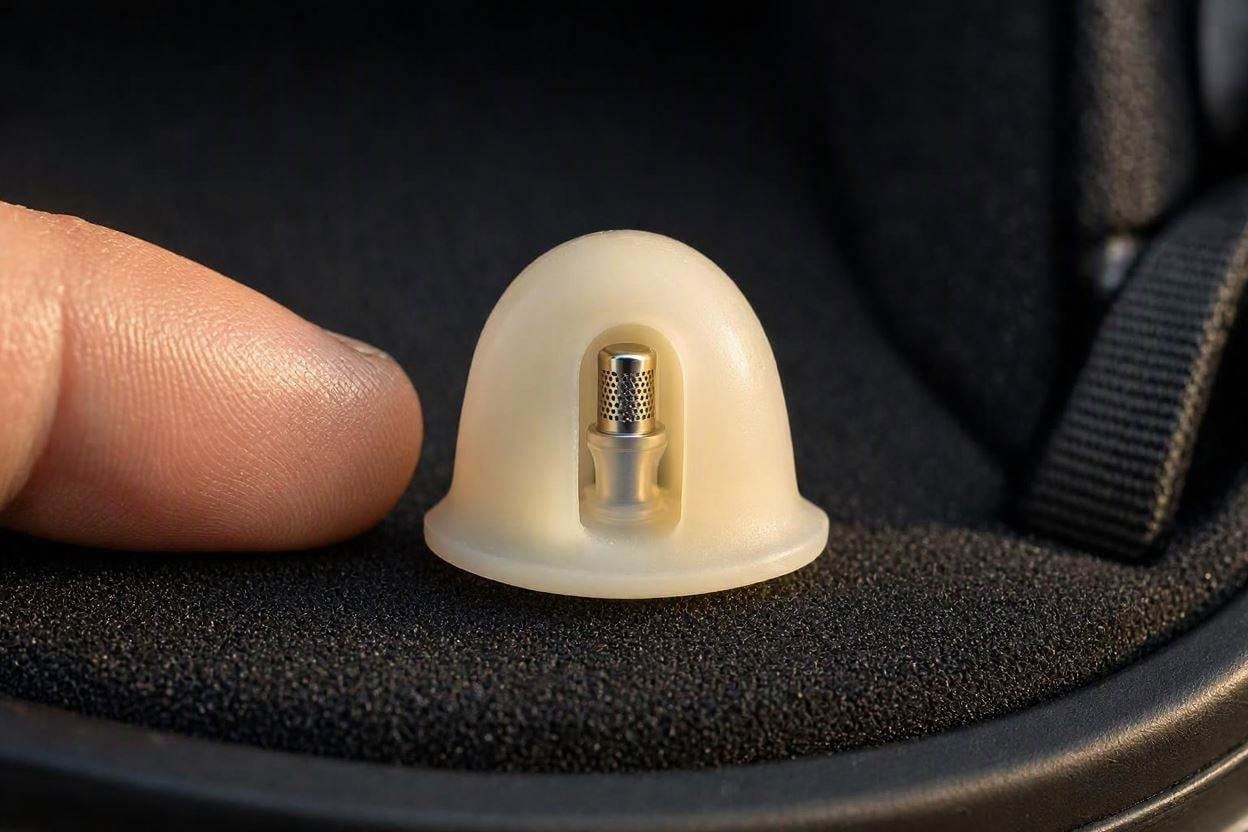
To understand why motorcycle earplugs are worth the money, you have to understand exactly what you are putting in your ear.
If you grab a handful of cheap foam earplugs from a hardware store, you are inserting a basic acoustic absorber. As we covered in our master guide on how sound absorption materials work, thick foam does a fantastic job of killing all high-frequency sounds. However, it blocks sound indiscriminately. It muffles the wind, but it also muffles the sound of screeching tires, emergency sirens, and your Cardo or Sena Bluetooth speakers. You end up riding completely isolated from your environment.
Premium motorcycle earplugs are different. They use Acoustic Attenuation Filters.
Instead of a solid block of foam, these are hollow silicone funnels with a highly engineered microscopic membrane inside. When sound hits the membrane, it acts like an equalizer on a stereo. It specifically targets and drastically reduces the damaging, high-velocity frequencies of wind turbulence, but allows the mid-to-low frequencies of human speech, sirens, and your exhaust note to pass through clearly. You are turning down the volume of the wind, without turning off the world.
1. Alpine MotoSafe Pro (The Best Overall)
Alpine is a European brand that focuses almost entirely on specialized hearing protection, and their MotoSafe line is the industry gold standard for riders.
What makes the MotoSafe “Pro” kit incredible is that it actually comes with two complete pairs of earplugs with different filter strengths. You get a “Tour” pair (medium attenuation, roughly 17dB reduction) designed for cruising around town at lower speeds. You also get a “Race” pair (heavy attenuation, 20dB reduction) designed specifically for 80mph highway runs or track days.
Most importantly, the physical silicone body of the earplug is incredibly soft and contains absolutely no hard plastic parts. If your helmet presses against your ears, you won’t feel a hard piece of plastic grinding into your cartilage.
The Pros
- Includes two distinct filter strengths for different riding styles.
- No hard plastic core; incredibly comfortable under tight helmets.
- Specifically engineered to let intercom voices pass through clearly.
The Cons
- The small, clear pull-tab can be hard to grab with cold fingers.
- The included zip-case is a bit bulky for a keychain.
Check Alpine MotoSafe Price on Amazon
2. EarPeace Moto (Best Low-Profile Comfort)
If you wear a highly aggressive, aerodynamic sportbike helmet (like an Arai or Shoei), the cheek pads and ear pockets are designed to be incredibly tight. A common problem riders face is that pulling their tight helmet off their head rips the earplugs right out of their ears, dropping them onto the dirty gas station asphalt.
EarPeace Moto solves this with an ultra-low-profile, dual-flange design. Once inserted properly, they sit practically flush within your ear canal. They will not snag on your helmet liner when you take your lid off.
They also utilize an ingenious filter system. The kit comes with three different interchangeable filter cores (Medium, High, and Max) ranging from 17dB to 26dB of reduction. You literally pop the filter out with your fingernail and swap it depending on how windy your ride is going to be.
The Pros
- Extremely low profile; will not get ripped out by a tight helmet.
- Includes 3 interchangeable filter strengths in one kit.
- Comes with a brilliant, milled-aluminum waterproof keychain case.
The Cons
- Because they sit so deep, they can be slightly tricky to pull out.
- Changing the tiny filters requires a clean workspace (do not do it over a drain!).
3. Eargasm High Fidelity Earplugs (Best Comms Audio)
We recently reviewed Eargasm in our guide to the best high-fidelity concert earplugs, but they perform incredibly well on motorcycles, too.
If you ride with a Cardo, Sena, or other Bluetooth helmet communication system, you know that wind noise completely ruins your music quality and makes phone calls impossible to hear. Eargasm uses a slightly longer triple-flange silicone design that creates a flawless, deep acoustic seal.
By heavily neutralizing the high-frequency wind noise without muddying the mid-range frequencies, Eargasm acts like a magical equalizer for your helmet speakers. You will actually be able to hear the bass in your music and the crisp vocals of your riding buddies over the intercom, even at 75 mph.
The Pros
- Phenomenal acoustic clarity for Bluetooth helmet speakers.
- Triple-flange design creates the most secure, airtight seal.
- Included waterproof metal carrying case is virtually indestructible.
The Cons
- The pull-tab sticks out slightly further than the EarPeace models.
- Premium price tag.
Why Not Just Use AirPods Pro or ANC Earbuds?
A common mistake new riders make is putting in a pair of Apple AirPods Pro, turning on Active Noise Cancellation (ANC), and pulling their helmet on. This is highly dangerous.
As we detailed in our complete breakdown of how Active Noise Cancellation works, ANC uses internal microphones to generate an “anti-noise” wave. However, the aggressive, chaotic buffeting of wind inside a motorcycle helmet frequently overwhelms the tiny microphones on wireless earbuds.
Instead of canceling the noise, the ANC processor panics, often generating sudden, painful spikes of electronic static or high-pitched feedback directly into your eardrum. Furthermore, wireless earbuds stick out too far; if you are in a crash, a hard plastic earbud driven forcefully into your ear canal by the helmet padding can cause severe trauma. You must use soft, low-profile silicone earplugs for riding.
Frequently Asked Questions (FAQ)
Is it Legal to Wear Earplugs while Riding a Motorcycle?
In the vast majority of jurisdictions, yes. Most states and countries recognize that wind noise is a severe occupational hazard for riders. However, laws vary locally. Some states (like California or Ohio) have specific restrictions stating that earplugs can only be custom-molded to prevent hearing damage, or that they cannot be used to listen to music. Always check your local Department of Motor Vehicles regulations before riding.
Will a More Expensive, Quieter Helmet Fix the Noise Problem?
A premium helmet (like a Schuberth or Shoei) with superior neck rolls and aerodynamic venting will absolutely reduce wind shear. However, even the quietest, most expensive helmets on the market still average around 85 to 90 decibels at highway speeds. Over a two-hour ride, 90 decibels is still enough to cause long-term hearing fatigue and tinnitus. A quiet helmet is great, but it does not replace the biological need for earplugs.
How Do I Stop the Earplugs from Falling Out When I Put My Helmet On?
You must use the “reach over” insertion method. Reach your left hand over the top of your head, grab the top of your right ear, and pull the ear firmly upward and backward. This straightens out your ear canal. Insert the earplug, hold it for a second, and then let go of your ear. Your ear canal will compress back into its natural shape, locking the silicone flanges tightly in place so they won’t budge when the helmet liner slides over them.

Ememobong is the lead researcher and editor at Quiet Dwelling. As a professional technical writer, he specializes in breaking down complex acoustic engineering concepts into simple, actionable steps. His goal is to help people build distraction-free environments for better sleep and deep work.