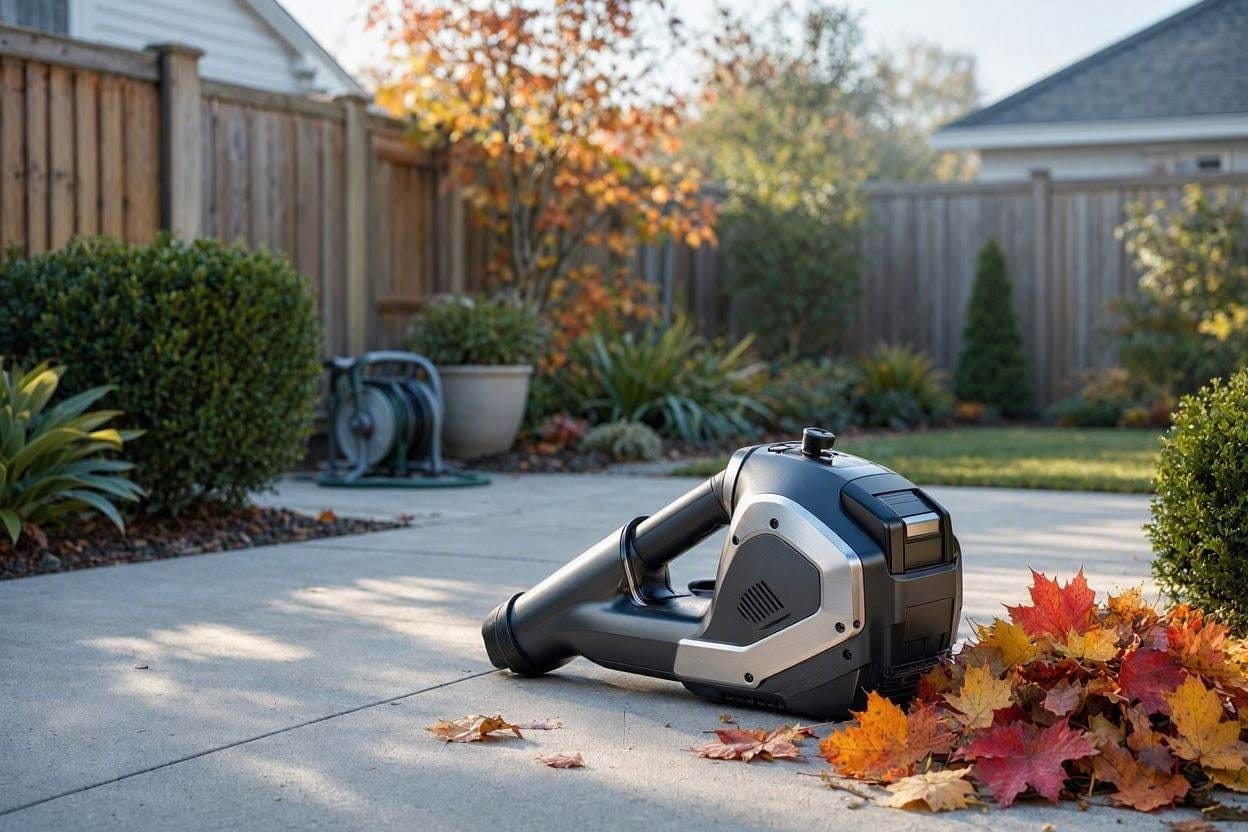
*This post contains affiliate links. If you use these links to buy something we may earn a commission at no extra cost to you.
It is 7:00 AM on a beautiful, crisp Saturday morning. You are enjoying a quiet cup of coffee in bed when suddenly, it happens. Your neighbor fires up a 2-stroke gas leaf blower. The agonizing, high-pitched mechanical screech echoes through the neighborhood, rattling your windows and ruining the peaceful morning.
We all hate that neighbor. But let’s be honest—yard work has to get done. If you have a driveway full of grass clippings or a lawn buried in autumn leaves, you cannot just use a broom. You need a blower, but you don’t want to be the person the whole neighborhood secretly despises.
For decades, homeowners believed that if a leaf blower was quiet, it was weak. That is no longer true. Thanks to massive leaps in lithium-ion battery technology and aerodynamic turbine engineering, the era of the ear-bleeding gas engine is officially over. Many cities are even passing strict noise ordinances banning gas blowers entirely.
I tested the latest yard tech to find the absolute best quiet leaf blowers that deliver hurricane-force winds without the jet-engine noise. Here is how to keep your yard pristine and your neighborhood peaceful.
The Science of the Screech: Why Gas is Dead
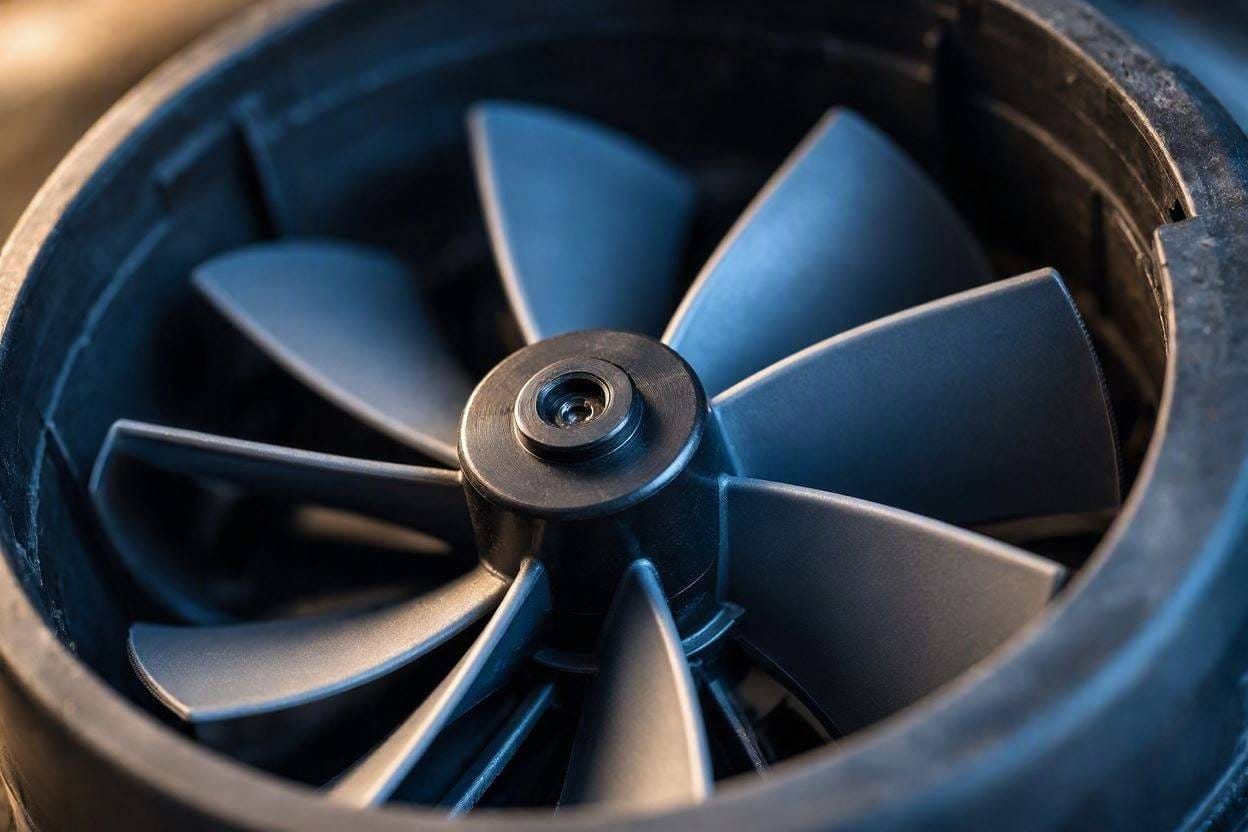
To understand why upgrading to battery power is so critical, you have to look at how sound is measured. Gas-powered leaf blowers consistently register at 90 to 105 decibels at the ear. According to the Centers for Disease Control and Prevention (CDC), exposure to anything over 85 decibels can cause permanent, irreversible hearing damage.
But the raw decibel number isn’t the only problem. It is the frequency.
A cheap 2-stroke gas engine fires erratically, creating a jagged, high-frequency mechanical whining noise. This high-frequency sound wave is highly abrasive to the human nervous system. It pierces through window glass and travels for blocks. When you pair that engine rattle with the crude plastic fan blades slapping the air, you get the ultimate noise nuisance.
The premium models on this list utilize Brushless Magnetic Motors. Because there are no physical carbon brushes rubbing together inside the motor, the mechanical grinding noise is completely eliminated. The only sound you hear is the “whoosh” of the air rushing out of the tube. It sounds more like a quiet window fan on a high setting rather than a revving motorcycle.
(Related Reading: Upgrading your whole yard? Check out our guide to the best quiet lawn mowers to complete your stealth landscaping kit).
1. EGO Power+ 56V 650 CFM (The Best Overall)
If you ask any professional landscaper about the gold standard of battery-powered yard tools, they will immediately point you to EGO. They have completely dominated the transition away from gas.
The EGO Power+ 650 CFM utilizes a brilliantly engineered aerospace-grade turbine fan. Instead of forcing air through a clunky chamber, the air moves in a direct, straight line from the intake to the nozzle. This aerodynamic efficiency drastically cuts down on wind-shear noise. When running at its standard setting, it hums at a highly respectable 65 dB.
Even when you hit the “Turbo” button to blast away wet, stuck-on leaves, the sound remains a smooth, rushing “whoosh” rather than a mechanical screech. Your neighbors won’t even realize you are doing yard work until they see you.
The Pros
- Unbelievable power that genuinely rivals commercial gas blowers.
- Aerodynamic turbine fan eliminates high-pitched whining.
- Variable speed dial lets you dial the noise down to a whisper for light sweeping.
The Cons
- The massive 5.0Ah battery makes it quite heavy to hold for extended periods.
- Premium price tag for the battery and charger kit.
Check EGO Power+ Price on Amazon
2. Greenworks Pro 80V Backpack Blower (Heavy Duty Pick)
If you have a massive yard, a long driveway, or deal with heavy, wet pine needles, a handheld unit might tire your arm out. You need the ergonomics of a backpack blower, but you don’t want the horrible noise of a gas engine strapped right next to your ears.
The Greenworks Pro 80V is an absolute beast. It moves an astonishing 730 CFM of air. However, because the heavy brushless motor and massive battery are mounted on your back with thick padded straps, it feels weightless. Better yet, the heavy plastic housing acts as an acoustic dampener. At 50 feet away, this unit registers at just 60 decibels. Your neighbor sitting on their porch will likely not even notice you are using it.
The Pros
- Backpack design takes 100% of the weight off your arms.
- Meets virtually all city noise ordinance requirements (under 65 dB).
- Incredible battery ecosystem (batteries fit other Greenworks tools).
The Cons
- Overkill and too bulky for someone with just a small patio.
- The 80V batteries are highly expensive to replace.
3. Toro Power Sweep (The Best Budget/Corded Pick)
Big lithium-ion batteries are expensive. If you live in a townhome, have a tiny driveway, or just need to blow grass clippings off your small front porch, spending $300 on a cordless blower doesn’t make sense.
The Toro Power Sweep is a classic, corded electric blower that usually costs under $50. Because it doesn’t need to carry a heavy battery or a gas tank, it weighs a ridiculous 4.6 pounds. It is incredibly easy to maneuver. The electric motor is exceptionally quiet (around 61 dB), providing a soft, steady hum that won’t disturb anyone.
The Pros
- Unbeatable price point for a highly reliable brand.
- Weighs less than 5 pounds; incredibly easy to use with one hand.
- Never runs out of battery (as long as you have an extension cord).
The Cons
- You are tethered to a wall outlet; managing a 100ft cord is annoying.
- Lacks the raw power needed to move heavy, wet, stuck-on leaves.
Buying Advice: How Leaf Blower Noise is Actually Measured
If you are trying to comply with a local noise ordinance, you need to understand how the manufacturers get their decibel numbers. You will often see numbers like “65 dB” on the box.
In the United States, leaf blower noise is measured using the ANSI B175.2 standard. This standard requires the acoustic meter to be placed exactly 50 feet away from the blower. This means the 65 dB rating is what your neighbor hears, not what you hear.
For the person holding the blower, the noise at the ear is always louder (usually around 15 to 20 decibels higher). Even with a whisper-quiet electric model, the physical rushing of air at 150+ MPH is loud. If you are doing yard work for more than 15 minutes, you should always wear some form of hearing protection to prevent auditory fatigue.
Frequently Asked Questions (FAQ)
Are Battery-Powered Leaf Blowers as Strong as Gas?
Yes. Five years ago, gas was king. Today, high-end 56V and 80V lithium-ion blowers (like the EGO and Greenworks models) produce more CFM (Cubic Feet per Minute) than standard residential gas blowers. They are fully capable of clearing wet leaves and heavy debris.
What is CFM vs. MPH?
When shopping, you will see both numbers. MPH (Miles Per Hour) measures the speed of the air coming out of the tube. High MPH is great for scraping wet leaves off pavement. CFM (Cubic Feet per Minute) measures the actual volume of air being pushed. High CFM is what actually moves massive piles of leaves across the yard. For the best performance, prioritize a high CFM number (over 500).
Can My City Actually Ban Me From Using a Gas Blower?
Absolutely. Over 100 cities across North America (including major areas in California, Washington D.C., and New York) have passed strict ordinances banning the use of 2-stroke gas leaf blowers due to noise pollution and toxic emissions. Upgrading to a quiet battery model ensures you won’t get hit with a hefty municipal fine.

Ememobong is the lead researcher and editor at Quiet Dwelling. As a professional technical writer, he specializes in breaking down complex acoustic engineering concepts into simple, actionable steps. His goal is to help people build distraction-free environments for better sleep and deep work.