*This post contains affiliate links. If you use these links to buy something we may earn a commission at no extra cost to you.
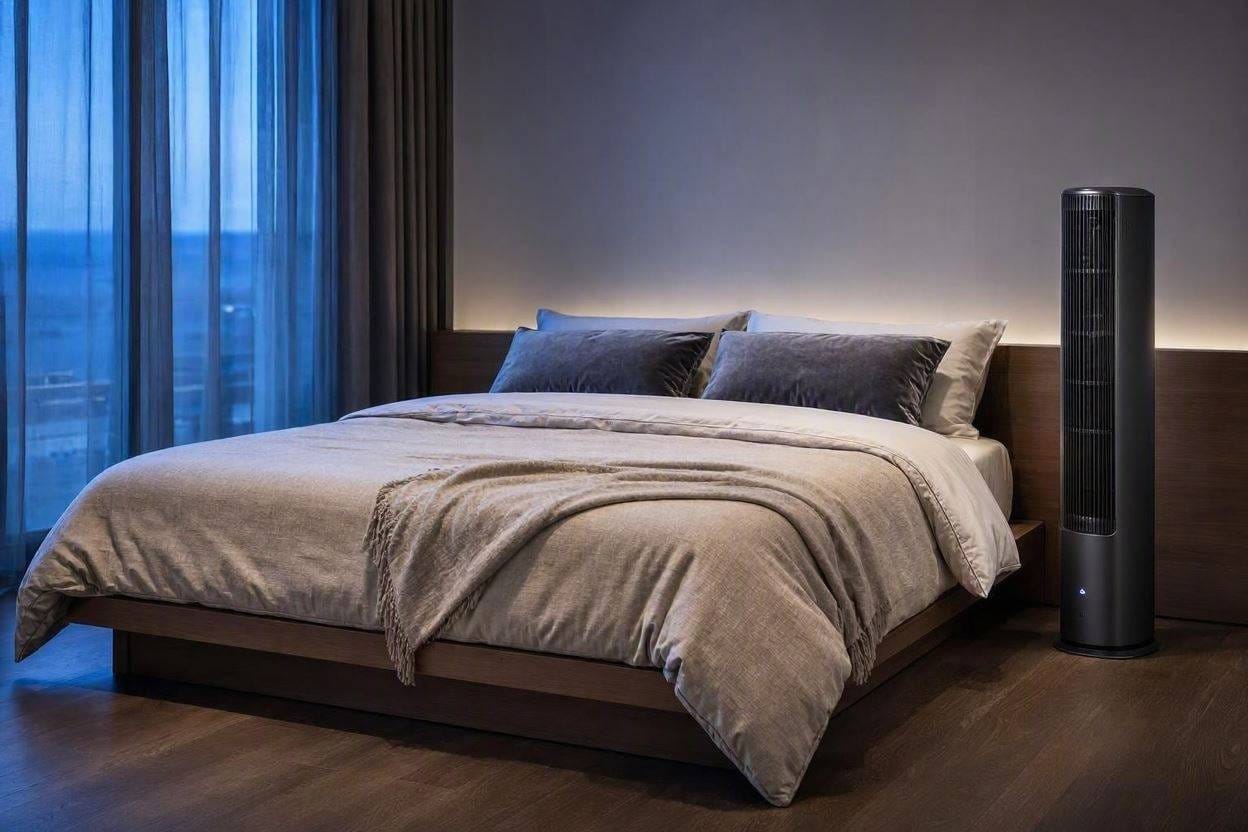
We’ve all experienced the misery of a hot summer night. You drag a cheap plastic tower fan out of the closet, plug it in, and turn it toward your bed. For the first ten minutes, the breeze feels amazing. But as you try to drift off to sleep, you start to hear it.
Click… click… click…
Every time the fan oscillates to the left, the cheap plastic housing groans. The motor emits a high-pitched, electric whine. By 3:00 AM, that repetitive, irregular ticking sound has completely triggered your nervous system, leaving you wide awake, sweating, and staring angrily at the ceiling.
I am an incredibly light sleeper, and I went through four different fans before I finally understood the acoustic physics of what makes a fan loud. It isn’t the air; it’s the mechanical friction. If you want to sleep peacefully, you need a fan engineered to eliminate internal vibration.
I have tested the market to find the absolute best quiet tower fans that deliver a massive, cooling breeze without the agonizing mechanical soundtrack.
The Science: Why Do Cheap Tower Fans Rattle?
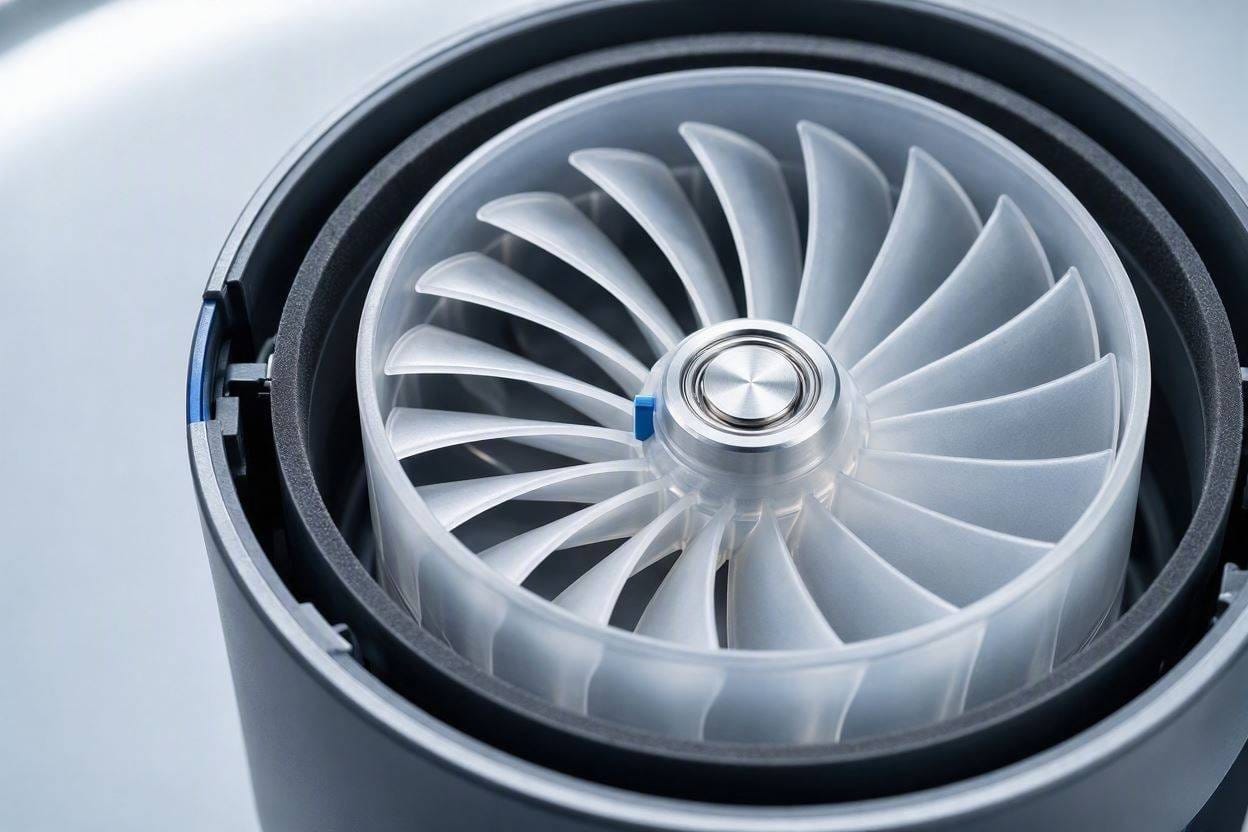
To understand why you need to upgrade, we have to look inside the machine. A standard pedestal fan uses a large, flat propeller blade. A tower fan, however, uses a cylindrical impeller wheel (it looks like a long, spinning hamster wheel with dozens of tiny vertical blades).
Because the impeller is tall and thin, it requires perfect factory balancing. Cheap tower fans use low-grade plastic impellers. When the motor spins at high RPMs, the imbalanced plastic flexes and scrapes against the inside of the casing. Furthermore, cheap fans use plastic oscillation gears to sweep left and right. Over a few months, those plastic gears strip and bind, causing that maddening “click… click… click” every time the fan turns.
The premium models on this list avoid this entirely by using brushless DC motors, reinforced impellers, and isolated oscillation tracks. They prioritize what acousticians call “Air Noise” over “Mechanical Noise.”
- Air Noise (Good): The smooth, steady “whoosh” of air leaving the grille. This acts as soothing pink noise, which actually helps mask disruptive street sounds and deepen your sleep.
- Mechanical Noise (Bad): The rattling, ticking, and electrical whining of a cheap motor struggling to spin.
1. Dreo Cruiser Pro T1 (The Best Overall for Sleep)
If you have never heard of Dreo, you are missing out on the biggest disruptor in the cooling market. They have specifically engineered their fans to conquer the acoustic problems of older brands.
The Cruiser Pro T1 is an absolute masterpiece of sleep engineering. It utilizes a highly tuned aerodynamic impeller design that drastically reduces wind shear. On its lowest sleep setting, the fan registers at an incredible 34 decibels (dB). If you check our decibel level guide, you know that 34 dB is quieter than a hushed library. It is practically invisible to the human ear.
Most importantly, the oscillation track is silky smooth. You can let this fan sweep a 90-degree arc all night long, and you will never hear a single mechanical click or groan from the base.
The Pros
- Operates at a whisper-quiet 34 dB on sleep mode.
- Absolutely zero mechanical clicking during oscillation.
- LED display automatically turns off after 60 seconds (no bright lights).
The Cons
- The remote control is very small and easy to lose in the sheets.
- Lacks smart-home (Alexa/Google) integration on this specific base model.
Check Dreo Cruiser Price on Amazon
2. Dyson Purifier Cool (The Premium 2-in-1 Pick)
If you have an unlimited budget and suffer from severe seasonal allergies or asthma, the Dyson Purifier Cool is the ultimate luxury bedroom appliance.
Dyson completely reinvented the fan with their “Air Multiplier” technology. Because there are no visible spinning blades, the air is drawn into the base, passed through a massive HEPA filter, and projected smoothly out of the loop amplifier. This creates a continuous, uninterrupted stream of air. Without blades chopping the air, you completely eliminate wind shear buffering noise.
While the fan can get loud on its absolute maximum setting (level 10), keeping it on levels 1 through 4 provides a gorgeous, silent breeze while simultaneously scrubbing 99.97% of allergens and dust out of your bedroom air.
The Pros
- Bladeless design creates an incredibly smooth, buffeting-free breeze.
- Acts as a world-class air purifier while you sleep.
- Phenomenal smartphone app for tracking air quality and scheduling sleep timers.
The Cons
- Extremely expensive premium price tag.
- You will have to buy replacement HEPA filters every year.
3. Lasko Wind Curve (The Best Budget White Noise)
If you don’t have $100 to spend on a fan, but you still desperately need a reliable breeze, the Lasko Wind Curve is the undisputed king of the budget category.
Lasko has been making this specific model for years because the internal motor is a proven workhorse. Now, to be completely transparent: this fan is not as quiet as the Dreo. But it makes our list because the noise it does produce is incredibly pleasant. The Lasko produces a deep, soothing, low-frequency hum.
According to the Sleep Foundation, introducing a steady ambient sound (like pink or white noise) masks sudden environmental noises like traffic or slamming doors. The Lasko acts as a brilliant two-in-one cooling machine and white noise generator for people who need a little bit of sound to fall asleep.
The Pros
- Produces a fantastic, soothing “pink noise” hum perfect for blocking street noise.
- Highly affordable budget price point.
- Features a dedicated “Nighttime” setting that automatically dims the display.
The Cons
- It is noticeably louder than the Dreo on its lowest setting.
- The wood-grain accent aesthetic looks slightly dated.
Who This is NOT For (The Room Size Warning)
I want to be completely honest about the limitations of tower fans. If your bedroom is massively large, has vaulted ceilings, or features massive south-facing windows that bake in the afternoon sun, a tower fan is not going to drop the temperature of the room. Fans do not cool air; they simply move it across your skin to evaporate sweat.
If you are trying to combat severe, overwhelming heat in a large master bedroom, you will be forced to run a tower fan on “Max” speed, which will inevitably be loud. If you need serious cooling power without the noise, you need to step up to one of the best quiet portable air conditioners featuring an inverter compressor.
Long-Term Maintenance: How to Keep Your Fan Silent
Even the pristine Dreo Cruiser will eventually start to rattle if you neglect it. If your fan starts ticking a year from now, don’t throw it away. Do this 10-minute maintenance check:
- The Dust Imbalance: This is the #1 cause of fan noise. Over months of use, heavy dust and pet hair will cake onto the tiny blades of the impeller wheel. Because dust doesn’t build up evenly, the heavy clumps throw the spinning wheel off-balance, causing it to vibrate and tick against the casing. Use a vacuum brush attachment on the back grille once a month.
- The Floor Decoupling Trick: If your fan is sitting on a hardwood or laminate floor, the microscopic vibrations from the motor will transfer into the floorboards, creating a low, booming hum in the room below you. Place a thick, dense rubber mat (like a heavy mousepad or acoustic pad) underneath the base of the fan to break the structural vibration.
Frequently Asked Questions (FAQ)
Does Oscillation Make a Tower Fan Louder?
In cheap fans, yes. The oscillation mechanism is driven by a separate, tiny motor and plastic gears. As those gears wear down, they create a clicking or groaning sound at the apex of the turn. Premium fans (like the Dreo) use isolated tracks and stepper motors to ensure the sweeping motion remains completely silent.
Is a Tower Fan Quieter than a Pedestal Fan?
Generally, yes. Pedestal fans use large, flat blades that “chop” the air, which creates a significant amount of wind-shear buffeting noise. Tower fans use cylindrical impellers that scoop and push the air more smoothly, resulting in a steadier, less turbulent “whoosh” sound.
Why Does My Tower Fan Whistle?
A high-pitched whistle is almost always caused by an air restriction. If the intake grille on the back of the fan is blocked by dust, a curtain, or pushed too close to a wall, the motor has to suck the air harder through a smaller gap, creating a whistling wind tunnel effect. Always leave at least a foot of clearance behind the fan.

Ememobong is the lead researcher and editor at Quiet Dwelling. As a professional technical writer, he specializes in breaking down complex acoustic engineering concepts into simple, actionable steps. His goal is to help people build distraction-free environments for better sleep and deep work.