*This post contains affiliate links. If you use these links to buy something we may earn a commission at no extra cost to you.
There are few things more maddening than lying awake in the pitch black, staring at the ceiling, while the person next to you saws logs. Every time they take a breath, you brace yourself for the next snort. It elevates your heart rate, spikes your stress hormones, and breeds a deep, irrational resentment toward someone you love.
According to the Sleep Foundation, severe snoring can reach up to 90 decibels. To put that into perspective, that is the exact same volume as a gas-powered lawnmower running right next to your pillow.
Out of desperation, most of us grab a cheap jar of neon-orange foam earplugs from the pharmacy. And what happens? You roll over onto your side, the hard foam jams painfully deep into your ear canal, and by 3:00 AM, they have fallen out into the sheets anyway.
If you want to save your sleep (and potentially your marriage, avoiding the dreaded “sleep divorce”), you cannot use construction-grade foam. You need earplugs engineered specifically for the pressures of side-sleeping and the low-frequency rumble of a human snore. I have tested the absolute best sleep acoustics on the market. Here are the best earplugs for snoring that will finally give you a peaceful night.
The Science: Why Snoring Defeats Foam Earplugs
To block a sound effectively, you must understand its physical shape. Snoring is heavily weighted in the low-frequency sound spectrum. As we detailed in our guide on blocking low-frequency noise, deep bass waves carry immense kinetic energy. They easily pass through lightweight, porous materials.
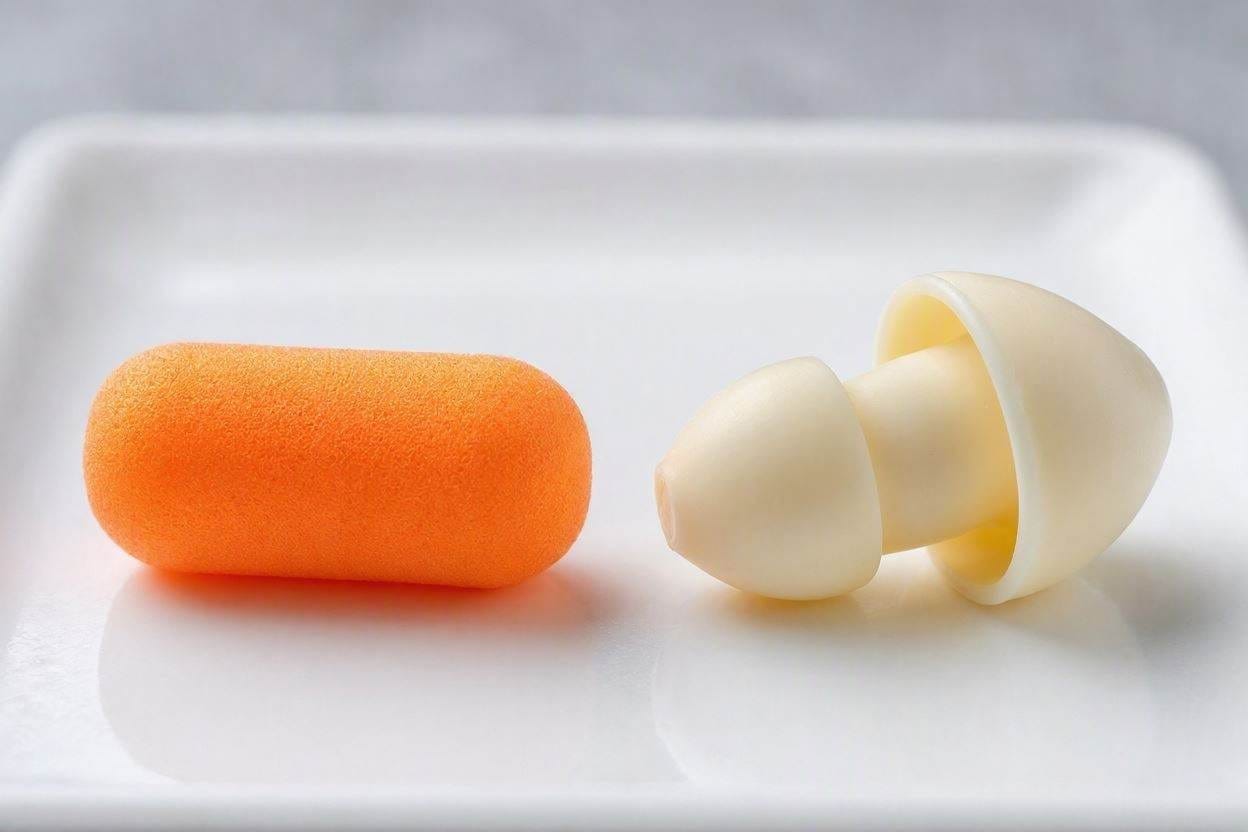
Standard yellow foam earplugs are highly porous (they are mostly air). While they do a fantastic job blocking high-frequency noises (like birds chirping or a siren), the deep, guttural vibration of a snore passes straight through the foam.
Furthermore, foam earplugs work by expanding inside the ear canal. If you sleep on your side, the weight of your head on the pillow pushes the expanding foam deeper into the sensitive cartilage of your ear. After three hours, this causes severe, throbbing pain, which wakes you up anyway.
To block a snorer comfortably, you need an earplug that relies on dense silicone to form an airtight seal outside the deep canal, sitting completely flush with the outer bowl of your ear (the concha).
1. Loop Quiet 2 (The Best Overall for Side Sleepers)
If you have read our comparison of the Loop Experience vs. Flare Calmer, you know how brilliant Loop’s acoustic engineering is. But for sleeping, you do not want the metallic “Experience” model. You want the Loop Quiet 2.
The entire body of the Loop Quiet—including the signature ring—is made of incredibly soft, flexible, medical-grade silicone. When you push them in, the ring sits perfectly flush inside the bowl of your ear. You can press your ear directly into a firm memory foam pillow, and you will not feel any hard plastic digging into your cartilage.
They offer 24 decibels of noise reduction. While 24 dB might not completely erase the sound of a roaring motorcycle, it reduces a loud snore to a highly manageable, soft breathing sound that easily fades into the background.
The Pros
- 100% soft silicone body provides zero pressure points for side sleepers.
- Includes 4 different tip sizes to guarantee an airtight, custom seal.
- Reusable, washable, and highly durable for nightly use.
The Cons
- Can create a slight “heartbeat” occlusion sound if pushed in too deep.
- They are very small; if they fall out in the sheets, they are hard to find.
Check Loop Quiet Price on Amazon
2. Mack’s Pillow Soft Silicone Putty (The Best Custom Seal)
Some people have incredibly narrow, oddly shaped, or highly sensitive ear canals. If the idea of sticking anything into your ear canal makes you cringe, you need moldable silicone putty.
Mack’s Pillow Soft earplugs are legendary in the sleep community. Instead of inserting them into the canal, you roll the sticky silicone into a ball and press it flat over the opening of your ear. It molds perfectly to the unique shape of your outer ear, creating an impenetrable, airtight seal over the hole.
Because they do not enter the canal at all, they cannot cause inner-ear pain. The heavy, dense silicone putty is astonishingly effective at deadening the low-frequency rumble of a snoring partner.
The Pros
- Never enters the ear canal; 100% painless for side sleepers.
- Creates a flawless airtight seal, regardless of your ear shape.
- Incredibly affordable (sold in bulk packs).
The Cons
- The putty gets dirty quickly; you must throw them away after 5-7 uses.
- If you have long hair, stray hairs can occasionally stick to the putty.
3. Soundcore Sleep A20 (The Ultimate Electronic Fix)
If your partner’s snoring routinely hits that extreme 80 to 90-decibel range, passive earplugs might not be enough. You need acoustic masking.
As we covered in our review of the best sleep headphones, standard earbuds are too bulky for bed. The Soundcore Sleep A20s are microscopic electronic earbuds engineered to sit perfectly flush in your ear. They form a passive physical seal to block the noise, and then they play a continuous stream of pink noise or rain sounds directly into your ear canal.
This localized sound masking raises your auditory baseline, making the sharp spikes of your partner’s snoring invisible to your brain. It is the absolute nuclear option for saving your sleep.
The Pros
- Combines physical blocking with active white-noise masking.
- Flush, ultra-tiny design does not press into the pillow.
- Built-in personal alarm wakes you up without waking your partner.
The Cons
- Highly expensive compared to non-electronic silicone plugs.
- You must remember to charge them every morning.
The “No-Earplug” Alternative: Room Masking
If you have tried every earplug on the market and your ears simply cannot tolerate having objects inside them overnight, you still have options. You must shift from treating your ear to treating the room.
Running a high-quality physical white noise machine on the nightstand between you and your partner creates an acoustic shield. If you don’t want a dedicated noise machine, buying one of the best quiet air purifiers and running it on a medium setting provides an incredibly soothing, low-frequency “pink noise” hum. This ambient noise narrows the dynamic range of the room, masking the snoring while simultaneously removing dust and allergens from the air—which might actually help reduce your partner’s snoring in the first place!
Frequently Asked Questions (FAQ)
Will I still hear my morning alarm if I wear these?
Yes. Earplugs lower the overall volume of the world, but they do not make you completely deaf. An alarm clock, a baby crying, or a smoke detector are designed to emit high-frequency, piercing sounds that will penetrate the 24 dB reduction of an earplug. You will hear your alarm; it will just sound slightly muffled.
Is it safe to wear earplugs every single night?
Generally, yes, but hygiene is critical. Your ears naturally produce wax to clean themselves. Inserting earplugs nightly can compress that wax deep into the canal. If you use reusable plugs like the Loop Quiet, you must wash them with warm soap and water regularly to prevent bacterial ear infections. If you use moldable putty, discard them the moment they look dirty.
Why does my own heartbeat sound so loud when I wear earplugs?
This is called the occlusion effect. When you plug your ear canal, the low-frequency vibrations generated by your own body (breathing, chewing, blood pumping) cannot escape out of the ear opening. Instead, they bounce back against your eardrum, making them sound amplified. To minimize this, use a shallower-fitting plug like the Mack’s moldable putty, which doesn’t seal deep inside the canal.

Ememobong is the lead researcher and editor at Quiet Dwelling. As a professional technical writer, he specializes in breaking down complex acoustic engineering concepts into simple, actionable steps. His goal is to help people build distraction-free environments for better sleep and deep work.