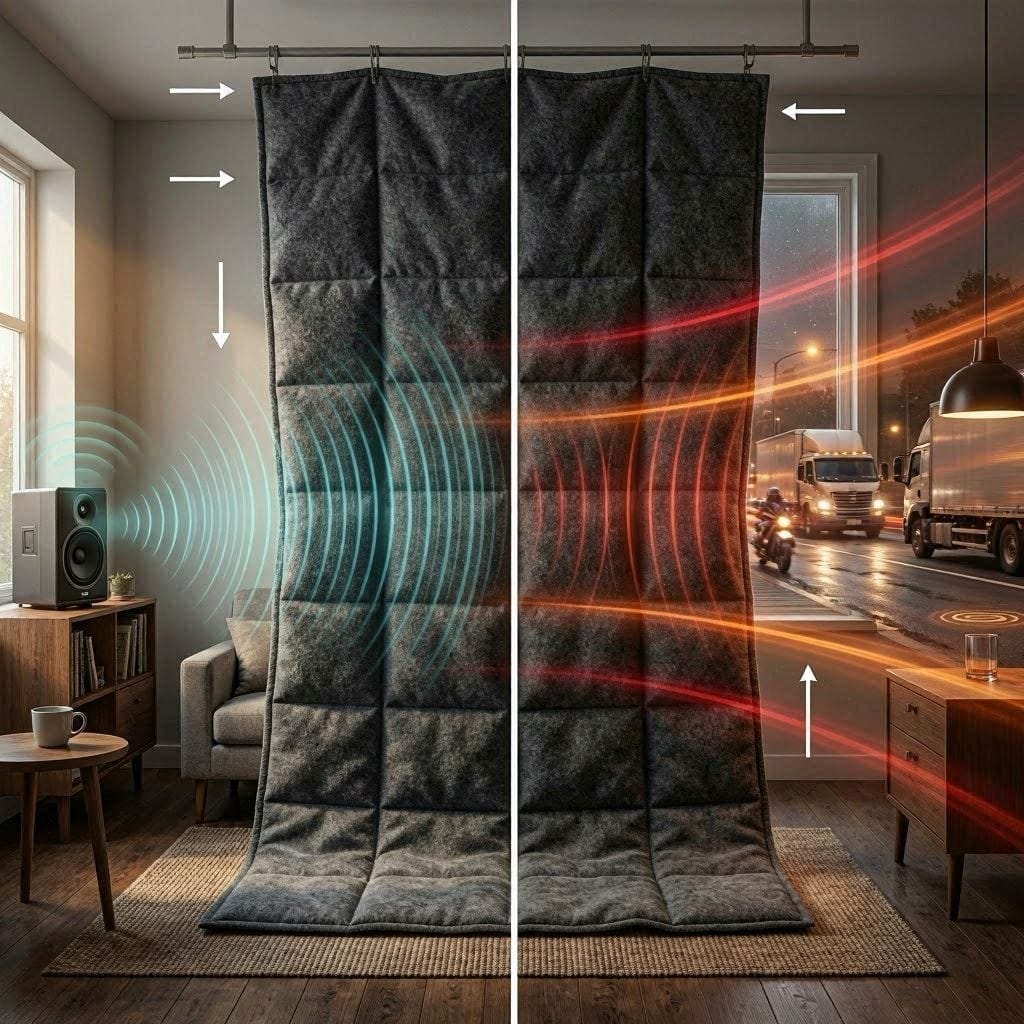
If you are dealing with loud neighbors or street noise and want a cheap fix, you are likely asking: do soundproof blankets work? It is a highly popular DIY acoustic hack. Search any forum, and you will find people recommending heavy-duty moving blankets tacked over doors and windows to create a quiet dwelling.
The logic seems sound. Blankets are thick, heavy, and cheap. If you throw a heavy blanket over your head, the world sounds muffled. Therefore, hanging one over your bedroom window should block out the morning traffic, right?
To find the truth, we have to look at the physical laws of architectural acoustics. The answer depends entirely on what kind of noise you are trying to stop.
In this guide, we will break down the exact physics of heavy acoustic fabrics, explain the difference between absorbing echoes and blocking transmission, and show you exactly when and how to use them.
The Short Answer: Do Soundproof Blankets Work?
To fully answer the question of do soundproof blankets work, we must split the answer into two distinct categories based on the laws of physics:
- For stopping echoes inside your room: YES. Heavy blankets are fantastic acoustic absorbers. They will stop your voice from echoing off hard walls, making your room sound much warmer and cozier.
- For blocking outside noise from coming in: NO. Standard moving blankets lack the structural density required to physically block heavy kinetic sound waves. A loud dog bark or a heavy truck will pass right through the fabric.
This massive difference comes down to the two main pillars of acoustics. To ensure you don’t waste your money on the wrong materials, you must read our master guide on Soundproofing vs. Sound Absorption.
The Physics: Do Soundproof Blankets Work Against Traffic?
The reason many people who ask do soundproof blankets work end up disappointed is because they are trying to stop airborne transmission with a porous material.
Sound is a physical wave of kinetic energy. When a heavy sound wave (like a deep car engine or a subwoofer) travels through the air, it carries immense power. To stop a physical wave of energy, you must obey the Law of Mass. According to foundational principles established by the Acoustical Society of America, it requires heavy, dense, airtight structural mass to stop acoustic energy.
Standard heavy-duty moving blankets (even those weighing 7 to 8 pounds each) are made of woven cotton, polyester, and recycled fibers. They are highly porous.
When a heavy, low-frequency sound wave hits a blanket, the kinetic energy simply pushes straight through the tiny microscopic air holes between the woven fibers. The blanket does virtually nothing to slow down the physical force of the wave. You can learn exactly how much heavy mass is required to stop these waves by reading our complete guide to understanding STC (Sound Transmission Class) ratings.
What Are Acoustic Blankets Actually Good For?
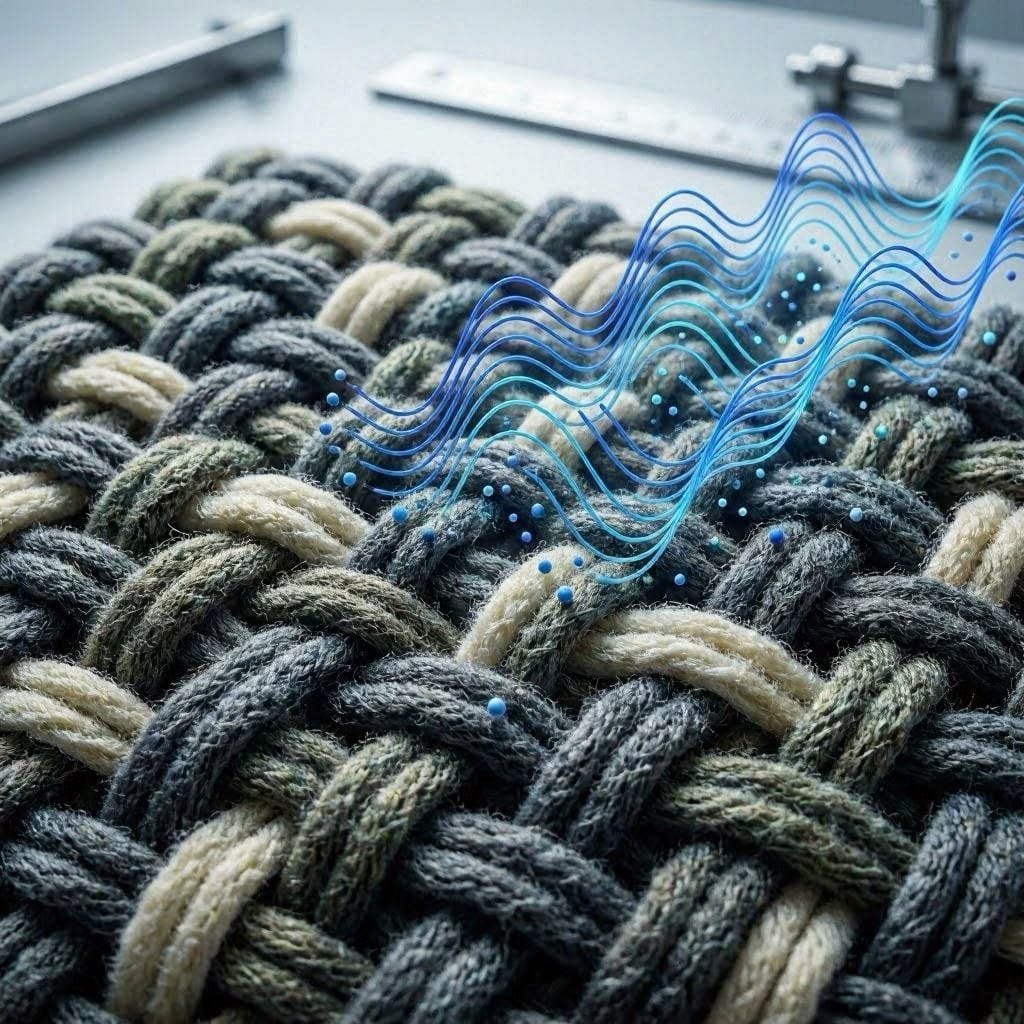
If they don’t block your neighbor’s television, why do so many audio professionals use them?
Heavy blankets have a very high NRC (Noise Reduction Coefficient). This means they are elite at absorbing internal sound reflections.
When you speak in an empty room with bare drywall and hardwood floors, your voice bounces off the hard surfaces, creating a chaotic, ringing echo. When you hang heavy blankets on the walls, those sound waves are forced into the microscopic maze of fabric fibers. The friction of the air rubbing against the fabric converts the acoustic energy into trace amounts of heat, killing the echo instantly.
Best Use Cases for Blankets:
- Building a cheap, DIY vocal booth for podcasting or singing.
- Dampening the harsh echoes in an empty home office for better Zoom calls.
- Hanging over a solid-core door to absorb high-frequency hallway chatter.
The Exception: Mass-Loaded Vinyl Blankets
There is one specific scenario where a blanket actually will block sound.
True industrial “soundproofing blankets” (often called acoustic quilts or sound barrier sweeps) are not just thick fabric. They are manufactured with a heavy, limp-rubber core made of Mass Loaded Vinyl (MLV) sewn directly into the middle of the fabric layers.
This MLV core acts as a heavy acoustic dead-weight, providing the dense mass required to actually stop sound waves from passing through. However, these specialized MLV blankets are incredibly heavy (often weighing 15+ pounds) and are significantly more expensive than a cheap moving blanket. You can read exactly how this core material works in our guide: What is Mass Loaded Vinyl?
If Blankets Fail, What Actually Blocks Sound?
If you are suffering from the sleep-disrupting health effects of noise pollution, you cannot rely on cotton and polyester. You must introduce real structural changes to your doors and windows.
If you are trying to block noise on a budget, try these proven methods instead:
Seal the Air Gaps
Sound behaves exactly like fluid. If air can get through the cracks around your bedroom door or window frame, sound can get through perfectly intact. Installing a heavy-duty silicone door sweep and sealing your window frames with acoustic caulk will block more airborne noise than hanging five blankets combined.
Acoustic Window Inserts
If traffic noise is coming through your glass, blankets won’t help. You need a dense barrier. Press-fitting a custom acrylic acoustic window insert into your existing window frame creates a massive, dead-air gap that drastically cuts down on low-frequency traffic rumble. Read more about blocking traffic in our guide to STC vs. OITC ratings.
Upgrade to Solid Core Doors
Most interior bedroom doors are hollow wood. They act like empty drum chambers, amplifying sound. Swapping your hollow bedroom door for a heavy, dense, solid-core wooden door adds massive structural density and instantly blocks hallway noise.
So, the next time a friend asks you do soundproof blankets work, you can tell them the scientific truth: they are perfect for killing a harsh echo, but they are powerless against a barking dog. Use the right acoustic tool for the right job, and reclaim your quiet dwelling.

Ememobong is the lead researcher and editor at Quiet Dwelling. As a professional technical writer, he specializes in breaking down complex acoustic engineering concepts into simple, actionable steps. His goal is to help people build distraction-free environments for better sleep and deep work.