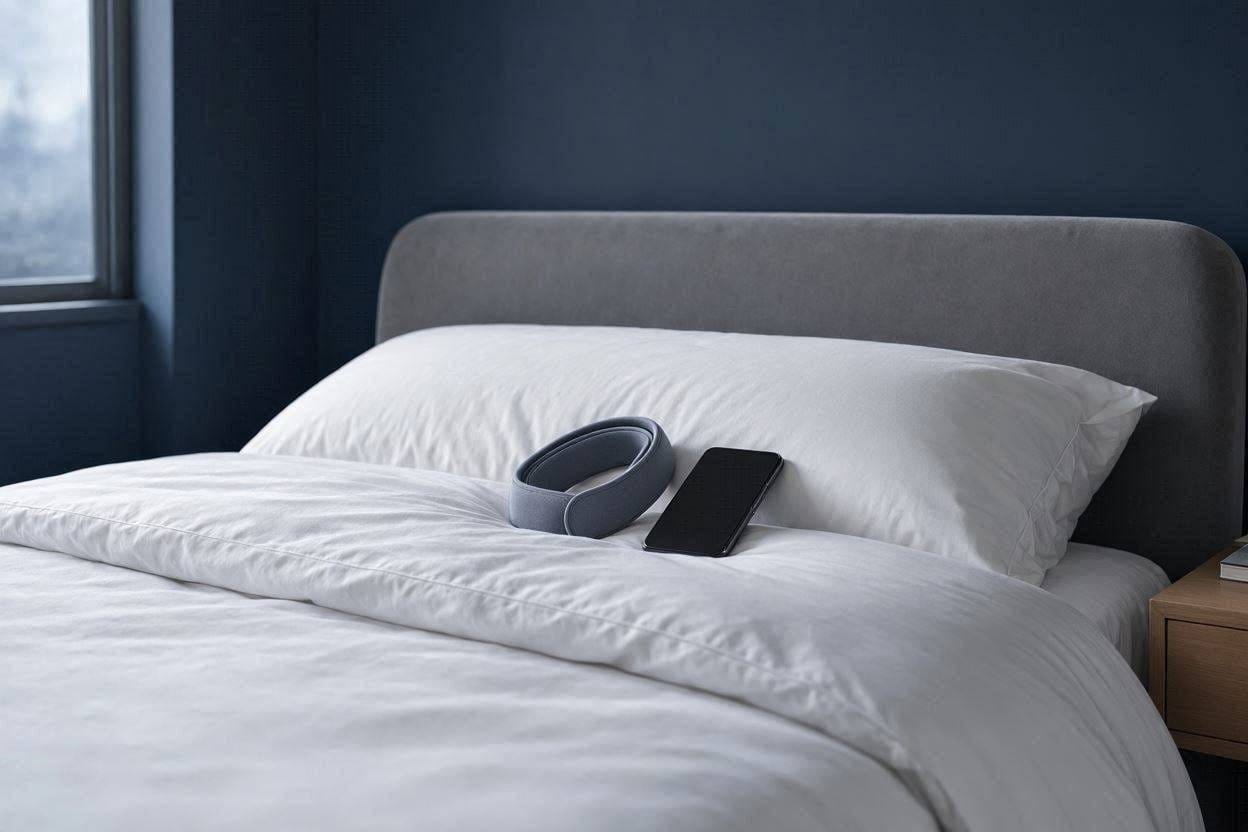
This post contains affiliate links. If you use these links to buy something, we may earn a commission.
If you are a side sleeper, you already know the struggle. You try to fall asleep listening to a podcast or white noise using your regular wireless earbuds. Everything is fine while you are on your back, but the second you roll over onto your side, the hard plastic of the earbud aggressively jams into your ear canal. You wake up with bruised cartilage and a dead battery.
Standard headphones and earbuds simply aren’t designed for the 8-hour pressure of a human head resting on a firm pillow. Over-ear headphones are far too bulky, and everyday earbuds are too thick. However, according to clinical sleep studies on acoustic masking, if you are trying to block out external disturbances, pairing your setup with the right audio background frequencies can completely transform your nightly routine.
To fix this physical discomfort, audio companies have completely re-engineered how we listen to audio in bed. From ultra-thin speakers sewn into comfortable fleece headbands to micro-earbuds that sit completely flush inside your ear, you no longer have to choose between your favorite sleep sounds and physical well-being. Much like learning how many decibels is safe for sleep, keeping sound at a comfortable volume overnight protects your long-term auditory health. Here are the best headphones for sleeping that actually work for side sleepers.
⏱️ The Quick Verdict
- The Overall Best for Comfort: AcousticSheep SleepPhones. A soft headband with ultra-thin, flat speakers inside. You won’t even feel them when your head hits the pillow.
- The Best In-Ear Option: Soundcore Sleep A20. Tiny, flush-fitting earbuds designed specifically to block out a snoring partner without causing ear fatigue.
- The Best Budget/Blackout Combo: MUSICOZY Sleep Mask. Combines a blackout eye mask with flat Bluetooth speakers for under $30.
1. The Overall Most Comfortable: AcousticSheep SleepPhones Wireless
If you absolutely cannot stand the feeling of something shoved inside your ear canal while you sleep, the AcousticSheep SleepPhones are the gold standard. Often called “pajamas for your ears,” this is essentially a soft, stretchy headband that contains two incredibly thin, flat padded speakers.
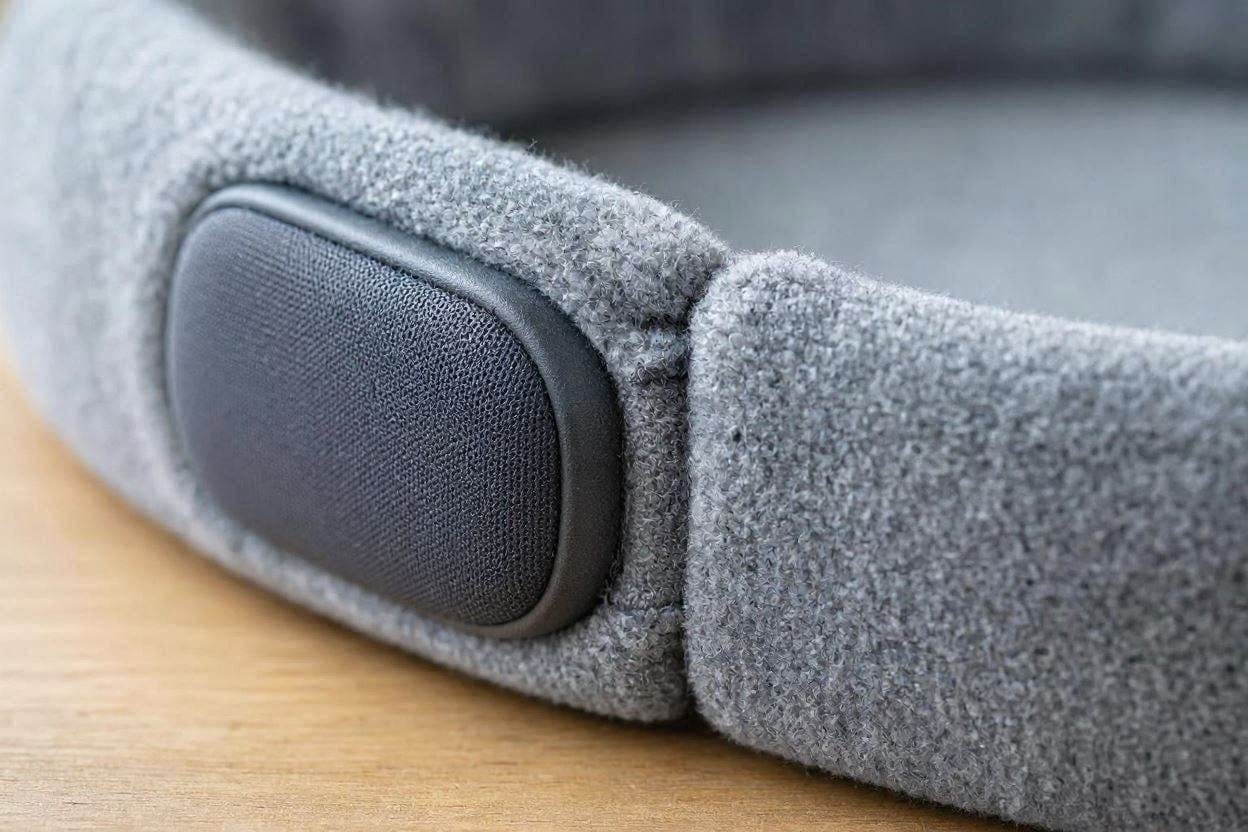
Because the speakers are flat and wrapped in fabric, you can lay your head entirely on your side on a firm pillow and feel zero pressure. They connect via Bluetooth, meaning no cords to strangle you in the middle of the night, and the battery easily lasts through a full 10-12 hours of sleep. If you prefer hardware-free solutions when traveling, check out our guide on the best travel white noise machines for alternative options.
Pros
- Absolute zero pressure on the ear for side sleepers.
- Comes in “Fleece” for cold rooms or “Breeze” for hot sleepers.
- Excellent battery life (up to 12 hours).
Cons
- Can shift around if you toss and turn a lot.
- Removing the electronics to wash the band is annoying.
AcousticSheep SleepPhones Wireless
The original “pajamas for your ears.” Features ultra-thin, flat Bluetooth speakers built into a soft, washable headband. The ultimate solution for side sleepers who experience ear pain from traditional earbuds.
2. The Best In-Ear Option: Soundcore Sleep A20 Earbuds
Some people don’t like wearing headbands, or they need serious passive noise cancellation because they sleep next to a partner who snores like a freight train. If that’s you, you need the Soundcore Sleep A20s.
Standard earbuds stick out of your ear. The Sleep A20s are uniquely engineered to sit completely flush within the concha of your ear. When you lay on your side, your pillow presses against your outer ear, not the hard plastic of the earbud. They are incredibly comfortable, even for 8 straight hours. Furthermore, they feature built-in sleep tracking and an alarm that only wakes you up, not your partner.
Pros
- Sits completely flush; no pillow pressure on the ear.
- Excellent at blocking out snoring and street noise.
- Personalized in-ear alarm won’t wake your partner.
Cons
- Very easy to lose in the blankets.
- Streaming Bluetooth audio drains the battery faster.
Soundcore Sleep A20 Earbuds
Ultra-compact sleep earbuds designed to sit completely flush in your ear. Features advanced passive noise blocking for snoring partners and a personal alarm system.
3. The Best Budget Option: MUSICOZY Sleep Headphones Mask
If you work night shifts, or your bedroom gets a lot of morning street light, the MUSICOZY is the ultimate two-birds-one-stone solution. For a fraction of the price of premium brands, you get a highly effective 3D blackout eye mask with flat Bluetooth speakers built right into the sides.
The 3D design of the mask means the fabric doesn’t press against your eyelids (allowing for crucial REM sleep eye movement without irritation), and the speakers are adjustable so you can slide them perfectly over your ears. It is surprisingly effective for under $30. For broader environmental sound dampening around your sleeping quarters, you may also want to explore our breakdown of soundproof curtains for blocking street noise.
Pros
- Unbeatable price point.
- 100% blackout capability is perfect for shift workers.
- 3D eye cups protect eyelashes and allow for REM sleep.
Cons
- Speakers are slightly thicker than premium alternatives.
- Can get a bit warm during summer months.
MUSICOZY Sleep Headphones Mask
A 2-in-1 solution featuring a 3D breathable blackout eye mask combined with adjustable built-in Bluetooth speakers. Perfect for night shift workers and frequent travelers.
Final Thoughts
A good night’s sleep is priceless, and if you require a podcast, an audiobook, or pink noise to drift off, you shouldn’t have to suffer through ear pain to get it. For pure side-sleeping comfort, we highly recommend the AcousticSheep SleepPhones. If blocking out a snoring partner is your main goal, go with the Soundcore Sleep A20s.

Ememobong is the lead researcher and editor at Quiet Dwelling. As a professional technical writer, he specializes in breaking down complex acoustic engineering concepts into simple, actionable steps. His goal is to help people build distraction-free environments for better sleep and deep work.