
This post contains affiliate links. If you use these links to buy something, we may earn a commission.
We have all experienced it. You finally board your flight, find your seat, and settle in. Then, the pilot throttles up the engines. For the next six hours, you are trapped inside a metal tube vibrating with 85 decibels of relentless, low-frequency roaring.
When you finally step off the plane, you feel physically exhausted, irritable, and drained. Most people blame this feeling on jet lag or recycled cabin air. But in reality, what you are experiencing is acoustic travel fatigue.
As we covered in our guide on the health effects of noise pollution, your brain treats constant, loud noise as a physical threat. Spending hours fighting against 85 decibels of engine drone spikes your cortisol levels and drains your cognitive energy. You aren’t just tired from traveling; your brain is tired of listening.
To survive modern air travel, standard earbuds won’t cut it. You need elite Active Noise Cancellation (ANC). I have spent years testing audio gear on long-haul flights, and I am going to show you exactly which headphones will permanently silence the jet engine and let you step off the plane feeling human.
🎯 The Quick Verdict
The Overall Best: Sony WH-1000XM5. The absolute king of battery life and adaptive noise cancellation. It adjusts the sound-blocking power based on changes in cabin pressure.
The Comfort King: Bose QuietComfort Ultra. If you wear glasses or have a sensitive head, Bose has the softest clamping force on the market with peerless low-frequency engine blocking.
The Best Budget Pick: Soundcore Space Q45. You don’t have to spend $400 for peace and quiet. These deliver incredible ANC and a massive 50-hour battery life for a fraction of the cost.
The Science: Why Flights Are Exhausting (And How ANC Fixes It)
If you put on heavy construction earmuffs on a plane, things will sound slightly muffled, but you will still hear the engine rumbling in your chest. That is because low-frequency bass waves are incredibly long and pass straight through passive, physical barriers.
To stop a jet engine, you have to fight fire with fire. This is what Active Noise Cancellation (ANC) does.
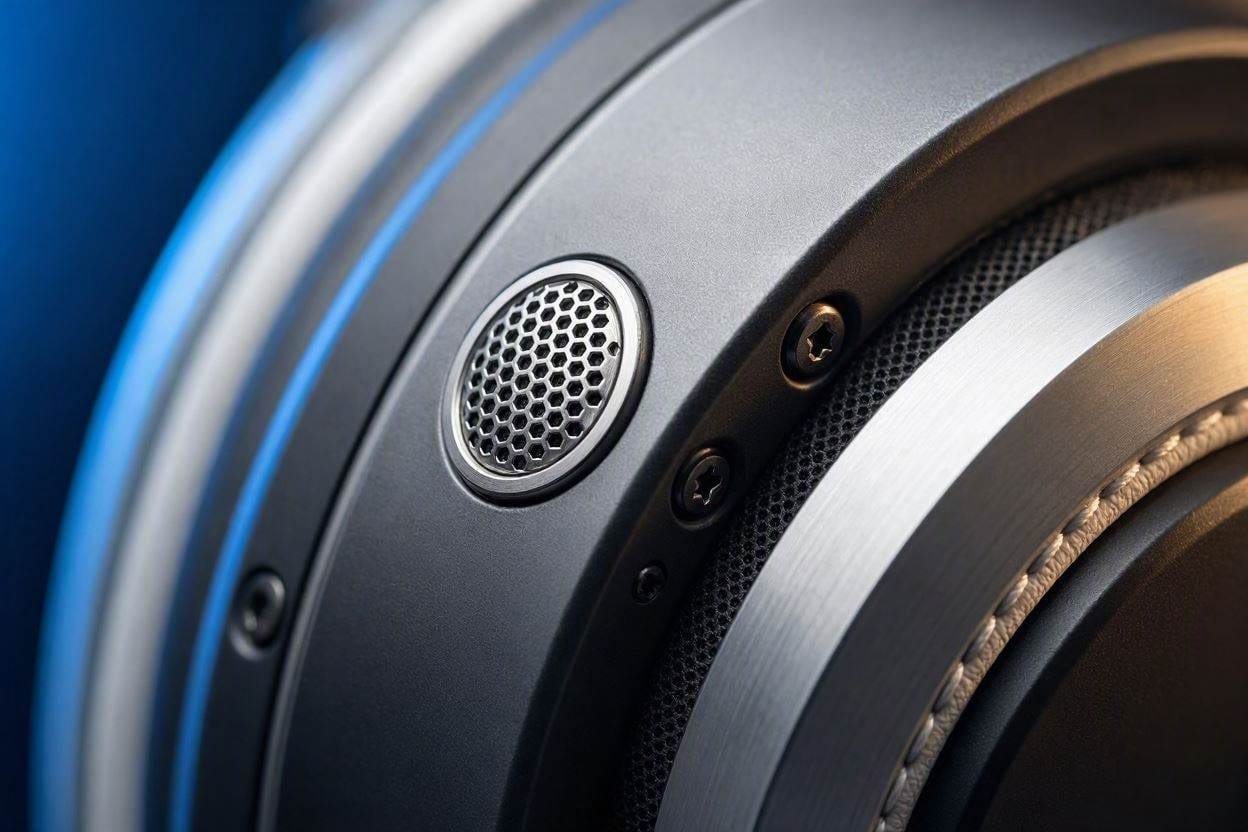
As detailed in our breakdown of how active noise cancellation actually works, ANC headphones use tiny external microphones to “listen” to the roar of the airplane cabin. An internal computer chip instantly calculates the exact opposite sound wave (the anti-phase) and plays it into your ears alongside your music.
When the airplane’s sound wave and the headphone’s anti-wave collide in your ear canal, they physically destroy each other. The engine drone literally vanishes into thin air. Because jet engines produce a constant, predictable drone, an airplane cabin is actually the perfect environment for ANC technology to flex its muscles.
1. Sony WH-1000XM5 (Best Overall for Long Hauls)
If you are flying from New York to Tokyo, this is the headphone you want in your carry-on. Sony completely redesigned their flagship headphones for the XM5 generation, outfitting them with eight individual microphones and two dedicated ANC processors.
What makes the XM5 the ultimate flight companion is its “Auto NC Optimizer.” When a plane takes off and reaches 30,000 feet, the cabin pressure changes. The Sony headphones actually detect these atmospheric pressure changes and automatically optimize the noise cancellation so your ears don’t feel “sucked in.” The battery easily survives 30 hours of continuous ANC playback.
The Reality Check (Drawbacks): Previous Sony models used to fold up on heavy metal hinges into a tiny ball. The new XM5s do not fold. The carrying case is quite large and will take up a noticeable chunk of space in your personal backpack.
The Pros
- Unmatched 30-hour battery life with ANC on
- Auto-optimizes for airplane cabin pressure
- Incredibly lightweight and comfortable over the crown
The Cons
- They do not fold; the travel case is bulky
- The touch controls can be overly sensitive if you bump them
2. Bose QuietComfort Ultra (The Comfort King)
Bose literally invented active noise cancellation for pilots in the 1980s. The QuietComfort Ultra is their modern masterpiece. If the Sony XM5 is the tech king, the Bose Ultra is the king of raw, physical comfort.
When you are wearing headphones for a 12-hour flight, “clamping force” is your worst enemy. If the headphones squeeze your jaw or press your glasses into your temples, you will get a massive headache. Bose uses incredibly deep, plush earcups and the lightest clamping force on the market. Furthermore, they feature physical folding hinges, making them highly compact for travel.
Their noise cancellation is arguably the deepest in the industry. The moment you flip the switch, the airplane engine drops into a terrifyingly quiet void.
The Pros
- The absolute most comfortable earcups for glasses wearers
- Folds down into a highly compact travel case
- Spatial Audio features make plane movies sound like a theater
The Cons
- Battery life is roughly 24 hours (less than Sony)
- The premium price tag
3. Soundcore Space Q45 (The Best Budget Pick)
What if you don’t have $400 to spend on headphones right before a big vacation? Anker’s Soundcore line has completely disrupted the audio industry by offering premium features at budget prices.
The Space Q45 is a travel monster. It features a staggering 50 hours of ANC battery life. You could fly from New York to London and back, twice, without ever needing to plug them in. The noise cancellation easily blocks out the harsh hum of the cabin, and they fold neatly into a hard-shell travel case that rivals the premium brands.
The Pros
- Massive 50-hour battery life (with ANC turned on)
- Unbeatable value for the price point
- Includes a high-quality hardshell travel case
The Cons
- The ANC is great, but slightly less “magical” than Bose
- The headband padding is a bit thin for larger heads
4. Apple AirPods Pro 2 (Best In-Ear Travel Option)
Not everyone can tolerate big, heavy earmuffs on a plane. If over-ear headphones make your ears sweat, or you plan to rest your head on a travel pillow against the window, you need an in-ear option. The Apple AirPods Pro 2 are an engineering marvel.
Despite being tiny, the H2 chip inside these earbuds produces ANC that rivals the massive Sony over-ears. They effortlessly erase the hum of the airplane cabin. Because they are earbuds, you can easily lean your head against the wall to sleep without a plastic headband digging into your skull.
The Reality Check: The battery only lasts 6 hours with ANC turned on. If you are taking a 10-hour flight to Europe, they will die midway over the Atlantic. You will have to put them back in their charging case for 30 minutes to juice them back up.
The Pros
- Zero bulk; you can easily sleep against the airplane window
- Incredible ANC that rivals heavy over-ear headphones
- Takes up virtually no space in your carry-on
The Cons
- Only 6 hours of continuous battery life
- You cannot plug them into the seatback in-flight entertainment system
Frequently Asked Questions (FAQ)
Will these Block Out a Crying Baby on My Flight?
Not completely, and it is important to understand why. Active Noise Cancellation works by predicting a sound wave and creating an exact mathematical opposite to destroy it. This works perfectly on the constant, predictable hum of an airplane engine. A baby crying is a sudden, unpredictable, high-frequency screech. The computer chip cannot predict it fast enough. The headphones will heavily muffle the baby’s cry due to the physical ear padding, but it will not “delete” the sound the way it deletes the engine drone.
Why Do Noise-Canceling Headphones Make Me Feel Nauseous on Planes?
This is a highly common phenomenon known as “eardrum suck” or false cabin pressure. Because the headphones completely erase low-frequency ambient sounds, your brain is tricked into thinking there has been a sudden change in atmospheric pressure (similar to taking an elevator up a skyscraper). If you are highly sensitive to this, the Sony WH-1000XM5 is your best option, as it features a specific atmospheric pressure optimizing tool designed to stop this exact feeling.
Can I Use ANC Headphones without Playing Music?
Yes! Many frequent flyers use their headphones purely as electronic earplugs. You can turn them on, activate the noise-cancellation feature, and leave your music off to simply sleep in silence. Alternatively, you can play a gentle pink or brown noise track to further mask any sudden cabin noises like the drink cart clattering by.

Ememobong is the lead researcher and editor at Quiet Dwelling. As a professional technical writer, he specializes in breaking down complex acoustic engineering concepts into simple, actionable steps. His goal is to help people build distraction-free environments for better sleep and deep work.