This post contains affiliate links. If you use these links to buy something, we may earn a commission.
For most households, Saturday morning chores come with a universally dreaded soundtrack: the deafening, high-pitched screech of the vacuum cleaner. The moment you flip the power switch, conversations have to stop, the dog runs away in sheer terror, and anyone trying to sleep in the next room is violently jolted awake.
Traditional vacuum cleaners are notoriously aggressive on the ears. According to the National Institute on Deafness and Other Communication Disorders (NIDCD), prolonged exposure to noises over 85 decibels can cause gradual hearing loss. A standard department-store upright vacuum easily hits 80 to 90 decibels, emitting a harsh mechanical whine that bounces off your hard floors and echoes throughout your home.
But having spotless carpets shouldn’t require earplugs. In recent years, premium appliance engineers have completely redesigned how vacuums handle airflow and motor vibrations, allowing for massive suction power at conversational volume levels. Let’s explore the acoustic mechanics behind silent suction, and review the 5 best quiet vacuum cleaners of 2026.
The Physics of Vacuum Noise: Why Do They Scream?
To understand why a cheap vacuum is loud and a premium vacuum is quiet, we have to look at the physics of airflow. The noise from a vacuum cleaner is generated by three distinct acoustic events:
- Motor Whine: Cheap vacuums use brushed AC motors that spin at incredibly high RPMs, generating a harsh, high-frequency mechanical screech.
- Air Turbulence: When massive amounts of air are forced through narrow, unoptimized plastic tubes, it creates severe wind turbulence, resulting in a loud “roaring” sound.
- Impact Vibration: The kinetic energy of the spinning motor physically vibrates the plastic chassis of the vacuum, transferring low-frequency rumbling directly into your floorboards.
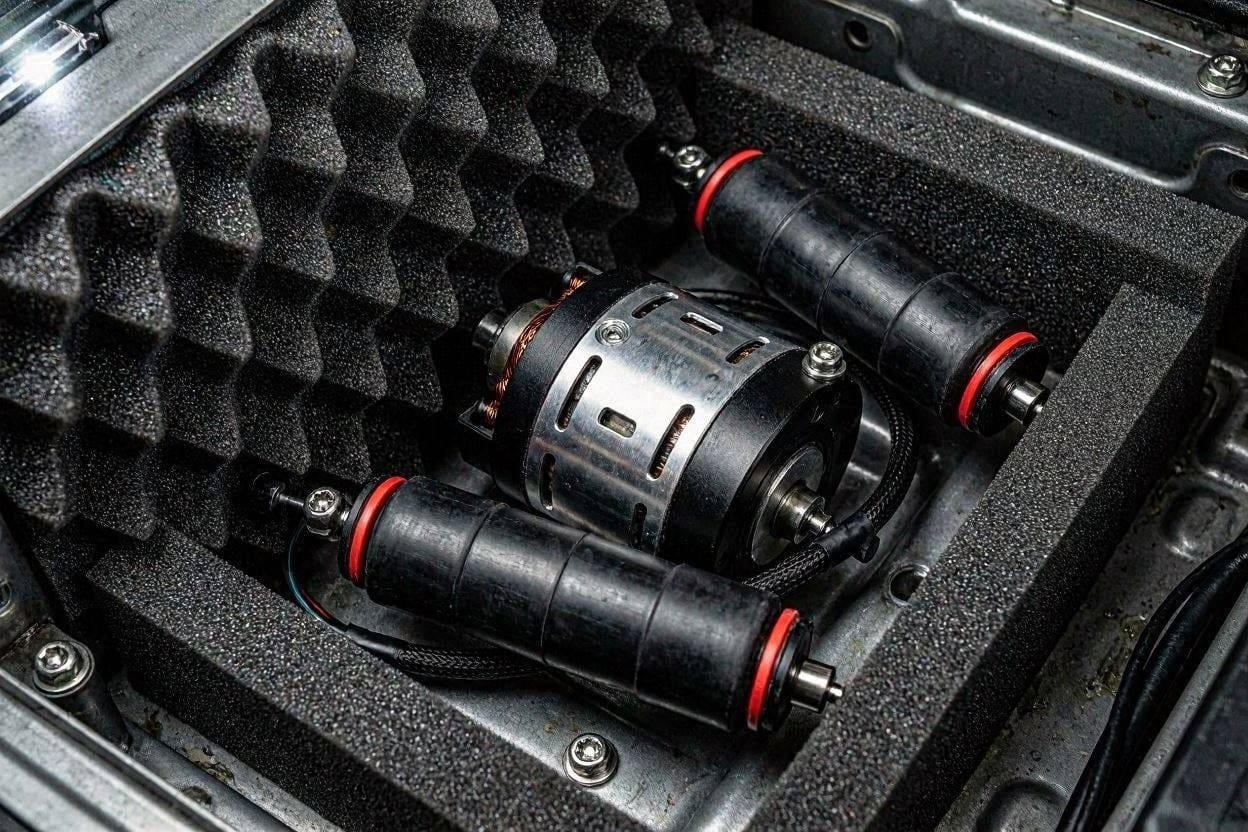
Quiet vacuums fix this through acoustic encapsulation. They suspend the motor in thick rubber shock mounts to kill the floor vibrations, surround the motor housing with high-density acoustic foam to absorb the high-frequency screech, and utilize aerodynamically smooth air-paths to eliminate wind turbulence. The result is a deep, muffled “whoosh” instead of a piercing scream.
1. Miele Complete C3 Excellence (The Gold Standard of Quiet)
When it comes to acoustic appliance engineering, the German manufacturer Miele is in a class of its own. The Miele Complete C3 is a canister vacuum that consistently ranks as the quietest, most powerful cleaner on the global market.
Miele achieves its legendary silence through its sealed “Silence Motor” technology. The entire motor block is encapsulated in thick sound-deadening insulation. Even when running on its highest 1200-watt suction setting, you can easily hold a normal conversation without raising your voice. It also features a specialized “Silence Setting” on its dial that drops the decibel level even further, making it the ultimate machine for cleaning while a baby is sleeping in the next room.
The undisputed king of quiet cleaning. Featuring a fully encapsulated Silence Motor and a specialized acoustic setting, this canister vacuum delivers unmatched suction at conversational sound levels.
Check the current price on Amazon ➔
2. Dyson V15s Detect Submarine (Best Cordless & High-Tech)
Historically, Dyson vacuums were known for their incredible suction and their incredibly loud, jet-engine whine. However, with the release of the Dyson V15s Detect Submarine, they have dramatically improved their acoustic profile.
Dyson completely re-engineered their Hyperdymium™ motor to reduce tonal friction. They added highly advanced acoustic baffles inside the chassis that specifically target and absorb the most irritating high-frequency sound waves. While it is slightly louder than the Miele C3, it is astonishingly quiet for a lightweight cordless stick vacuum. Furthermore, its intelligent piezo sensor automatically ramps the suction (and the noise) up and down based on how much dirt it detects, meaning it only gets loud when it absolutely needs to.
The ultimate high-tech cordless cleaner. Thanks to redesigned acoustic baffles and a smart motor that only ramps up when it detects heavy dirt, it is the quietest stick vacuum Dyson has ever made.
Check the current price on Amazon ➔
3. Shark Stratos Upright (Best For Pets & Carpets)
If you have thick carpets and multiple shedding pets, you usually need a massive, heavy-duty upright vacuum—and those are notoriously loud. The Shark Stratos Upright is the brilliant exception to the rule.
Shark utilizes a completely sealed HEPA system that prevents air (and noise) from leaking out of the seams of the plastic body. They also redesigned their DuoClean brush roll to glide smoothly over hard floors, eliminating the loud, rattling “clatter” that most vacuums make when they transition off a rug. It produces a deep, heavily muffled hum that is far less likely to send your cats running for cover.
A heavy-duty upright that doesn’t scream. With a fully sealed acoustic body and a rattle-free brush roll, this is the perfect deep-cleaning tool for homes with pets and thick carpets.
Check the current price on Amazon ➔
4. Tineco Pure ONE S11 (Best Smart Budget Option)
If you want the smart, auto-adjusting technology of the premium cordless vacuums without spending $700, the Tineco Pure ONE S11 is a phenomenal mid-tier option that excels in acoustic performance.
Tineco’s proprietary iLoop Smart Sensor technology constantly monitors the dust levels on your floor. When you are vacuuming a relatively clean hallway, the motor drops down to an ultra-quiet whisper (around 70 dB). Because it spends the vast majority of its time running on this low-power, low-noise setting, it provides one of the most acoustically pleasant cleaning experiences on the market for daily touch-ups.
A highly affordable cordless vacuum that uses smart dust sensors to keep the motor running on its quietest setting until it absolutely needs more power.
Check the current price on Amazon ➔
5. iRobot Roomba j7+ (Best Robot / Hands-Free Silence)
The absolute best way to not hear a vacuum cleaner is to not be in the room when it happens. Robot vacuums have revolutionized quiet cleaning, and the iRobot Roomba j7+ is arguably the smartest one available.
Because robot vacuums don’t need to push air through long, twisting hoses, they require significantly less suction power to clean effectively. This means their motors are inherently much smaller and vastly quieter than a standard upright. The Roomba j7+ glides around your home with a gentle, low-frequency hum. You can schedule it to run while you are at the office, meaning you will literally never hear it operate.
The ultimate quiet cleaning hack: let a robot do it while you are away. This intelligent vacuum cleans with a gentle hum and avoids obstacles effortlessly.
Check the current price on Amazon ➔
Pro Tip: The Dirty Filter Effect
Even if you buy the quietest vacuum on earth, it will eventually start screaming at you if you ignore routine maintenance.
When a vacuum filter gets clogged with fine dust, the motor has to work twice as hard to pull air through it. This intense strain forces the motor RPMs to spike, completely ruining the acoustic dampening and causing a high-pitched, strained whine. If your quiet vacuum suddenly sounds louder than usual, don’t throw it away—just wash or replace the HEPA filters to restore the airflow and the silence!
The Verdict: Reclaiming Your Saturday Morning
Cleaning your home shouldn’t be an auditory assault. By upgrading to a machine engineered for acoustic comfort, you can vacuum while watching TV, listening to a podcast, or even while your family sleeps.
If you want the absolute pinnacle of silent engineering and don’t mind dragging a canister, the Miele Complete C3 Excellence is a masterpiece of acoustic dampening. However, if you demand the convenience of a cordless stick vacuum, the smart-sensing technology of the Dyson V15s offers the perfect balance of massive suction and reduced noise pollution.

Ememobong is the lead researcher and editor at Quiet Dwelling. As a professional technical writer, he specializes in breaking down complex acoustic engineering concepts into simple, actionable steps. His goal is to help people build distraction-free environments for better sleep and deep work.