*This post contains affiliate links. If you use these links to buy something we may earn a commission at no extra cost to you.
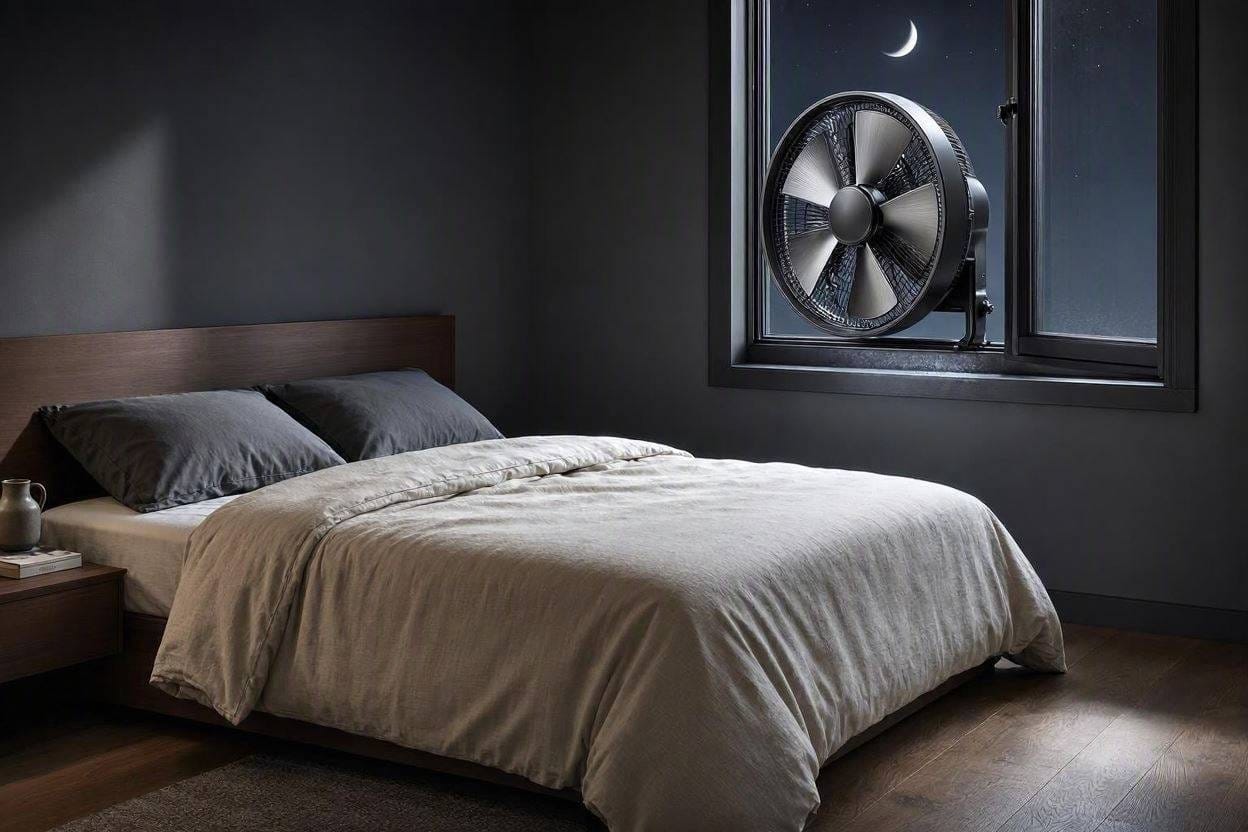
It is the middle of July. Your bedroom is sweltering, and you don’t have central air conditioning. To survive the night, you buy a cheap plastic twin-fan from the local hardware store, wedge it into your bedroom window, and turn it on.
The heat immediately starts to drop, but another problem begins. The cheap plastic housing of the fan vibrates aggressively against your window frame. The exposed motors whine with a high-pitched electrical hum. Every time a car drives by outside, the noise pours right through the open fan blades and into your ears.
According to the Sleep Foundation, keeping your bedroom cool (around 65 degrees Fahrenheit) is absolutely critical for deep, restorative REM sleep. But if achieving that temperature requires listening to a rattling plastic box all night, your sleep cycle is doomed anyway.
I have tested the market to find the absolute best quiet window fans. By utilizing aerodynamic air chambers, sealed motors, and proper acoustic decoupling, these modern units will pull in crisp night air without turning your window into a booming amplifier.
The Science: Why Are Window Fans So Loud?
To fix the noise, you have to understand where it comes from. Window fans are uniquely vulnerable to acoustic failure because of how they are mounted. There are two primary issues: Wind Shear and Structural Resonance.
A standard $20 window fan uses cheap, flat plastic blades. As the motor spins, these flat blades violently “chop” the air, causing turbulence. This turbulence results in high-frequency wind shear—the hissing, rushing sound that irritates the eardrum.
More importantly, the fan is wedged tightly between the hard wooden or vinyl tracks of your window. When the cheap internal motors vibrate, that kinetic energy transfers directly into your window frame. As we discussed in our guide on Airborne vs. Impact Noise, transferring vibration into a hollow wall turns your entire bedroom into a booming acoustic amplifier.
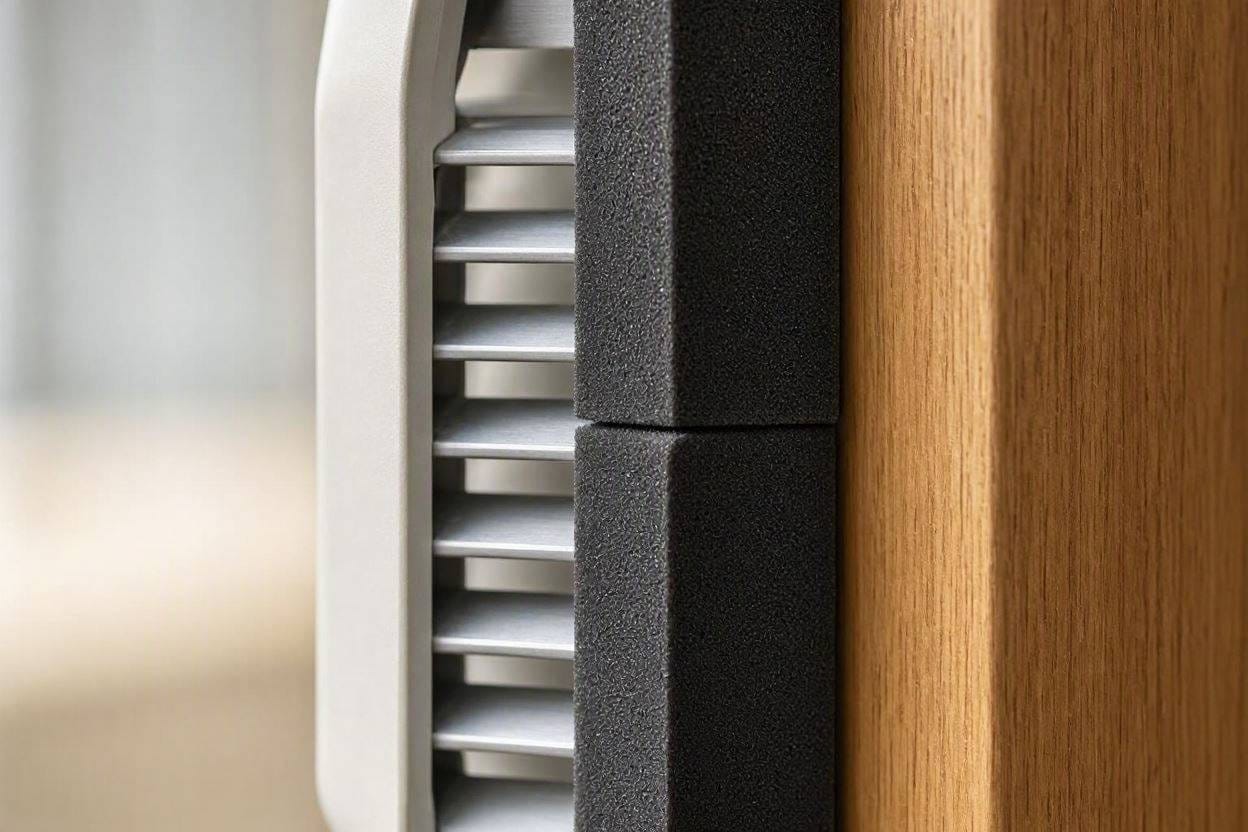
Premium window fans solve these issues by using aerodynamically curved blades (to smooth out the air) and incorporating thick weatherstripping into the chassis to act as a rubberized shock absorber against your window frame.
1. Vornado Transom (The Absolute Best)
If you want genuine acoustic stealth in your bedroom, the Vornado Transom is an absolute masterpiece of engineering. Vornado completely threw away the traditional “two big fan blades” design.
Instead, the Transom uses a sealed air chamber with a cylindrical impeller wheel (similar to the best quiet tower fans). This closed design does two incredibly important things. First, it pushes a massive, smooth column of air into the room without the harsh chopping noise of traditional blades. Second, the sealed housing acts as an acoustic barrier, physically blocking outside street noise from leaking through the open fan grate.
It also features high-density foam blocks that wrap around the unit. When you close your window onto the Transom, the foam creates an airtight, vibration-absorbing seal, completely killing structural rattling.
The Pros
- Sealed chamber design blocks outside street noise significantly better than open fans.
- Includes custom acoustic foam blocks to stop window frame vibration.
- Electronic one-touch reversible airflow (exhaust vs. intake) without removing the unit.
The Cons
- Premium price tag compared to traditional twin fans.
- Because it is so low-profile, it doesn’t move quite as much raw air volume as massive box fans.
Check Vornado Transom Price on Amazon
2. Bionaire Thin Window Fan (Best Slim/Reversible)
If you don’t want to remove your window screen to install a fan, you need an ultra-slim profile. The Bionaire Thin Window fan is a classic, highly reliable unit designed specifically for tight spaces.
Acoustically, it manages noise beautifully by utilizing three smaller, independently operated fans instead of two large ones. By spreading the airflow across three smaller motors, the unit doesn’t have to strain as hard, resulting in a very consistent, low-frequency hum that acts as excellent pink noise for sleep.
It also features a built-in digital thermostat. You can set it to 68 degrees, and the fan will quietly turn itself on and off throughout the night to maintain the temperature, ensuring you don’t wake up freezing at 4:00 AM.
The Pros
- Ultra-slim profile allows you to leave your window screen in place to block bugs.
- Built-in thermostat prevents the room from getting too cold.
- Electronic reversible motors (you don’t have to physically flip the fan around).
The Cons
- The plastic expansion panels on the sides are a bit flimsy and can rattle if not wedged tightly.
- The blue LED display is quite bright in a dark bedroom.
3. Genesis Twin Window Fan (Best Budget Pick)
If you just need a cheap, reliable cross-breeze for a guest bedroom or a home office, the Genesis Twin Fan is the best option under $50.
While it lacks the fancy sealed acoustic chamber of the Vornado, it stands out from other budget fans because it utilizes high-quality copper motors. Cheap aluminum motors overheat and whine aggressively; copper motors run cooler and smoother.
This fan is not “whisper silent,” but the noise it produces is a very deep, robust fan hum. If you are someone who actively uses a loud box fan to drown out a snoring partner or street noise, the Genesis provides that perfect, steady wall of sound without any sharp, annoying ticking noises.
The Pros
- Highly affordable price point for copper motor reliability.
- Independent fan control (set one to intake, one to exhaust) for maximum air exchange.
- Provides an excellent, steady pink-noise hum for sound masking.
The Cons
- You have to manually remove and flip the fan around to fully reverse the airflow direction.
- Lacks acoustic weatherstripping; you will have to add your own foam.
The DIY Hack: How to Stop Your Current Fan From Rattling
If you already own a window fan and can’t afford to replace it, the problem is almost certainly structural decoupling. When hard plastic touches hard wood or metal, it rattles.
The 5-Minute Fix: Go to the hardware store and buy a roll of thick, high-density closed-cell weatherstripping foam tape (usually under $10). Line the entire outer edge of your fan’s plastic chassis with the foam tape. When you slide the fan into the window and pull the sash down, the thick foam will compress. It acts as an acoustic shock absorber, trapping the motor vibration before it can enter the window frame. It also creates an airtight seal that helps block exterior street noise!
Need More Power? If a window fan simply isn’t cutting through the heatwave, but you still need to protect your sleep, check out our guide to the best quiet portable air conditioners featuring ultra-smooth inverter compressors.
Frequently Asked Questions (FAQ)
Should I Set My Fan to Intake or Exhaust at Night?
For the fastest cooling, you should utilize thermodynamic cross-ventilation. When the sun goes down and the outside air drops below the temperature inside your bedroom, set your window fan to Intake to pull the cool air in. Simultaneously, open a window on the opposite side of your house (or down the hallway) to allow the hot, trapped air to naturally exhaust out. If you buy a twin fan with independent motors, you can set one side to intake and one to exhaust in the same window, creating a powerful mini-vortex.
Do Window Fans Block Outside Street Noise?
Generally, no. A standard window fan requires you to leave your window wide open. Because standard fans have open plastic grates, all the airborne street noise (cars, dogs, sirens) will pass right through the fan and into your room. If you live on a noisy street, you must buy a sealed-chamber fan like the Vornado Transom, which physically blocks the direct path of the sound wave.

Ememobong is the lead researcher and editor at Quiet Dwelling. As a professional technical writer, he specializes in breaking down complex acoustic engineering concepts into simple, actionable steps. His goal is to help people build distraction-free environments for better sleep and deep work.