This post contains affiliate links. If you use these links to buy something, we may earn a commission.
If you live near a busy street, an airport, or a neighborhood full of barking dogs, your windows are your biggest enemy. Even when closed, standard glass panes let massive amounts of acoustic energy bleed right into your bedroom, ruining your sleep and your sanity.
In your search for a quick, renter-friendly fix, you have undoubtedly come across the concept of “soundproof curtains.” The marketing promises a miracle: simply hang these drapes, and your loud apartment will instantly transform into a silent sanctuary.
But before you spend your hard-earned money, we need to have an honest conversation about acoustic physics. Do soundproof curtains actually work? Or are they just an overpriced scam designed to sell thick blackout drapes?
The truth lies somewhere in the middle. While they won’t stop a freight train in its tracks, the right heavy-duty curtains can drastically improve the acoustic comfort of your room—if you buy the right materials and hang them correctly. Let’s separate the myths from the science and look at the absolute best soundproof curtains of 2026.
The Brutal Truth: Soundproofing vs. Sound Absorption
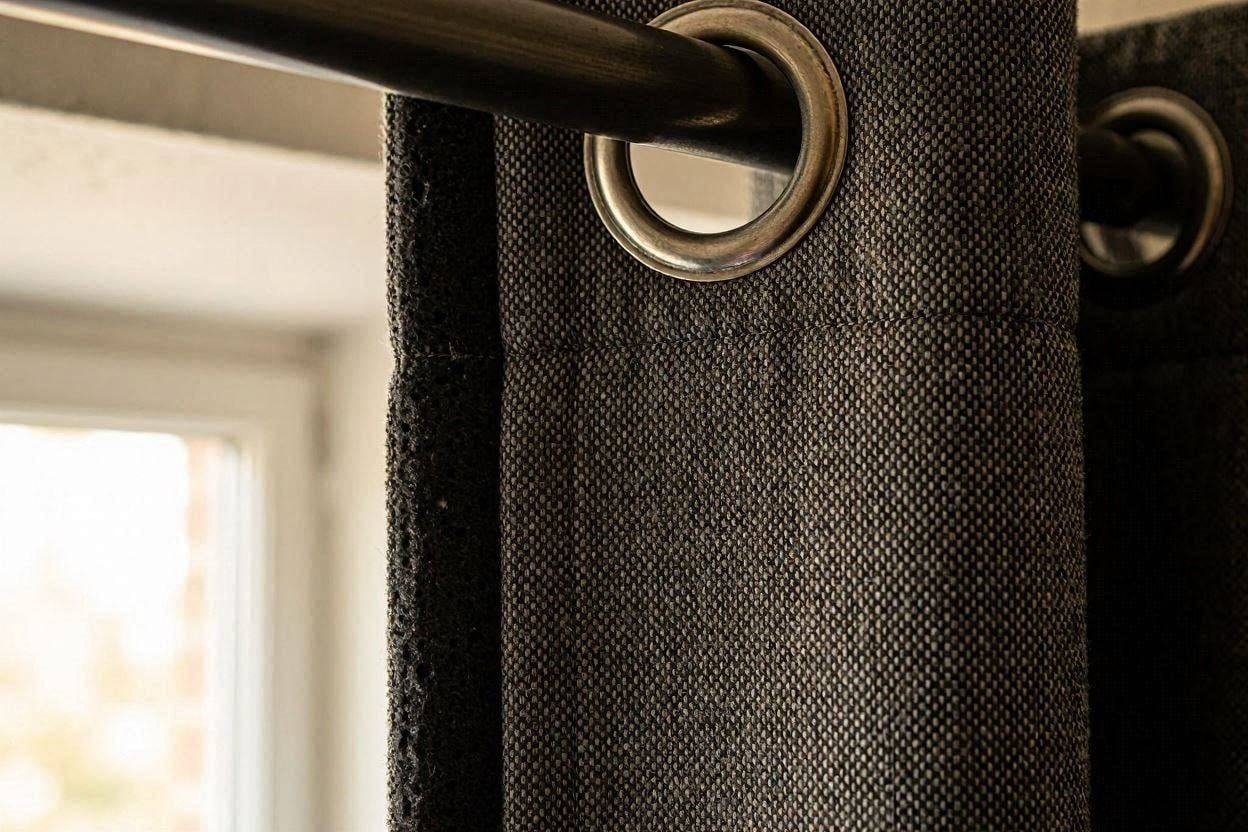
To understand what a curtain can and cannot do, you must first understand a fundamental rule of audio engineering. As noted by the acoustic specialists at Acoustic Fields, there is a massive difference between blocking sound and absorbing sound.
Soundproofing (Blocking): This is the act of stopping outside noise from entering a room. It requires heavy, solid mass (like concrete, thick drywall, or acoustic glass) and airtight seals.
Sound Absorption (Dampening): This is the act of stopping sound waves from bouncing around inside a room, which reduces echo and makes a space feel “quieter” and more intimate. It requires soft, porous materials (like foam, rugs, and heavy fabrics).
Because curtains are made of fabric, they primarily act as sound absorbers. They do not have the solid, heavy mass required to physically block the deep, low-frequency rumble of a passing diesel truck. If you want to block low-end frequencies, you need to read our guide on How To Truly Soundproof A Window using custom inserts.
However, what heavy acoustic curtains excel at is muffling high-frequency noises (like birds chirping, people talking on the sidewalk, or hissing wind) and completely killing the echo in your bedroom. This acoustic dampening drastically reduces the overall harshness of the noise that makes it through the glass.
The Top 3 Soundproof Curtains of 2026
If you understand their limitations and are ready to add a fantastic layer of acoustic dampening (and total light blackout) to your room, here are the top-performing curtains on the market right now.
1. NICETOWN 100% Blackout Soundproof Curtains (The Best Value)
When it comes to balancing budget and performance, NICETOWN has dominated the acoustic curtain space for years. What makes these specific curtains so effective is their 3-pass fabric construction.
They feature a densely woven layer of blackout yarn sandwiched between two heavy microfiber layers. While they won’t stop a bass drop, they weigh significantly more than standard living room drapes. That extra physical weight acts as a fantastic net for mid-to-high frequency sound waves, muffling street chatter beautifully.
The absolute best bang for your buck. These ultra-heavy microfiber curtains feature triple-weave technology that crushes room echo, blocks 100% of UV light, and noticeably muffles high-frequency street noise.Check the current price on Amazon ➔
2. Moondream Sound Insulation Curtains (The Premium Choice)
If you are willing to spend more for actual patented acoustic technology, Moondream is the gold standard. Unlike standard blackout drapes, Moondream engineers their curtains specifically for acoustic isolation.
These curtains utilize three distinct layers: a heavy blackout fabric, a proprietary thermal-insulating layer, and a dense cotton acoustic lining. In independent laboratory testing, Moondream curtains have been shown to reduce incoming noise by up to 7 decibels (which your brain perceives as the sound being cut in half). They are heavy, luxurious, and highly effective.
Engineered with three distinct technical layers, these are the heavy-hitters of the curtain world. Lab-tested to drop room noise by up to 7dB, they are the closest thing to true soundproofing you can hang on a rod.Check the current price on Amazon ➔
3. Rose Home Fashion Thermal Acoustic Curtains (Best For Drafty Windows)
If your windows are old and drafty, they aren’t just letting in noise—they are letting in air. And in physics, where air goes, sound goes. According to The Department of Energy, fixing window drafts is one of the most effective ways to improve home comfort.
Rose Home Fashion solves this by adding an incredibly dense fleece lining to the back of their blackout curtains. This fuzzy, heavy fleece layer is exceptional at trapping air currents and dampening the high-pitched hissing of wind outside. They are slightly stiffer than normal curtains, but that stiffness translates to excellent acoustic blocking power.
The Golden Rule: How to Hang Curtains for Soundproofing
Here is where 90% of people fail. You can buy the most expensive, heavy-duty acoustic drapes in the world, but if you hang them like standard living room decor, they will do absolutely nothing.
Sound travels like water. If there is a gap around the sides, top, or bottom of the curtain, the street noise will easily “flank” around the fabric and fill your room anyway. To get real acoustic benefits, you must trap the air between the window and the curtain.
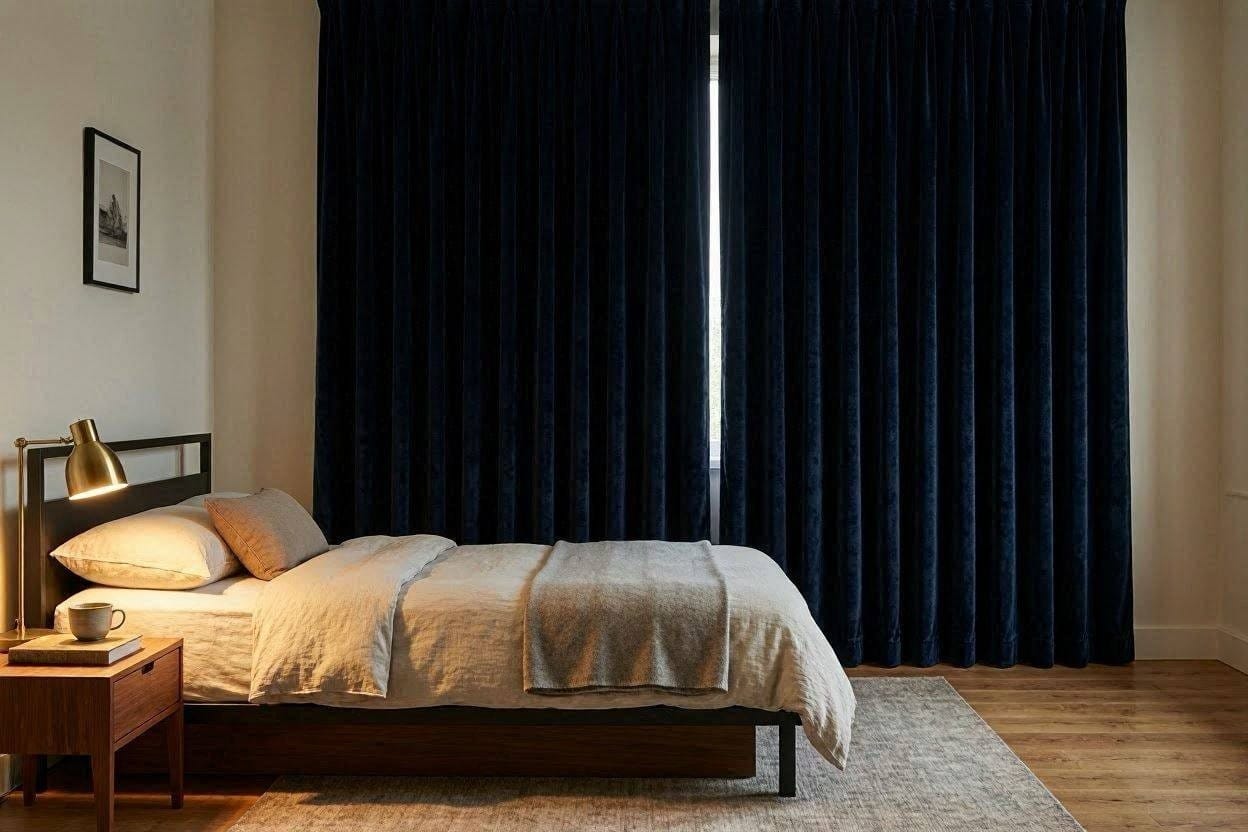
- Ceiling to Floor: Do not buy curtains that stop at the windowsill. You need them to touch the ceiling and drag slightly on the floor to seal the bottom air gap.
- Go Wide: Your curtain rod should extend at least 6 to 10 inches past the edges of the window frame on both sides.
- Pleating Adds Mass: Curtains should never be pulled completely flat when closed. You want them to have deep, wavy pleats. Why? Because a pleated curtain has double or triple the physical fabric mass covering the opening compared to a flat curtain. Buy panels that are 2x to 3x the actual width of your window.
The Verdict
So, do soundproof curtains actually work? Yes, but you must have realistic expectations.
They are not magical soundproof barriers that will block the booming bass of a loud neighbor’s subwoofer. However, if your goal is to soften the harshness of a busy street, muffle conversations from the sidewalk, kill the annoying echo in your bedroom, and block out 100% of the morning sun, a heavy set of premium acoustic curtains is one of the best investments you can make for your sleep hygiene.

Ememobong is the lead researcher and editor at Quiet Dwelling. As a professional technical writer, he specializes in breaking down complex acoustic engineering concepts into simple, actionable steps. His goal is to help people build distraction-free environments for better sleep and deep work.