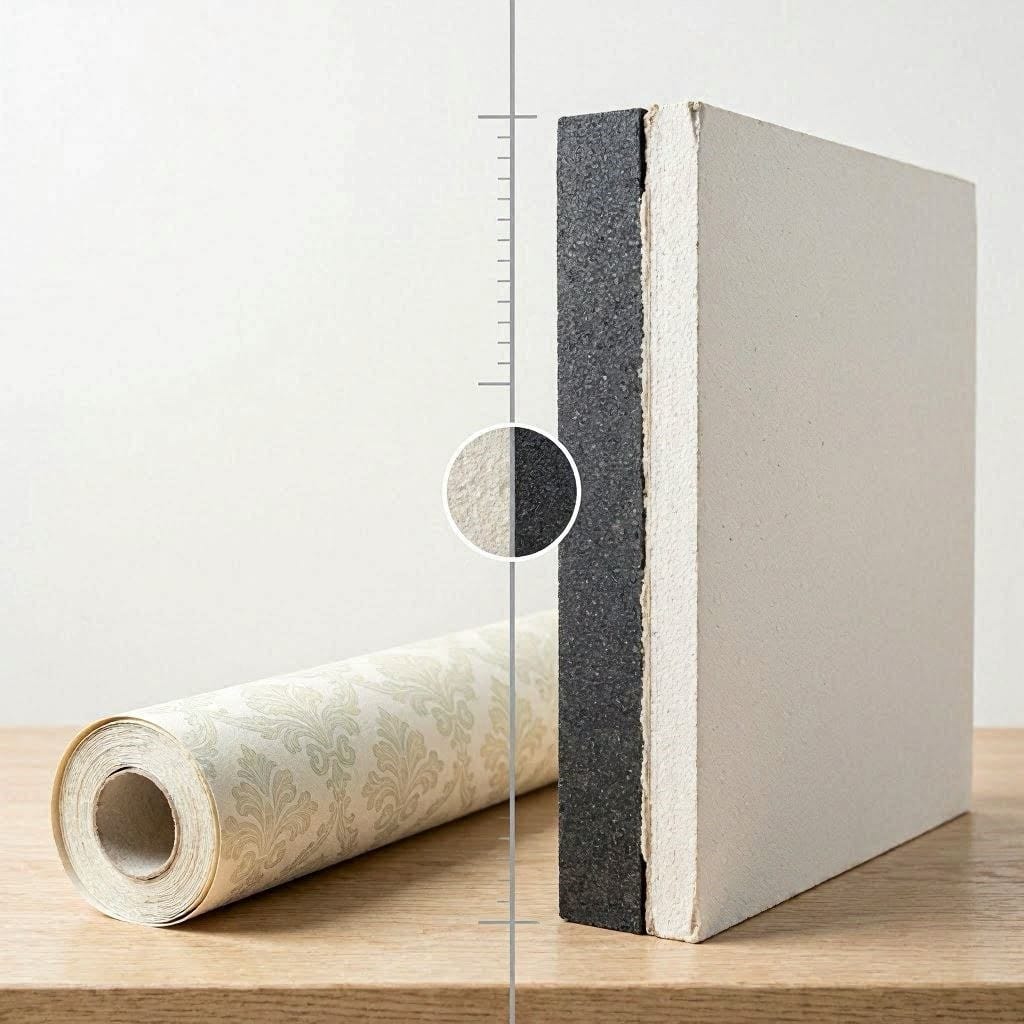
If you live in a noisy apartment, share a thin wall with a loud neighbor, or suffer from street noise, you have likely desperately searched for a quick, renter-friendly way to block the sound. During that search, you almost certainly encountered ads for “soundproofing wallpaper” or “acoustic wall coverings.”
The marketing promises the ultimate dream: simply peel, stick, and enjoy absolute silence without needing to tear down your drywall or hire a contractor. It sounds too good to be true.
So, we have to ask the million-dollar question: does soundproofing wallpaper work?
The short, scientifically backed answer is No. Soundproofing wallpaper cannot physically block airborne noise or structural vibrations.
While these thick, textured wallpapers might make your room look beautiful, they are marketed using highly deceptive acoustic terminology. In this guide, we will break down the fundamental physics of why a wall covering fails to stop noise, what “acoustic wallpaper” actually does, and what materials you really need to reclaim your quiet dwelling.
The Physics of Sound: Why Wallpaper Fails
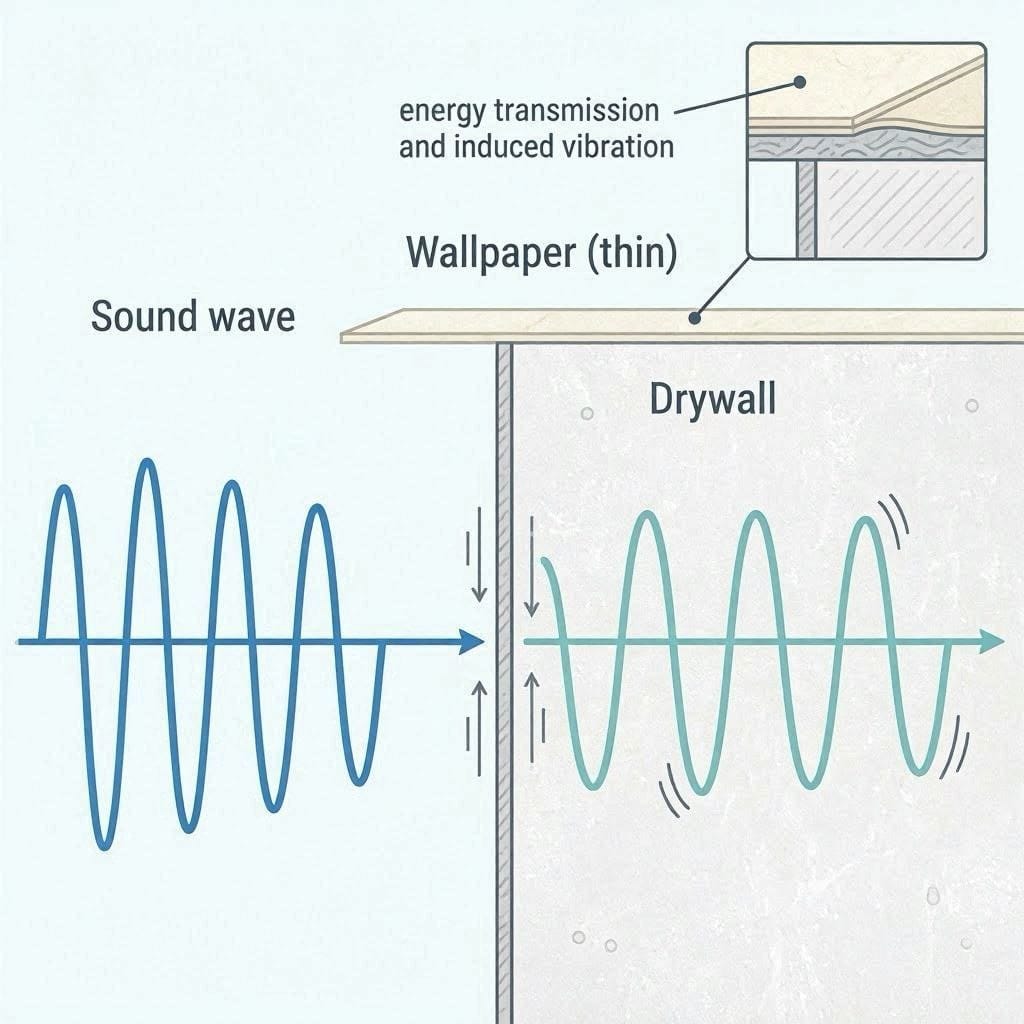
To understand why wallpaper cannot stop the sound of a barking dog or a loud television, we must look at how sound travels. Sound is a physical, mechanical wave of kinetic energy. When your neighbor yells, that energy travels through the air, hits your shared wall, and forces the solid drywall to vibrate. That vibration then transfers the sound into your bedroom.
To stop a physical wave of energy, you must obey the Law of Mass. According to foundational principles established by the Acoustical Society of America, it requires massive, heavy density to stop acoustic energy from vibrating a structure.
This is where the concept of “soundproof wallpaper” completely falls apart:
- Lack of Density: Standard acoustic wallpaper is usually made of a thin layer of closed-cell polyethylene foam or thick textured fabric, measuring roughly 3mm to 5mm thick. It weighs mere ounces.
- Kinetic Bypass: When a heavy, low-frequency sound wave (like a deep male voice or a bass speaker) hits a 3mm layer of foam paper, the wave doesn’t even slow down. The kinetic energy passes straight through the wallpaper, vibrates the rigid drywall underneath, and enters your ears.
If you want to understand exactly how much mass is required to stop standard voices, read our complete guide to understanding STC (Sound Transmission Class) ratings.
What Does “Acoustic” Wallpaper Actually Do?
If soundproof wallpaper doesn’t block noise, how are companies legally allowed to sell it?
They rely on confusing the general public about the difference between Soundproofing (blocking sound from entering a room) and Sound Absorption (stopping internal echoes).
Thick, textured wallpapers—especially those backed with a thin layer of acoustic fleece or foam—have a marginal ability to absorb high-frequency echoes inside the room you are already sitting in. If you have a completely empty room with bare walls and hardwood floors, clapping your hands will create a harsh, ringing echo. Applying a thick wallpaper will slightly dampen that internal ringing, making the room sound a bit “warmer” and less cavernous.
However, an acoustic absorber does not block external noise. To fully understand this critical distinction, you must read our master guide on Soundproofing vs. Sound Absorption. Do not buy an absorber to do a sound-blocker’s job.
If Wallpaper Doesn’t Work, What Does?
If you are suffering from the sleep-disrupting health effects of noise pollution, you cannot rely on peel-and-stick paper. You must introduce structural mass and decoupling to your walls.
Here are the real materials used by professional acousticians to stop sound transmission:
Mass Loaded Vinyl (MLV)
If you want a thin material that actually works, MLV is the industry standard. Unlike lightweight wallpaper, Mass Loaded Vinyl is an incredibly heavy, dense, limp-rubber membrane. A single 1/8-inch thick sheet weighs 1 pound per square foot. It is installed behind the drywall to act as a massive acoustic dead-weight. Read more in our guide: What is Mass Loaded Vinyl?
Adding a Second Layer of Drywall
The most cost-effective way to stop noise through a shared wall is to simply make the wall heavier. Adding a second layer of 5/8-inch Type X fire-rated drywall over your existing wall (preferably with a layer of Green Glue damping compound sandwiched in between) will drastically cut down on airborne noise.
Decoupling the Wall Frame
If you are dealing with low-frequency impact noise (like heavy footsteps or booming subwoofers), mass alone won’t work. You must physically disconnect the drywall from the wooden studs using resilient sound isolation clips to break the vibration path. Learn how this works in our guide to the 4 Principles of Soundproofing.
Frequently Asked Questions (FAQ)
Does Thick Textured Wallpaper Stop Echoing?
Yes, slightly. Heavily textured, thick wallpaper (especially fabric or flock wallpaper) provides a tiny amount of high-frequency sound absorption. It will slightly lower the reverberation time in an empty room, but it performs significantly worse than dedicated acoustic fabric panels.
Are there any Renter-Friendly Ways to Soundproof a Wall?
True soundproofing requires construction, which makes it very difficult for renters. However, you can mitigate noise by pushing heavy bookcases against the shared wall (filled tightly with books to add mass), sealing the air gaps around your door with draft stoppers, and using a high-quality white noise machine to mask the incoming sounds.
Can I Paint My Walls with Soundproof Paint Instead?
No. “Soundproof paint” is another massive acoustic myth. While it may contain microscopic ceramic or sound-absorbing particles, paint dries into a layer that is fractions of a millimeter thick. It possesses absolutely zero mass and has no physical ability to stop a kinetic sound wave. It is a complete waste of money for noise reduction.

Ememobong is the lead researcher and editor at Quiet Dwelling. As a professional technical writer, he specializes in breaking down complex acoustic engineering concepts into simple, actionable steps. His goal is to help people build distraction-free environments for better sleep and deep work.