When most people compare pink noise vs white noise in the bedroom, they are looking for the best way to block disturbances like honking traffic or loud neighbors. However, in the realm of acoustic science, noise isn’t just a nuisance; it is one of the most powerful tools available for optimizing your sleep cycle.
Environmental sounds pull you out of deep sleep because the human brain is hardwired to detect sudden changes in volume, even while unconscious. The solution is not necessarily a completely silent room, but rather the strategic introduction of auditory masking.
By utilizing the specific “colors” of noise, you can create a sonic blanket that smooths out jarring sounds and aligns with your brain’s natural sleep waves.
From the classic static of white noise to the deep, rumbling frequencies of brown noise, here is the ultimate guide to understanding sleep acoustics and choosing the perfect frequency for your quiet dwelling.
What Are the “Colors” of Noise? (The Science of Sound)
To understand why noise has colors, we have to look at the physics of sound. Sound is measured in two main ways: frequency (the pitch, measured in Hertz) and amplitude (the volume, measured in decibels).
Just like sunlight contains a spectrum of colors based on light frequencies, auditory noise contains a spectrum of sound frequencies. When audio engineers and sleep scientists refer to the “color” of noise, they are describing the power distribution of the sound signal across different frequencies.
By tweaking which frequencies are loud and which are quiet, we get different colors, each with unique benefits for the human nervous system.
White Noise: The Classic Sound Masker
White noise is the most famous color on the acoustic spectrum. It gets its name directly from white light, which is created when all colors of the visual spectrum are combined equally.
The Acoustic Profile
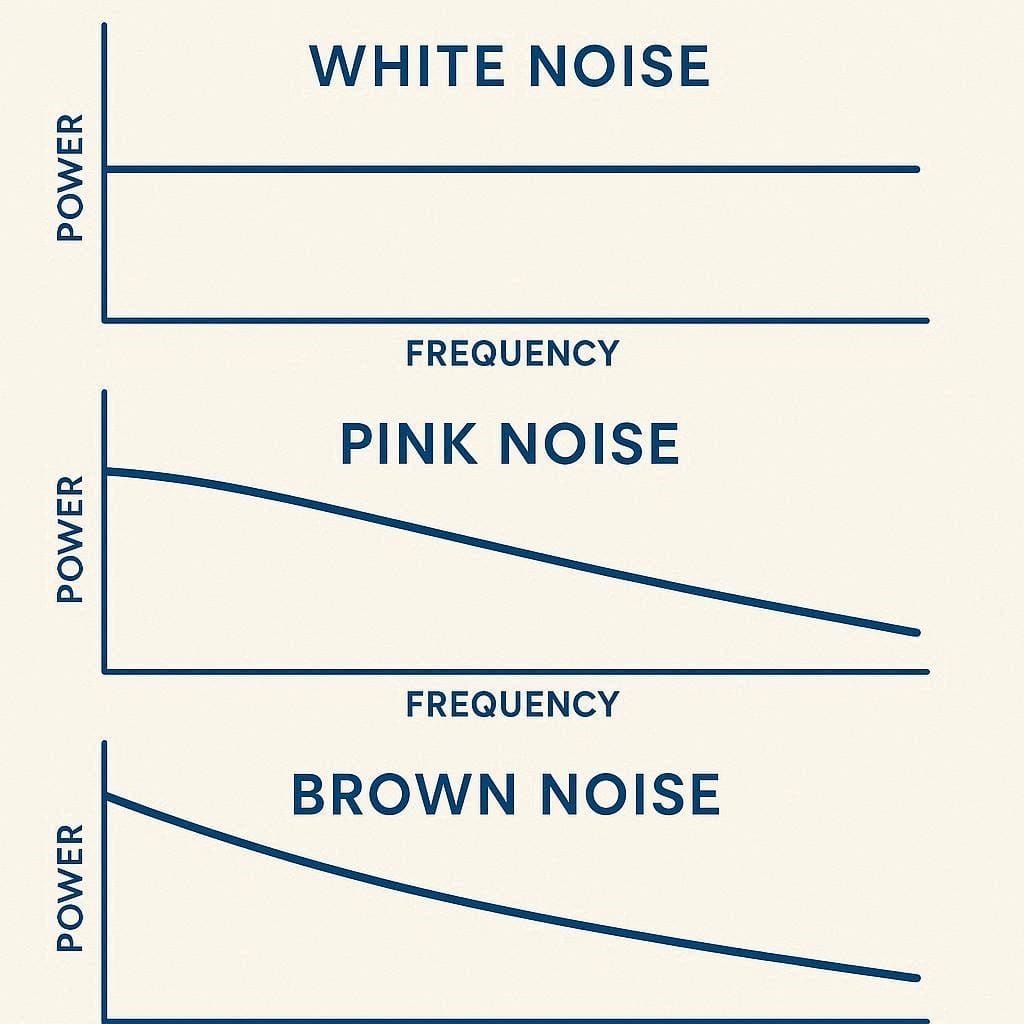
White noise contains equal energy across all audible frequencies. Because it spans the entire spectrum evenly (from low bass to high treble), it sounds like a massive wall of sound. Think of the static of an untuned television, a loudly whirring fan, or a hissing radiator.
The Sleep Benefits
Because white noise plays every frequency at once, it is the ultimate acoustic masker. If a dog barks or a door slams, that sudden noise blends into the “wall” of the white noise rather than piercing through a silent room and waking you up.
- Best For: People living in noisy urban environments, shift workers sleeping during the day, and individuals trying to block out unpredictable, jarring background sounds.
Pink Noise: The Deep Sleep Inducer
While white noise is an excellent blocker, some people find its high-pitched frequencies a bit too harsh or “hissy” for relaxation. Enter pink noise.
The Acoustic Profile
Pink noise also contains all audible frequencies, but the energy decreases as the frequency gets higher. The lower, bass-heavy frequencies are louder, while the high, treble frequencies are softer. In nature, pink noise is everywhere: the steady patter of rainfall, wind rustling through leaves, or the gentle lap of ocean waves.
The Sleep Benefits
Pink noise is widely considered the holy grail for sleep quality. Recent neurological studies suggest that the frequency of pink noise perfectly mirrors the brain waves produced during slow-wave sleep (the deepest, most restorative phase of sleep). Listening to pink noise doesn’t just block outside sounds; it can actually help you spend more time in deep sleep, improving memory consolidation and physical recovery.
- Best For: Individuals looking to improve their overall sleep quality, wake up feeling more refreshed, and those who find white noise too sharp or abrasive.
Brown Noise: The Ultimate Relaxation Frequency
Sometimes referred to as Red Noise, Brown noise takes the concept of Pink noise and pushes it even further.
The Acoustic Profile
In Brown noise, the higher frequencies are almost entirely filtered out, leaving a deep, resonant rumble. It lacks the “hiss” of white noise and the “shhhh” of pink noise. Instead, it sounds like a distant, powerful waterfall, the low roar of a jet engine from inside the cabin, or heavy thunder rolling in the distance.
The Sleep Benefits
Brown noise is incredibly soothing to the central nervous system. Its deep frequencies are excellent for quieting a racing mind, promoting deep relaxation, and inducing a sense of safety. Furthermore, many audiologists recommend brown noise for tinnitus sufferers, as the low frequencies can effectively mask the high-pitched ringing in the ears without causing auditory fatigue.
- Best For: People with sleep anxiety, individuals who need help falling asleep quickly, students trying to focus, and those managing tinnitus.
Black Noise: The Sound of True Silence
Black noise is entirely different from the rest of the spectrum because it isn’t actually a sound you can hear.
The Acoustic Profile
In technical terms, black noise represents a spectrum that is completely silent, with occasional random spikes of noise at absolute zero frequency. In practical, everyday terms, black noise is simply the sound of absolute silence.
The Reality of the Bedroom
Achieving true black noise (absolute silence) is nearly impossible in a standard residential environment, as homes constantly produce low-level ambient noise. However, many people simply cannot sleep with any artificial noise playing. For these individuals, the goal is to get as close to black noise as possible by eliminating ticking clocks, buzzing appliances, and ambient light hums.
- Best For: Highly sensitive sleepers who find any auditory input distracting and prefer to invest in soundproofing rather than sound-masking.
Pink Noise vs White Noise vs Brown Noise: Which Should You Choose?
Choosing the right frequency comes down to identifying what is keeping you awake. Use this quick-reference guide to select your ideal noise color:
| Noise Color | What It Sounds Like | Primary Benefit | Best Used For |
|---|---|---|---|
| White Noise | Static, whirring fan, hissing steam | Maximum auditory masking | Blocking out unpredictable, loud environmental noises (traffic, voices). |
| Pink Noise | Steady rain, rustling leaves, gentle waves | Brain wave alignment | Improving time spent in deep, restorative slow-wave sleep. |
| Brown Noise | Distant thunder, low waterfall, airplane cabin | Deep nervous system relaxation | Soothing sleep anxiety, increasing focus, and masking tinnitus. |
Building Your Ideal Acoustic Sleep Environment
Understanding the colors of noise is only the first step; implementing them properly is where you reclaim your sleep. Creating a perfectly quiet dwelling often requires layering your acoustic environment.
If you prefer the deep, restorative benefits of pink or brown noise, investing in a high-quality, dedicated sound machine (rather than relying on a tinny smartphone speaker) is essential to get the full depth of the bass frequencies. You can explore our top picks for dedicated sleep sound machines here.
Additionally, you can naturally layer the acoustics of your bedroom by carefully selecting your appliances. For instance, instead of a harsh, buzzing climate control system, you can introduce steady, pink-noise-adjacent ambient sound by running an ultrasonic humidifier. We highly recommend checking out our guide to the 5 best quiet humidifiers for the bedroom to find an appliance that hydrates the air while adding a soothing, low-decibel hum to your sleep environment.
Finally, for those chasing the elusive “Black Noise” and requiring absolute silence, eliminating internal room noise is critical. Swapping out standard bedroom accessories for non-ticking silent wall clocks and silent alarm clocks ensures that your carefully curated quiet environment isn’t ruined by the relentless ticking of a secondhand.
If you want to understand how these colors compare to deeper acoustic frequencies, check out our complete master guide to the colors of noise, including brown and black noise.
Frequently Asked Questions (FAQ)
Is it Safe to Listen to White Noise all Night?
Yes, it is perfectly safe to listen to white, pink, or brown noise throughout the night, provided the volume is kept at a safe level. Audiologists generally recommend keeping continuous background noise below 60 decibels (roughly the volume of a normal conversation) to prevent any risk of auditory fatigue or hearing damage.
Can I Just Use a Free Phone App for Sound Masking?
While free smartphone apps are a great way to test which color of noise you prefer, they are not ideal for long-term use. Smartphone speakers are small and lack the physical capacity to produce rich, low-frequency bass notes. As a result, brown noise played through a phone often sounds “tinny” and resembles white noise. A dedicated sound machine with a high-quality speaker driver is highly recommended for accurate sound reproduction.
Do Earplugs Work Better than White Noise?
Earplugs and white noise serve different purposes. Earplugs aim to achieve “black noise” by physically blocking sound waves from entering the ear canal. White noise works via auditory masking, raising the baseline of sound in the room so sudden noises don’t register to your brain. Many light sleepers find success by combining the two: wearing high-quality earplugs while running a pink or brown noise machine at a low volume.

Ememobong is the lead researcher and editor at Quiet Dwelling. As a professional technical writer, he specializes in breaking down complex acoustic engineering concepts into simple, actionable steps. His goal is to help people build distraction-free environments for better sleep and deep work.