*This post contains affiliate links. If you use these links to buy something we may earn a commission at no extra cost to you.
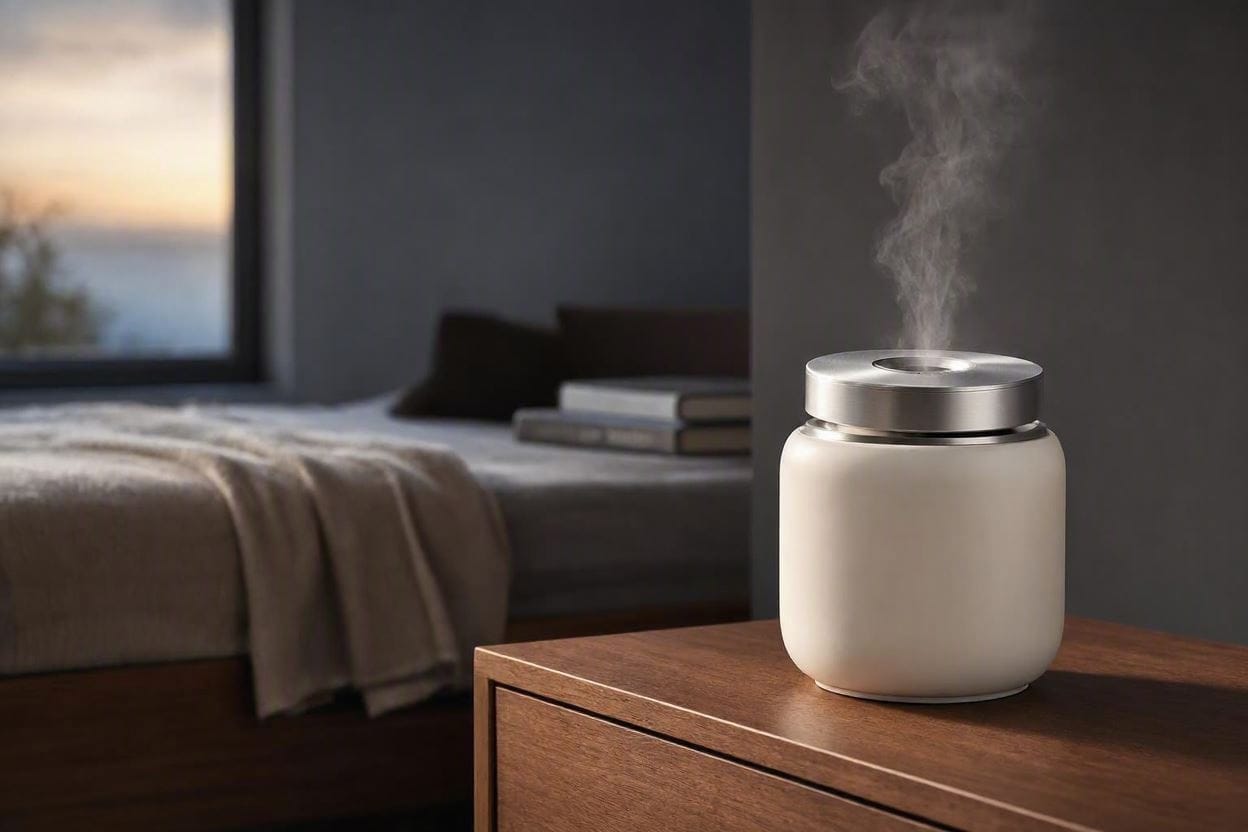
We have all been there. It is the middle of winter, the heater is blasting, and the air in your bedroom is bone dry. You wake up with a scratchy throat, chapped lips, and irritated sinuses. So, you do what any health-conscious person does: you buy a humidifier, fill it up, and place it on your nightstand.
You turn off the lights, close your eyes, and wait for sleep to take over. But instead of silence, you hear a mechanical whining fan. And then, just as you are drifting off into deep sleep, it happens.
GLUG… GLUG… GLUG.
A massive, violent air bubble forces its way through the water tank, sounding like someone is emptying an office water cooler right next to your ear. You wake up startled, your heart rate spikes, and your sleep cycle is completely ruined.
I am a highly sensitive sleeper, and for years, I refused to use humidifiers because the irregular, sudden bubbling sounds drove me insane. But after enduring one too many dry winters, I spent months testing the acoustic profiles and fluid dynamics of modern humidifiers. I learned that the secret to a silent night doesn’t just come down to the motor—it comes down to the physical design of the water tank.
In this guide, I will show you exactly why old humidifiers gurgle, the science behind silent ultrasonic technology, and my top picks for the absolute quietest humidifiers that will let you breathe easy and sleep soundly.
The Science of the “Glug”: Why Do Humidifiers Bubble?
To buy a truly quiet humidifier, you must understand the physics of why they make noise in the first place. There are two primary sources of noise: the motor and the water displacement.
First, let’s look at the motor. If you buy an Evaporative Humidifier, it works by pulling dry room air through a wet, wicking paper filter using a large internal fan. While these are great for preventing mineral dust, the fans are inherently loud. They sound like a box fan running on high.
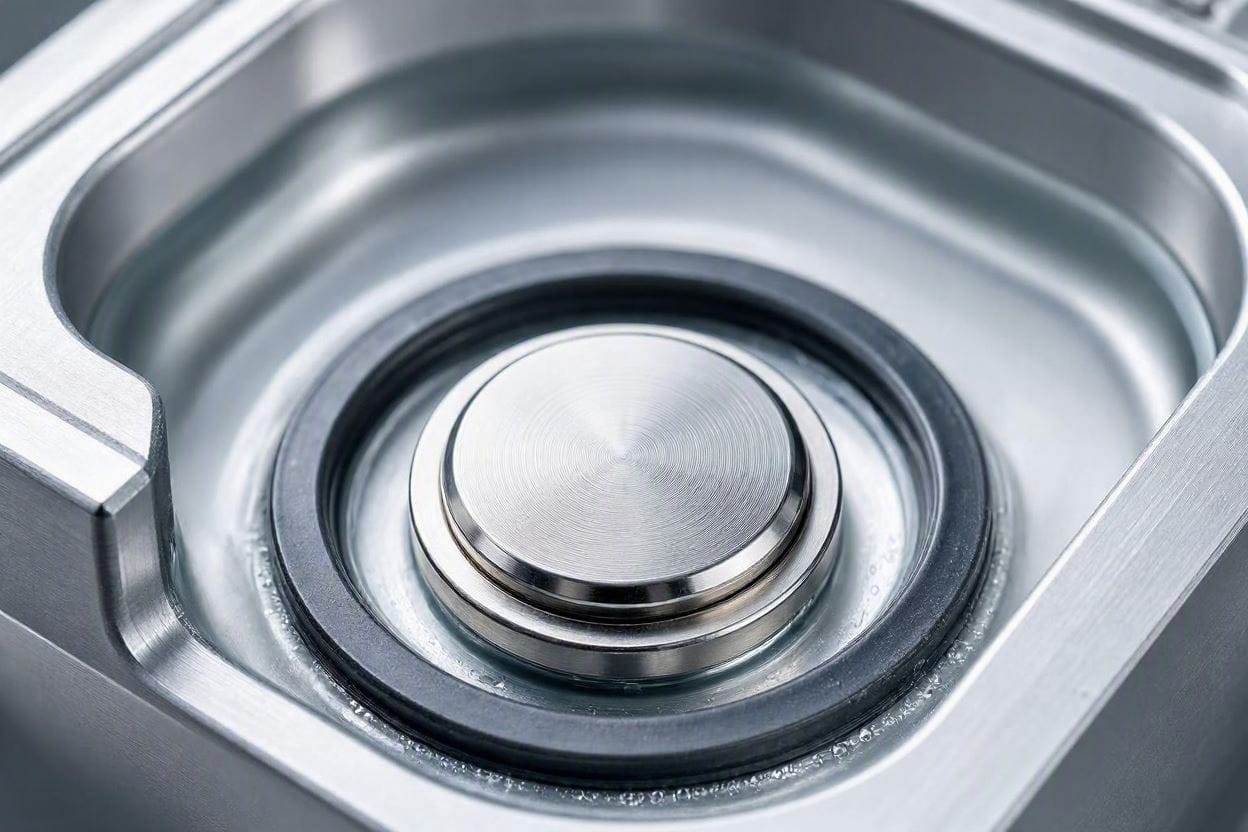
If you want silence, you must buy an Ultrasonic Humidifier. Ultrasonic models do not use fans to push water into the air. Instead, they use a tiny metallic diaphragm (a piezoelectric transducer) that vibrates at an incredibly high frequency—usually around 1.7 million times per second. This vibration physically shatters the water droplets into a microscopic, cool fog that floats into the room. Because there is no heavy fan motor, the baseline operating noise is practically zero.
But what about the gurgle?
The dreaded glug-glug-glug happens in traditional “bottom-fill” humidifiers. In these models, the water tank sits upside down on a spring-loaded valve. As the water level drops, a vacuum forms inside the plastic tank. Eventually, the pressure forces air to rush up through the water valve to equalize the pressure, creating a massive, noisy bubble.
As we detailed in our clinical guide on how many decibels are safe for sleep, it is not the steady hum of a machine that wakes you up—it is the sudden, unpredictable spikes in volume. A sudden gurgle is guaranteed to trigger your amygdala and pull you out of deep sleep.
The Solution: Buy a “Top-Fill” humidifier. Top-fill models have a lid that opens to the air at the top. Because they don’t create an airtight vacuum seal, air never has to force its way through the water. No vacuum means no bubbles. No bubbles means uninterrupted sleep.
1. Levoit OasisMist 450S (The Best Overall)
If you want the ultimate balance of smart features, massive capacity, and acoustic stealth, the Levoit OasisMist is unparalleled. Levoit is famous for making some of the best quiet air purifiers on the market, and their acoustic engineering translates beautifully to their humidifiers.
This is a top-fill ultrasonic model. Because you pour water directly into the open top, it completely bypasses the vacuum-seal bubbling problem. In sleep mode, the display lights turn completely off, and the ultrasonic vibrating disk operates at a microscopic 26 decibels. This is significantly quieter than a person whispering.
Furthermore, it has a built-in humidistat. You can set your target humidity to 45% on your smartphone, and the machine will quietly cycle itself on and off to maintain that exact level without you ever having to touch it.
The Pros
- Top-fill design completely eliminates loud gurgling air bubbles.
- Operates at a whisper-quiet 26 dBA in Sleep Mode.
- Offers both warm and cool mist options for year-round comfort.
The Cons
- At 4.5 liters, it has a fairly large footprint on a small nightstand.
- Requires distilled water to prevent white mineral dust buildup.
2. Carepod One (The Premium / 100% Gurgle-Free Pick)
If you are serious about acoustic stealth and hygiene, the Carepod is a masterpiece of modern engineering. Designed by a doctor, the Carepod completely reimagined how a humidifier is built.
Traditional humidifiers use complex tanks and plastic tubes that trap mold and bacteria. The Carepod consists of just three parts: a stainless steel bowl, a lid, and a floating ultrasonic oscillator. Because the ultrasonic element floats directly on top of the water, there are zero gravity valves, zero tubes, and absolutely zero bubbling or gurgling noises.
It is as silent as a machine can physically be. Furthermore, because the entire tank is just a smooth stainless steel bowl, you can throw it directly into the dishwasher or literally boil it on the stove to sterilize it, making it the safest and quietest option for a baby’s nursery.
The Pros
- Floating oscillator design creates a 100% gurgle-free experience.
- Stainless steel tank can be boiled for hospital-grade sterilization.
- Gorgeous, minimalist, award-winning aesthetic.
The Cons
- Extremely expensive compared to standard plastic humidifiers.
- No smart app or built-in digital humidistat reader.
3. AquaOasis Cool Mist (The Best Budget Pick)
If you don’t care about WiFi connectivity, phone apps, or stainless steel, and just want a cheap, reliable humidifier that won’t keep you awake, the AquaOasis is legendary on Amazon for a reason.
It strips away all the complex features and relies on a simple, physical turn-dial to control the mist output. While this is a “bottom-fill” tank (which means it relies on a vacuum seal), AquaOasis engineered the water valve to be incredibly slow and muffled. You will occasionally hear a very faint, dull “bloop” as water displaces, but it completely lacks the sharp, sudden acoustic spike of other cheap competitors.
Because there are no bright LED display screens, it won’t add any light pollution to your bedroom, making it a fantastic budget pick for maintaining deep sleep architecture.
The Pros
- Unbeatable price point for true ultrasonic technology.
- Simple analog dial means no annoying glowing LED screens.
- 360-degree rotating nozzle allows you to aim the mist away from your bed.
The Cons
- Bottom-fill design means you will still hear occasional, muffled bubbling.
- Cleaning the inside of the tank requires a narrow brush.
The Acoustic Towel Trick: Decoupling Your Humidifier
Even if you buy a completely silent ultrasonic humidifier, you might still hear a low-frequency hum. Nine times out of ten, this is not the machine’s fault. It is an acoustic phenomenon known as structural flanking noise.
If you place a humidifier directly on top of a cheap, hollow wooden nightstand, the microscopic vibrations from the ultrasonic disk will transfer directly into the wood. The hollow drawer of the nightstand acts like the body of an acoustic guitar, catching the vibration and amplifying it into a loud, annoying hum. We detail the physics of this extensively in our master guide on the four principles of soundproofing.
The Fix: You must apply the principle of structural decoupling. Never place a humidifier directly on bare wood. Take a thick, folded hand towel, or a dense rubber anti-vibration pad, and place it under the machine. The soft material acts as a shock absorber, trapping the kinetic vibration before it can enter the nightstand. The humming noise will instantly disappear.
Frequently Asked Questions (FAQ)
Are Ultrasonic Humidifiers Bad For Sleep?
No, they are highly beneficial. According to the Environmental Protection Agency (EPA) and the Mayo Clinic, maintaining an optimal indoor humidity level (between 30% and 50%) keeps your nasal passages lubricated. This prevents snoring, soothes dry throats, and reduces the likelihood of waking up due to congestion.
Why Does My Humidifier Make a High-Pitched Whining Noise?
If your ultrasonic humidifier is whining, it usually means the piezoelectric vibrating disk is calcified with hard water minerals. Over time, calcium buildup creates physical friction on the disk, resulting in a high-frequency screech. Always use distilled water in your humidifier, or soak the base in white vinegar for 30 minutes to dissolve the acoustic-ruining mineral scale.
Is Warm Mist Quieter than Cool Mist?
No! In fact, warm mist humidifiers (vaporizers) are significantly louder. They work by using an internal heating element to physically boil water into steam. This creates a constant, aggressive hissing and bubbling sound as the water boils, making them a terrible choice for individuals seeking a quiet sleeping environment.

Ememobong is the lead researcher and editor at Quiet Dwelling. As a professional technical writer, he specializes in breaking down complex acoustic engineering concepts into simple, actionable steps. His goal is to help people build distraction-free environments for better sleep and deep work.