
*This post contains affiliate links. If you use these links to buy something we may earn a commission at no extra cost to you.
We all know the sheer, boiling frustration of trying to focus in a shared space. You sit down at your desk with a massive deadline looming. You open your laptop, ready to execute some serious, uninterrupted “deep work.”
And then it starts. The coworker two desks down starts loudly eating a bag of crunchy chips. Your college roommate decides to take a phone call on speaker. The person next to you at the coffee shop starts rapidly clicking their pen. Within three minutes, your concentration is entirely shattered, replaced by a surge of anxiety and irritation.
If you want to achieve high-level cognitive focus, you must protect your auditory environment. But standard foam earplugs are uncomfortable and make you feel like you are underwater, while massive over-ear headphones can cause headaches after a few hours of studying.
You need specialized acoustic tools designed for long-term wear and specific frequency targeting. I have reviewed the top acoustic filters and smart earbuds on the market to find the tools that actually eliminate distraction. Here are the best noise-canceling earplugs for studying to help you reclaim your focus.
The Science of Distraction: Why Speech Ruins Deep Work
To buy the right tool, you must understand how your brain processes distraction. According to cognitive research published by the American Psychological Association (APA), intermittent conversational speech is the single most destructive element to cognitive focus in an open office or dorm environment.
Your brain is biologically hardwired to decipher human language. When you hear two people talking nearby, your auditory cortex forces you to subconsciously listen and process the words, even if you are desperately trying to focus on a textbook. Acousticians refer to this as the Speech Interference Level (SIL).
To defeat SIL, you must choose between two distinct acoustic technologies:
- Passive Acoustic Earplugs: These are solid pieces of silicone or filtered barriers that physically block the kinetic sound wave from entering your ear canal. They lower the total decibel volume of the room.
- Active Noise Cancellation (ANC): True “noise-canceling” requires a battery. Earbuds use internal microphones to read the room, and fire an inverted “anti-noise” wave into your ear to electronically destroy the background hum. Read our master guide on how ANC physics actually work to understand its limits.
1. Loop Quiet 2 (The Best Overall for Focus)
We recently wrote a massive comparative breakdown of the Loop Experience vs. Flare Calmer for sensory overload. However, when it comes to pure, unadulterated studying, you don’t want the metallic “Experience” model. You want the Loop Quiet 2.
The Loop Quiet is made of 100% soft, flexible silicone. It acts as a passive physical barrier, dropping the volume of the room by a massive 24 decibels. It turns loud conversations into faint, muffled whispers that your brain can easily ignore.
Because they are entirely soft, you can wear them for a 6-hour marathon study session without your ear canals feeling bruised or fatigued (a major problem with cheap foam plugs). They look like sleek, modern jewelry rather than bright orange construction gear, making them perfect for public cafes and libraries.
The Pros
- Provides intense 24dB passive noise reduction.
- 100% soft silicone body is completely painless for all-day wear.
- Includes 4 different tip sizes to ensure an airtight acoustic seal.
The Cons
- Causes the “occlusion effect” (your own breathing sounds louder in your head).
- If you drop them in a dark library, the tiny silicone ring is hard to find.
2. Bose QuietComfort Ultra Earbuds (The Premium ANC Pick)
If you don’t want a passive piece of silicone and prefer to study while listening to classical music, Lo-Fi beats, or deep brown noise, you need electronic earbuds. And nobody beats Bose at Active Noise Cancellation.
While we highlighted their over-ear headphones in our guide to the best headphones for flying, their QuietComfort Ultra Earbuds are vastly superior for studying. Over-ear headphones get heavy and sweaty after an hour of reading. These tiny earbuds sit comfortably in your ear and deploy the most aggressive electronic noise-canceling algorithm on the consumer market.
If you study in a coffee shop with espresso machines grinding and HVAC units roaring, slipping these in feels like stepping into a vacuum-sealed vault.
The Pros
- The undisputed champion of electronic noise deletion.
- Allows you to play ambient focus tracks while canceling outside noise.
- Extremely comfortable oval-shaped silicone tips.
The Cons
- Highly expensive premium price tag.
- Battery life limits you to about 6 hours of continuous study before needing the case.
3. Flare Calmer Focus (The Best for Misophonia)
What if you don’t actually want the world to be quieter? What if you are sitting in a lecture hall or a study group, and you *need* to hear people speak, but the sharp sound of someone clicking a pen or chewing gum makes you want to flip the desk over?
You need the Flare Calmer Focus. This device does not block sound (it offers 0 decibels of volume reduction). Instead, it is a tiny, hollow silicone funnel that slides deep into your ear canal. It acts as an acoustic waveguide.
By altering the physical shape of your ear canal, it prevents harsh, high-frequency trigger noises (like chewing, throat clearing, or sirens) from bouncing and distorting before they hit your eardrum. It literally smooths out the abrasive “edge” of the noise, preventing your nervous system from entering a fight-or-flight panic state while studying.
The Pros
- Incredible relief for misophonia, ADHD, and sensory processing disorders.
- Because it is hollow, there is zero occlusion (your breathing doesn’t echo).
- Allows you to hear lectures and conversations perfectly clearly.
The Cons
- It will NOT make the room quieter. Do not buy to block out volume.
- Takes some practice to rotate and seat them perfectly in the ear.
The “Pink Noise” Study Hack
If you buy a pair of passive earplugs (like the Loop Quiet) and you can still faintly hear the annoying chatter of the coffee shop, you can deploy the ultimate acoustic study hack: Ambient Room Masking.
While you are wearing your earplugs, pull up a Pink Noise track on your laptop or phone speaker, and play it at a moderate volume on the desk in front of you. Pink noise (which sounds like a deep, rushing river) is scientifically proven to enhance cognitive focus and mask erratic speech frequencies.
The pink noise will fill the ambient space around your study area, raising the noise floor. Your passive earplugs will then reduce the total volume of everything by 24 decibels. The combined effect is an impenetrable, deeply soothing acoustic bubble that no conversational distraction can breach.
Frequently Asked Questions (FAQ)
Why Do I Hear My Own Heartbeat When I Wear Earplugs to Study?
This is a completely normal physical phenomenon known as the Occlusion Effect. When you plug your ear canal with a solid object, the low-frequency vibrations generated by your own body (like your heartbeat, chewing, or heavy breathing) cannot escape out of the ear opening. Instead, they bounce back against your eardrum, making them sound amplified. To minimize this, use a shallower-fitting plug or a hollow device like the Flare Calmer.
Can Wearing Earplugs Every Day Cause an Ear Infection?
If you don’t maintain acoustic hygiene, yes. Your ears naturally produce wax to clean themselves and protect the eardrum. Wearing earplugs for 8 hours a day can compress that wax deep into the canal and trap moisture, leading to bacterial growth. Always wash your silicone earplugs with warm soapy water every few days, and let your ears “breathe” for a few minutes every hour during study sessions.
Do Construction Foam Earplugs Work For Studying?
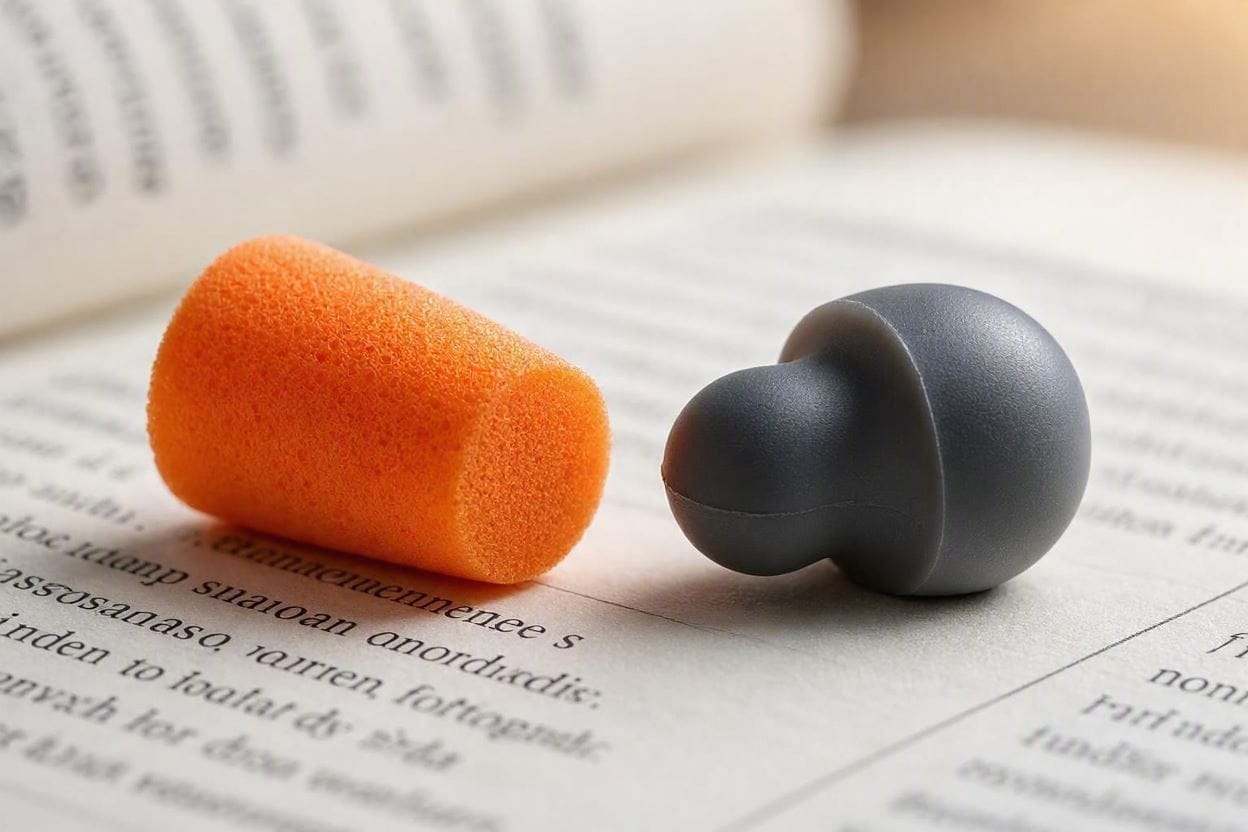
While cheap, neon-orange construction earplugs have a very high NRR (Noise Reduction Rating) and will absolutely block sound, they are terrible for studying. They expand forcefully inside the ear canal, causing severe pressure pain and headaches after about an hour of use. They also muffle sound unevenly, making you feel disoriented and isolated. Premium silicone plugs are vastly superior for cognitive comfort.

Ememobong is the lead researcher and editor at Quiet Dwelling. As a professional technical writer, he specializes in breaking down complex acoustic engineering concepts into simple, actionable steps. His goal is to help people build distraction-free environments for better sleep and deep work.