
*This post contains affiliate links. If you use these links to buy something we may earn a commission at no extra cost to you.
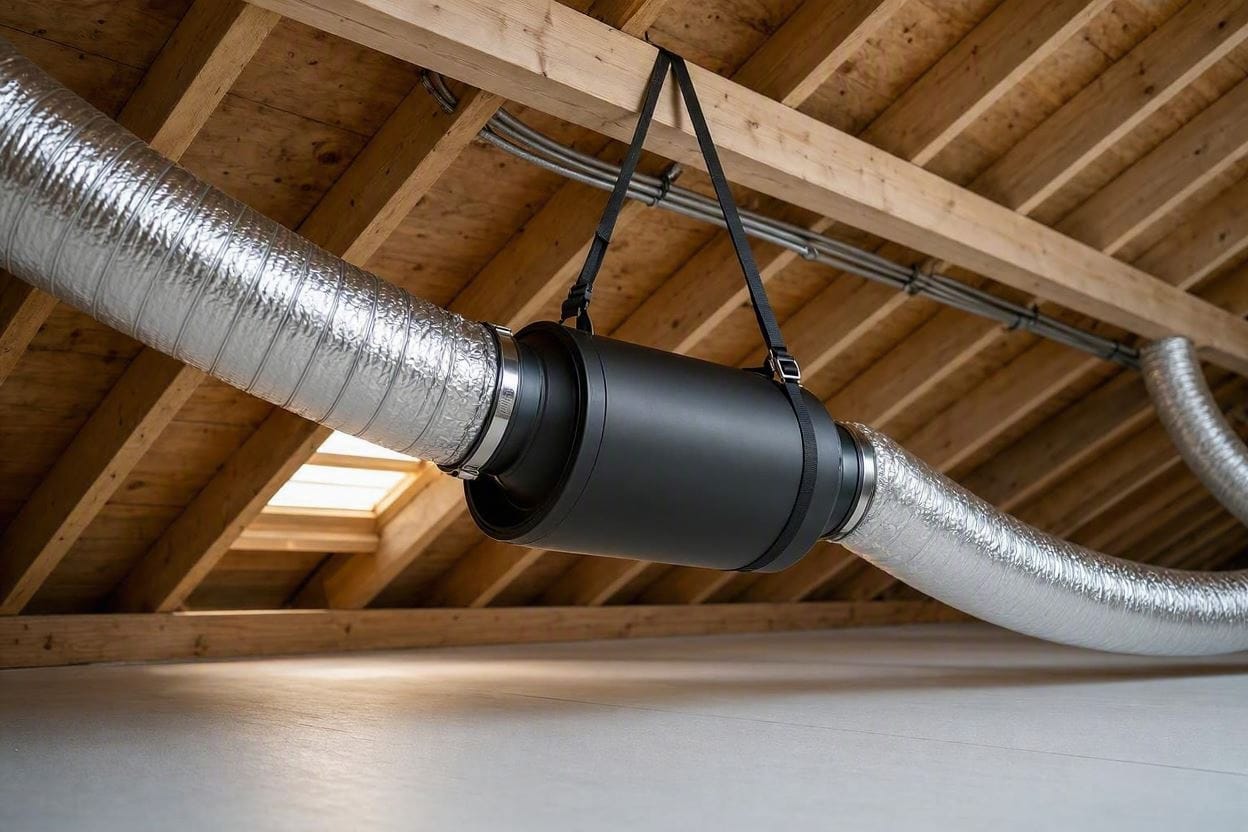
Whether you are trying to push A/C into a hot upstairs bedroom, ventilating a home theater equipment closet, or exhausting a workshop, an inline duct fan is the ultimate airflow solution. But there is a massive catch: standard inline fans sound like a jet turbine echoing through your walls.
Because these fans are directly connected to your home’s metal ductwork, they act as an acoustic megaphone. The violent mechanical hum of cheap AC motors, combined with high-speed air turbulence, creates a low-frequency drone that can easily ruin the peace of your acoustic environment.
Fortunately, ventilation technology has experienced a massive leap forward. By replacing outdated AC motors with advanced EC (Electronically Commutated) motors and utilizing aerodynamic stators, the newest inline fans operate in near-total silence. Here are the best quiet inline duct fans to boost your airflow without waking the house.
The Science of Silence: Why EC Motors Reign Supreme
According to the American Society of Heating, Refrigerating and Air-Conditioning Engineers (ASHRAE), controlling mechanical noise at the source is the most critical step in HVAC acoustics. If you buy a cheap inline fan, you are buying an Alternating Current (AC) motor. AC motors are notoriously loud because they rely on voltage suppression to change speeds, which creates a loud, magnetic “hum” or “buzz” when turned down.
Premium quiet fans use EC (Electronically Commutated) motors. EC motors use an onboard micro-processor to control the magnetic fields perfectly. This allows the fan to utilize PWM (Pulse Width Modulation) to spin at incredibly low speeds without producing any electrical humming.
Combine this frictionless motor with a mixed-flow impeller blade design—which slices the air instead of slapping it—and you get a fan that moves massive volumes of air in virtual silence.
1. AC Infinity CLOUDLINE Series (The Gold Standard)
In the world of acoustic ventilation, AC Infinity is the undisputed king. Originally designed to cool high-end audio-video equipment without ruining the acoustic environment of a home theater, the CLOUDLINE series is an engineering masterpiece.
Operating at an astonishingly low 32 dBA (for the 6-inch T6 model), this fan is virtually undetectable to the human ear. It features a state-of-the-art EC motor and dual-ball bearings that eliminate mechanical friction. Furthermore, it comes with a digital smart controller that allows you to set precise temperature and humidity triggers, ensuring the fan only runs exactly when needed, at the exact minimum speed required.
The Pros
- Operates at a whisper-quiet 32 dBA; completely silent from a few feet away.
- PWM technology ensures zero motor hum even at the lowest speed settings.
- Incredible smart thermostat controller with Bluetooth/WiFi app connectivity.
The Cons
- Premium technology comes with a higher price tag.
- The smart controller setup requires a minor learning curve.
2. TerraBloom ECMF Series (The High-Capacity Pick)
If you have a massive attic, a sprawling basement workshop, or a long run of complex ducting, you need a fan that can move extreme volumes of air. The TerraBloom ECMF series delivers commercial-grade power while keeping noise to a strict minimum.
While slightly louder than the AC Infinity at 50 dBA at max speed, it pushes significantly more air against static pressure. TerraBloom utilizes a heavy-duty coated steel housing (which adds acoustic mass) rather than plastic, helping to trap the high-frequency motor noise inside the casing. It also utilizes a premium EC motor, meaning no buzzing or electrical hum when dialed down to lower speeds.
The Pros
- Massive airflow capability for long duct runs and high static pressure.
- Heavy steel casing provides excellent structural sound damping.
- Energy-efficient EC motor saves money on continuous 24/7 operation.
The Cons
- At max speed, the sheer volume of moving air is audible.
- Does not include an advanced smart thermostat display (uses a manual dial).
3. VIVOSUN Quiet Inline Fan (The Budget Pick)
If you just need to boost the airflow to a single stuffy room and don’t want to break the bank on smart controllers and Bluetooth apps, the VIVOSUN Quiet series provides excellent value. Rated around 49 dBA, it is significantly quieter than standard hardware store boosters.
Instead of an expensive EC motor, VIVOSUN uses an optimized mixed-flow design and a specialized aerodynamic stator that directs the air cleanly without extreme turbulence. The fan blade is perfectly balanced at the factory to prevent the unit from vibrating against your rafters or drywall.
The Pros
- Very affordable price point for a dedicated inline fan.
- Mixed-flow impeller design reduces air turbulence and whistling.
- Lightweight plastic body makes installation incredibly easy.
The Cons
- Does not feature the friction-free, hum-free performance of a true EC motor.
- The plastic housing does not absorb motor noise as well as steel.
The Final Step: Upgrading to Acoustic Ducting
Installing an EC-motor fan fixes the mechanical engine noise, but you still have one problem left: the sound of rushing air. If you push 400 CFM of air through a smooth, uninsulated metal duct, it will sound like a wind tunnel.
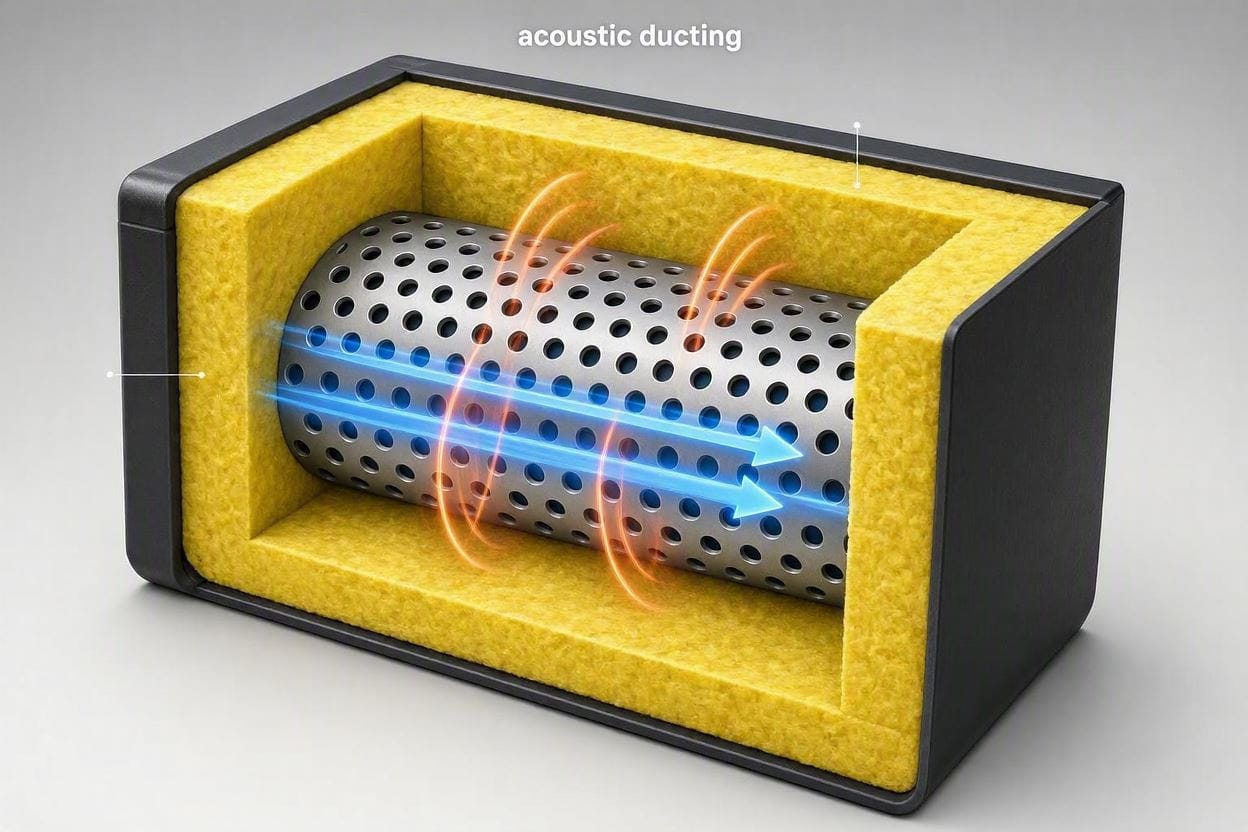
To achieve total silence, you must pair your quiet inline fan with Acoustic Insulated Ducting. Unlike standard cheap foil ducting, acoustic ductwork uses a perforated inner core surrounded by a thick layer of sound-absorbing fiberglass.
As the air rushes through the pipe, the high-frequency “whoosh” sound waves expand through the tiny perforations and are instantly trapped and absorbed by the fiberglass layer (utilizing the Principle of Absorption). By combining an AC Infinity fan with a 25-foot run of acoustic ducting, you can completely overhaul your home’s ventilation system without hearing a single sound.

Ememobong is the lead researcher and editor at Quiet Dwelling. As a professional technical writer, he specializes in breaking down complex acoustic engineering concepts into simple, actionable steps. His goal is to help people build distraction-free environments for better sleep and deep work.