
*This post contains affiliate links. If you use these links to buy something we may earn a commission at no extra cost to you.
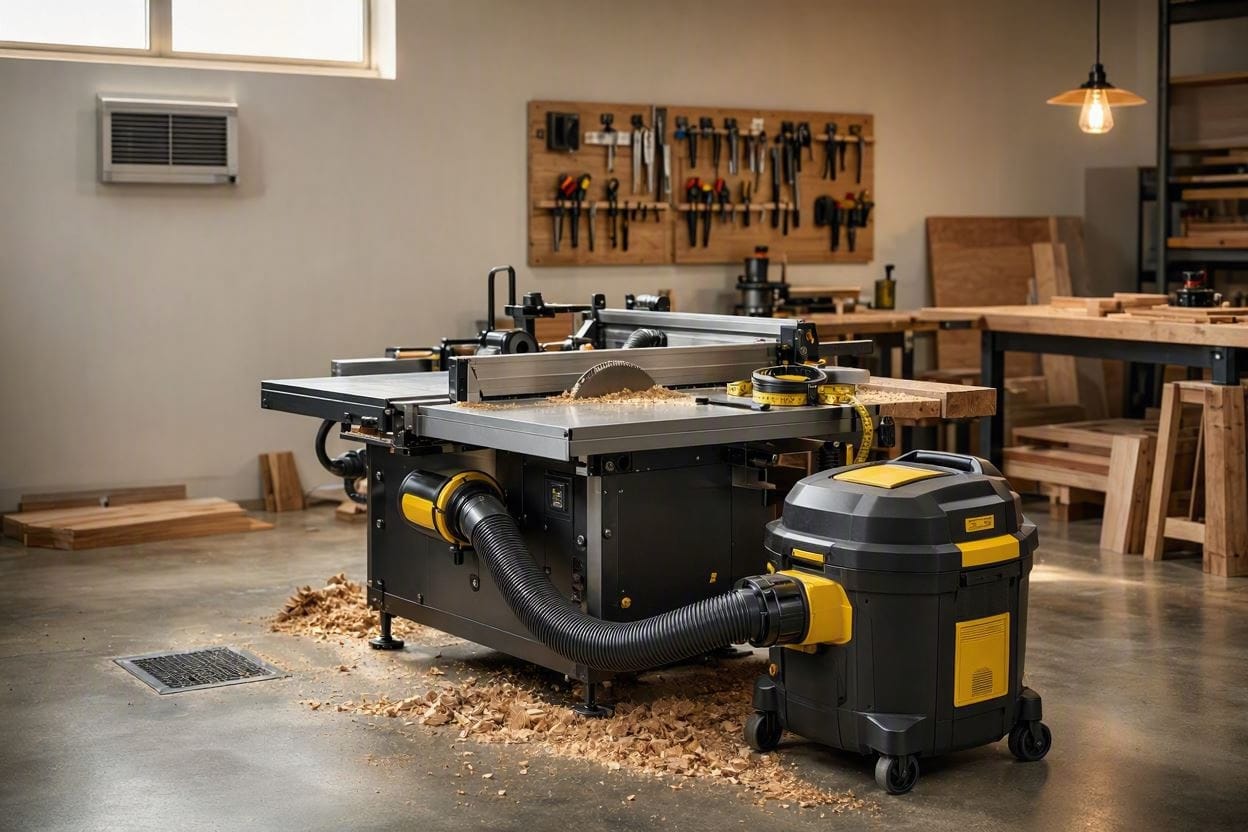
Anyone who spends time in a garage, DIY workshop, or detailing a car knows the brutal reality of a standard wet/dry vacuum. The moment you flip the switch, a deafening, high-pitched scream bounces off the hard concrete walls. It is loud enough to make your ears ring, wake up the family inside the house, and annoy the neighbors.
According to the Occupational Safety and Health Administration (OSHA), exposure to noise levels above 85 decibels (dBA) can cause permanent hearing damage. Shockingly, the average big-box store shop vac routinely blasts between 85 and 95 dBA, transforming a simple cleanup job into an acoustic hazard.
Fortunately, tool manufacturers have finally started treating noise pollution as a serious design flaw. By utilizing bypass motors, acoustic foam baffling, and advanced airflow dynamics, the newest generation of “stealth” shop vacs can suck up sawdust and water at a volume lower than a normal conversation. Here are the best quiet shop vacs on the market today.
The Science of Silence: Flow-Through vs. Bypass Motors
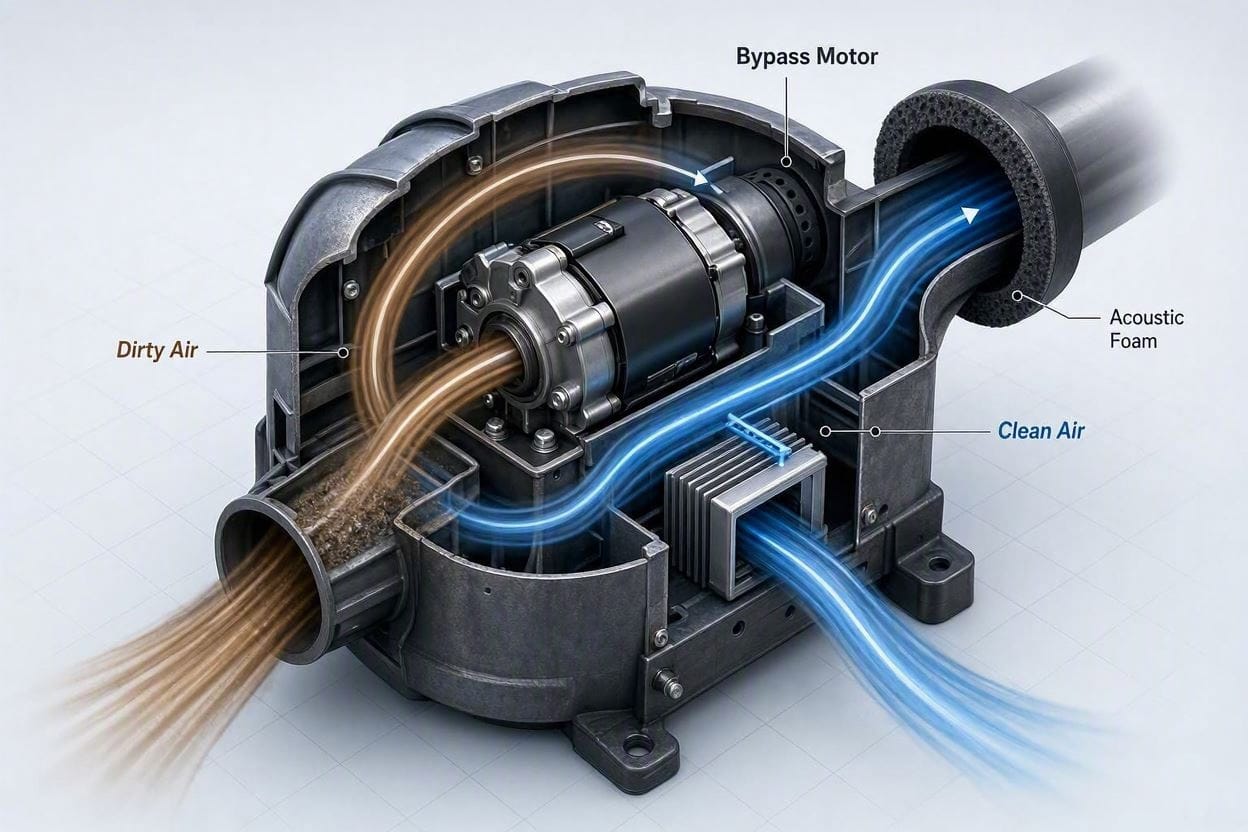
To understand why cheap shop vacs are so loud, you need to understand how they are built. Almost all budget wet/dry vacuums use a Flow-Through Motor. In this design, the dirty, dusty air sucked up by the hose is the exact same air used to cool the motor. Because the motor relies on massive, turbulent airflow to keep from overheating, it cannot be enclosed in an acoustic casing. The sound of the engine simply blasts out of the exhaust port.
Premium, quiet shop vacs utilize a Bypass Motor. In a bypass system, the working air (the air sucking up the debris) is kept entirely separate from the cooling air. Because the motor has its own clean, dedicated cooling fan, manufacturers can heavily insulate the motor housing.
By applying the 4 Principles of Soundproofing—specifically Absorption and Damping—engineers line the inside of the casing with acoustic foam and create baffled pathways that force the sound waves to bounce and trap themselves before escaping.
1. DeWalt StealthSonic 12-Gallon (The Best Overall)
If you want the perfect balance of raw suction power, massive capacity, and whisper-quiet operation, the DeWalt StealthSonic series is the undisputed king of the modern garage. Operating at under 65 dBA, it completely revolutionizes the cleanup experience.
As we covered in our guide on understanding the decibel scale, a 65 dBA rating means this vacuum is about the volume of a normal background conversation. DeWalt achieves this by redesigning the exhaust port. Instead of blasting turbulent air straight out the back (which causes a high-frequency whistle), the air is routed through a specialized acoustic muffler that diffuses the airflow and strips away the noise.
The Pros
- Operates at an astonishingly low 65 dBA, eliminating the need for ear protection.
- Massive 12-gallon capacity handles flooded basements and heavy sawdust.
- Incredible price-to-performance ratio compared to European brands.
The Cons
- The large form factor takes up significant floor space in a tight garage.
- The included hose is somewhat stiff compared to premium flexible hoses.
2. Fein Turbo I (The Premium Pick)
For serious DIYers and professional woodworkers who hook their vacuum directly to their orbital sanders and table saws, “dust extractors” are preferred over standard shop vacs. In the world of premium dust extraction, the German-engineered Fein Turbo I is legendary.
Operating at a stunningly quiet 60 dBA, the Fein utilizes a true high-end bypass motor heavily encased in acoustic material. One of its best features is the “Auto-Start” outlet. You plug your power tool directly into the vacuum. When you turn on your sander, the vacuum automatically silently purrs to life, capturing the dust at the source without screaming in your ear.
The Pros
- True 60 dBA operation makes it one of the quietest vacuums on the planet.
- Auto-start functionality for seamless integration with power tools.
- Long, extremely high-quality anti-static hose prevents clogs and shocks.
The Cons
- Premium German engineering commands a much higher price tag.
- Replacement fleece filter bags are an ongoing expense.
3. Makita Quiet Series (The Best Durability)
If you don’t need the massive 12-gallon capacity of the DeWalt but want something more rugged and affordable than the Fein, the Makita Quiet Series sits right in the sweet spot. Rated at exactly 60 dBA, this compact extractor is perfect for small garages and car detailing.
Makita achieved this ultra-low decibel rating by completely redesigning the internal airflow. The motor sits on rubber dampeners to stop impact vibration, and the exhaust air is pushed through a two-stage acoustic baffle system. It is incredibly durable, highly portable, and won’t leave your ears ringing after a long day of cleaning.
The Pros
- Exceptional 60 dBA acoustic rating.
- Compact footprint makes it incredibly easy to store and maneuver.
- Features excellent HEPA filtration to keep garage air pure.
The Cons
- Smaller tank capacity requires more frequent emptying.
- Lower peak horsepower compared to the massive DeWalt model.
The Easy Upsell: Install A Shop Vac Muffler
If your current shop vac is deafening, but you aren’t quite ready to invest in a premium stealth model, there is a $15 acoustic trick you can deploy today: The Shop Vac Muffler.
A massive portion of a vacuum’s noise profile comes from the exhaust port. As turbulent, high-speed air is blasted out of a tiny hole, it creates a high-frequency aerodynamic whistle. By attaching an aftermarket Shop Vac Exhaust Muffler directly to the blower port, you instantly diffuse the air.
Inside the muffler, acoustic foam forces the air to slow down and expand, stripping the high-frequency “hiss” and leaving you with a much lower, tolerable rumble. While it won’t magically turn a cheap vacuum into a Fein Turbo, it is the best, most affordable upgrade for instant acoustic relief.

Ememobong is the lead researcher and editor at Quiet Dwelling. As a professional technical writer, he specializes in breaking down complex acoustic engineering concepts into simple, actionable steps. His goal is to help people build distraction-free environments for better sleep and deep work.