*This post contains affiliate links. If you use these links to buy something we may earn a commission at no extra cost to you.
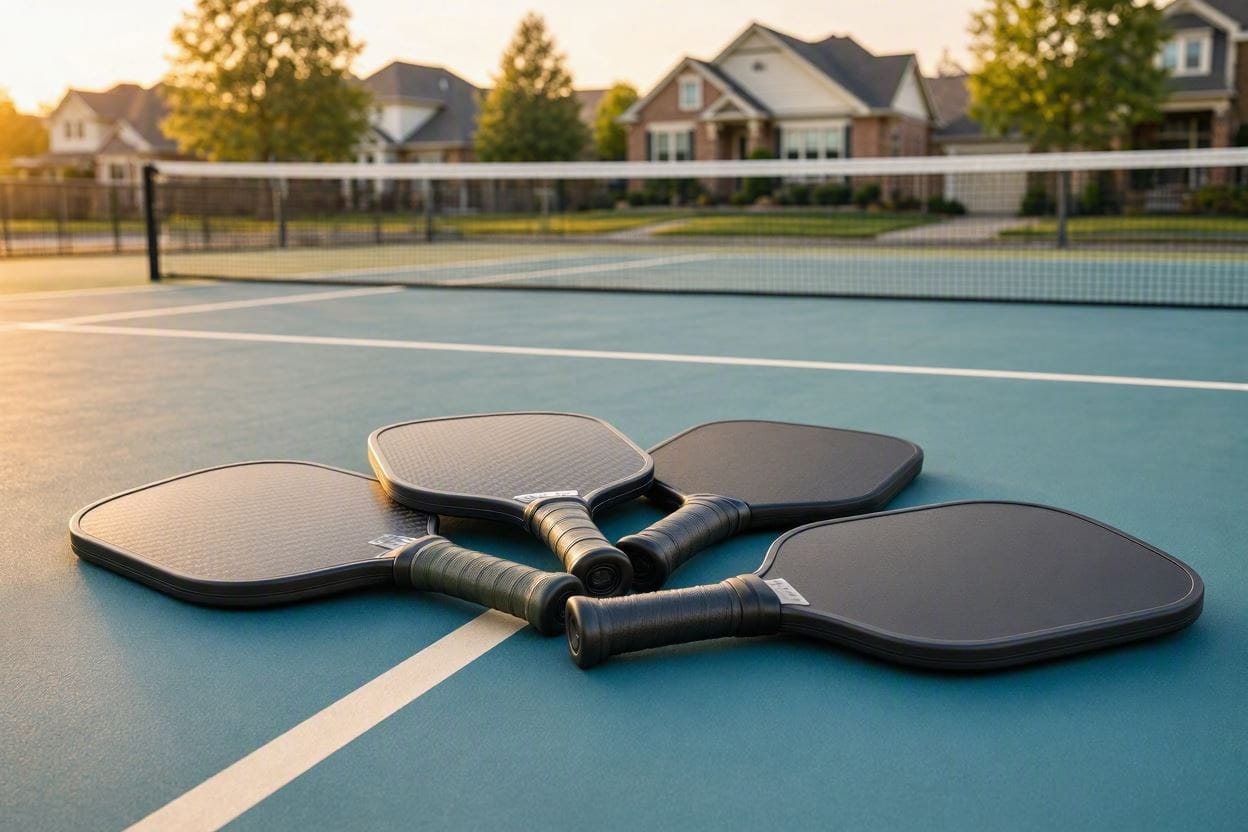
Pickleball has a noise problem, and if you live near a court, play in an HOA community, or show up for sunrise games while everyone else is still trying to sleep, you already know exactly what that problem sounds like. It is not the chatter or the footwork. It is the relentless, high-pitched pop of the paddle and ball that cuts through the air like a tiny hammer blow over and over again.
That sharp impact noise has become such a real-world nuisance that some communities have started regulating it directly. USA Pickleball has responded by creating quiet-focused equipment standards, and manufacturers are now building paddles specifically designed to reduce the harsh acoustic crack that makes the sport so controversial near homes and shared spaces. If you are trying to keep the peace without giving up the game, a quieter paddle is the smartest upgrade you can make.
Here are the best quiet pickleball paddles in 2026 for reducing that neighbor-annoying pop while still keeping enough control, feel, and playability to make the switch worthwhile.
The Acoustic Physics of Quiet Pickleball Paddles
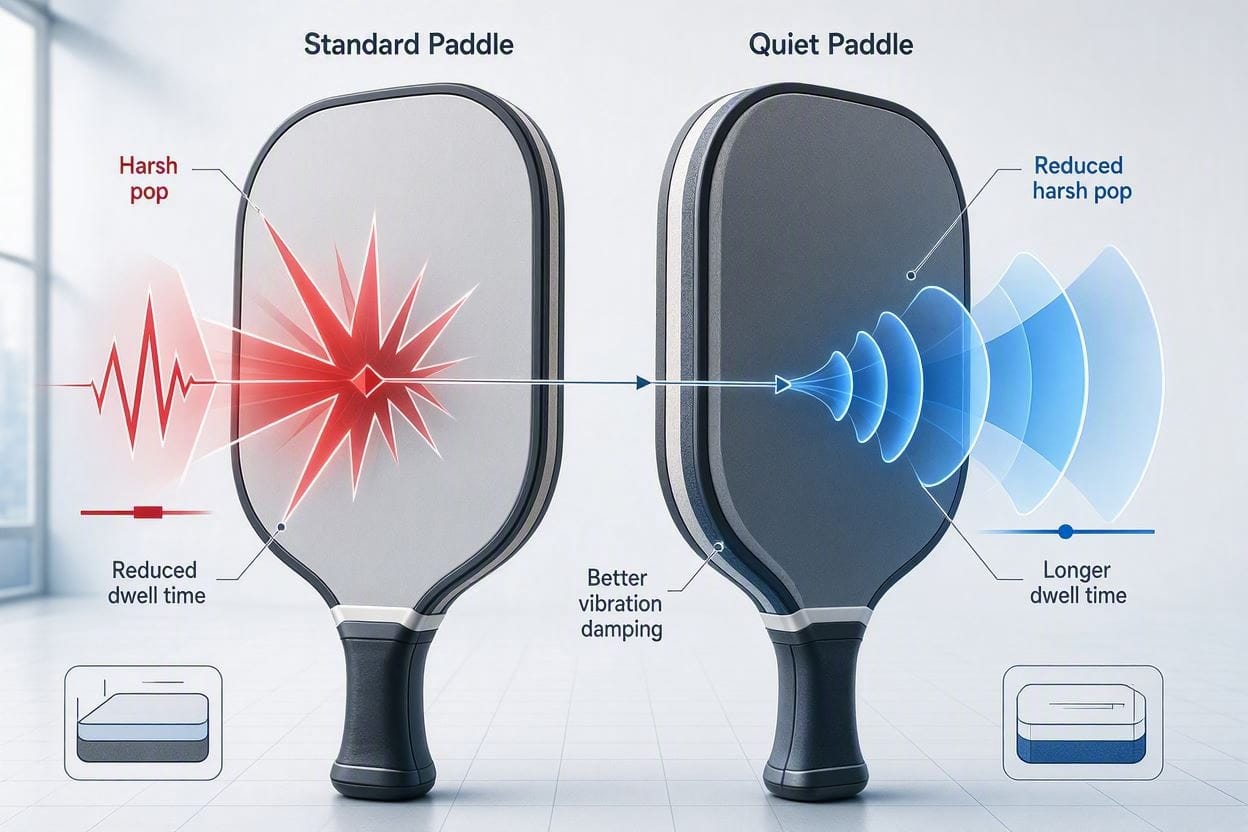
To understand why some paddles sound dramatically less offensive than others, you need to look at the three acoustic variables that matter most: impact stiffness, vibration damping, and dwell time.
- Impact Stiffness: Very stiff paddle faces rebound the ball instantly, creating a sharp, bright, high-frequency crack. Softer faces smooth out that attack and make the sound less piercing.
- Vibration Damping: Some paddle constructions absorb more of the impact energy before it turns into audible vibration. Less uncontrolled vibration means less nasty ring and less acoustic harshness.
- Dwell Time: When the ball stays on the paddle face just a fraction longer, the impact sounds rounder and softer instead of explosive. That tiny delay is one of the biggest reasons quiet paddles sound more civilized.
This is not all that different from what happens in the home. If you have read our guide to viscoelastic damping or our breakdown of the four principles of soundproofing, the pattern will feel familiar. Reduce resonance, add damping, and slow the energy transfer slightly, and the sound becomes much easier to live with.
That is exactly what the better quiet paddles are trying to do.
1. OWL Sport The OWL (The Purpose-Built Noise Killer)
If your number one goal is to reduce pickleball noise as aggressively as possible, The OWL is the paddle that deserves your attention first. This is not just a softer-feeling control paddle that happens to be less loud than average. It was designed from the ground up to address one specific problem: the piercing pop that has turned so many neighborhood courts into conflict zones.
That matters because many paddles marketed as “quiet” are really just slightly less harsh versions of normal designs. The OWL stands out because its entire identity is built around lowering acoustic output. For HOA communities, municipal courts, apartment-adjacent recreation spaces, and players already dealing with complaints, this is the clearest direct answer on the market.
USA Pickleball also announced The OWL as the first certified quiet product, which gives it more credibility than the usual vague marketing language. If you need the strongest “I am actually trying to solve the noise problem” option, this is it.
OWL Sport The OWL Quiet Paddle
- Acoustic Profile: Purpose-built to soften the sharp, high-frequency paddle crack that makes pickleball so irritating near homes.
- Key Feature: Quiet-focused construction designed specifically for lower-noise recreational play.
- Best For: HOA communities, noise-sensitive courts, and players who want the most direct solution to court complaints.
2. Diadem Hush (The Community-Compliance Pick)
The Diadem Hush makes the most sense for buyers who are not just shopping out of curiosity. They are shopping because there is an actual problem to solve. Maybe your club is discussing noise limits. Maybe your court has become a battleground between players and nearby residents. Maybe your neighborhood has reached the point where every morning session feels politically risky.
That is where the Hush becomes extremely appealing. It is built around the idea of quieter play in shared spaces, which means the product positioning itself matches the exact reason many people are searching for it. It is not trying to be a generic paddle for everyone. It is aimed at players who know the noise issue has become too big to ignore.
For that reason alone, it feels especially relevant in 2026. The demand is no longer theoretical. In some places, quieter paddles are fast becoming the cost of continuing to play in peace.
Diadem Hush Pickleball Paddle
- Acoustic Profile: Lower, softer impact character aimed at reducing the harsh pop heard across residential courts.
- Key Feature: Community-friendly paddle design built around quieter recreational play.
- Best For: Shared courts, neighbor-sensitive environments, and players trying to stay ahead of restrictions.
3. Gearbox Pro Ultimate Elongated Quiet Tech (The Competitive Player’s Quiet Option)
One reason many people drag their feet on quiet paddles is simple: they are afraid a quieter paddle will feel mushy, slow, or neutered. The Gearbox Pro Ultimate Elongated Quiet Tech is the kind of model that speaks directly to that fear.
Rather than feeling like a novelty compliance tool, it aims to keep a more modern performance identity while still pushing toward reduced acoustic output. That makes it a smart fit for stronger recreational players and serious intermediates who want to quiet things down without feeling like they have stepped into an entirely different sport.
If you still care deeply about responsiveness, reach, and overall confidence through contact, this is one of the most interesting entries in the category.
Gearbox Pro Ultimate Elongated Quiet Tech
- Acoustic Profile: More restrained and less pop-heavy than ultra-stiff power paddles.
- Key Feature: Quiet-oriented construction that still targets a competitive, modern feel.
- Best For: Intermediate and advanced players who want less noise without sacrificing too much performance identity.
4. Selkirk LUXX Control Air (The Soft-Feel Control Specialist)
The Selkirk LUXX Control Air is a strong match for players who value touch, resets, and finesse more than violent put-away power. That softer control-oriented personality naturally makes it attractive for anyone who is also trying to get away from the most brittle, high-pitched paddle sounds.
Not every quiet-paddle buyer is being forced into the category by court politics. Some simply hate that hard crack certain paddles produce. A plush-feeling control paddle like this can be a more organic answer, because it fits a real style of play rather than feeling like a compromise made under pressure.
If you want a paddle that sounds less aggressive while still feeling mainstream and premium, this is one of the safest choices.
Selkirk LUXX Control Air
- Acoustic Profile: Softer, more muted response than loud, crisp, power-first paddle constructions.
- Key Feature: Plush control-oriented feel that naturally helps tame impact harshness.
- Best For: Touch players, control players, and anyone who dislikes loud paddle feedback.
5. Paddletek Bantam ESQ-C (The Familiar-Feel Middle Ground)
The Paddletek Bantam ESQ-C is a practical choice for recreational players who want a quieter paddle without making a dramatic leap into ultra-specialized gear. It feels like a middle ground option for buyers who know the noise is an issue but still want something that resembles a familiar mainstream paddle experience.
That makes it useful for neighborhood courts, early morning sessions, and community centers where nobody has necessarily mandated quieter gear yet, but everyone would still benefit from a less abrasive sound profile.
If your goal is to be less annoying rather than to become a case study in acoustic compliance, this is the kind of paddle that makes a lot of sense.
Paddletek Bantam ESQ-C
- Acoustic Profile: Less piercing and less brittle than many stiff, pop-heavy recreational paddles.
- Key Feature: Familiar-feeling all-around playability with a more civilized sound signature.
- Best For: Casual and recreational players who want quieter play without overthinking the switch.
How To Choose the Best Quiet Pickleball Paddle
Buying a quieter paddle is not just about grabbing the first model with the word “quiet” in the name. A good purchase depends on where you play, how you play, and how serious the noise issue has become around you.
- Start with the rules: If your HOA, club, or city court has noise restrictions, check whether they want a specific quiet-approved style of paddle instead of simply something that sounds softer.
- Think about your playing style: Power players often prefer stiffer faces, but those can also be louder. Control-oriented paddles usually sound more muted because they do not rebound as violently.
- Remember the whole acoustic chain: The paddle matters, but so do the ball, court surface, enclosure, and how hard you hit. This is the same basic reason flanking noise makes home soundproofing more complicated than people expect.
- Prioritize softer sound character: Many of the best quiet paddles are not completely silent. What matters most is that they reduce the bright, cutting pop that people find stressful.
- Buy for the environment: If you play near homes, go as quiet as possible. If you play inside a larger sports complex, a moderately quieter paddle may be enough.
Can a Quiet Paddle Fully Solve Pickleball Noise Complaints?
Not always, but it can make a surprisingly large difference.
The reason is simple. Most complaints are not about a vague sense of “sports noise.” They are about the very specific impact signature of pickleball: a repetitive, sharp, high-frequency pop that travels well and becomes maddening through repetition. A quieter paddle directly targets that exact sound.
Still, equipment alone cannot solve every bad court setup. If a court is surrounded by hard reflective surfaces, used for long hours, and located too close to homes, there may still be friction. But switching to a quieter paddle is the fastest and easiest step available. No construction. No permits. No endless neighborhood meetings. Just a lower-noise setup starting with your very next game.
And if you already understand how repetitive noise affects comfort and focus from articles like our guide to sleep-disrupting decibel levels, you already understand why even a small reduction in harshness can matter so much over time.
The Best Quiet Pickleball Paddle For Your Situation
If you want the most direct answer to the pickleball noise problem, the OWL Sport The OWL is the best place to start. It is the clearest purpose-built quiet paddle for players who need to reduce complaints and keep the peace on residential courts.
If you are playing in a shared community setting where court politics are becoming tense, the Diadem Hush is another especially smart pick. For players who still want a more performance-minded feel, the Gearbox Pro Ultimate Elongated Quiet Tech does the best job of balancing competitive expectations with a quieter acoustic signature.
The bottom line is simple: quiet pickleball paddles are no longer a gimmick. They are a real solution to a real-life problem, and in 2026, they have become one of the smartest ways to keep enjoying the sport without turning your neighborhood into an acoustic war zone.
Frequently Asked Questions
Are Quiet Pickleball Paddles actually Quieter?
Yes, many of them are. The biggest difference is usually not total silence, but a softer, less piercing impact sound that reduces the harsh pop people find so annoying.
Do Quiet Pickleball Paddles Have Less Power?
Sometimes. Many quieter paddles trade a bit of explosive rebound for more damping, softer feel, and better control. For a lot of players, that is a perfectly worthwhile trade.
What Does Quiet Approved Mean in Pickleball?
It generally refers to equipment designed to meet quiet-focused performance standards intended to reduce the sport’s acoustic footprint in neighborhoods and shared recreational spaces.
Are Quiet Pickleball Paddles Required Anywhere?
Yes. Some communities and facilities have started requiring quieter equipment because nearby residents have pushed back against persistent court noise.
What else Helps Reduce Pickleball Noise Besides the Paddle?
Quieter balls, restricted play hours, better court placement, and noise-mitigation screens can all help. The paddle is the easiest first fix, but it is only one part of the acoustic equation.

Ememobong is the lead researcher and editor at Quiet Dwelling. As a professional technical writer, he specializes in breaking down complex acoustic engineering concepts into simple, actionable steps. His goal is to help people build distraction-free environments for better sleep and deep work.