*This post contains affiliate links. If you use these links to buy something we may earn a commission at no extra cost to you.
If you have ever tried to freshen up your kitchen floor early in the morning or tackle sticky footprints after everyone has gone to bed, you already know the problem with most floor-cleaning machines. They clean well enough, but they also sound like you accidentally started airport ground support in your hallway.
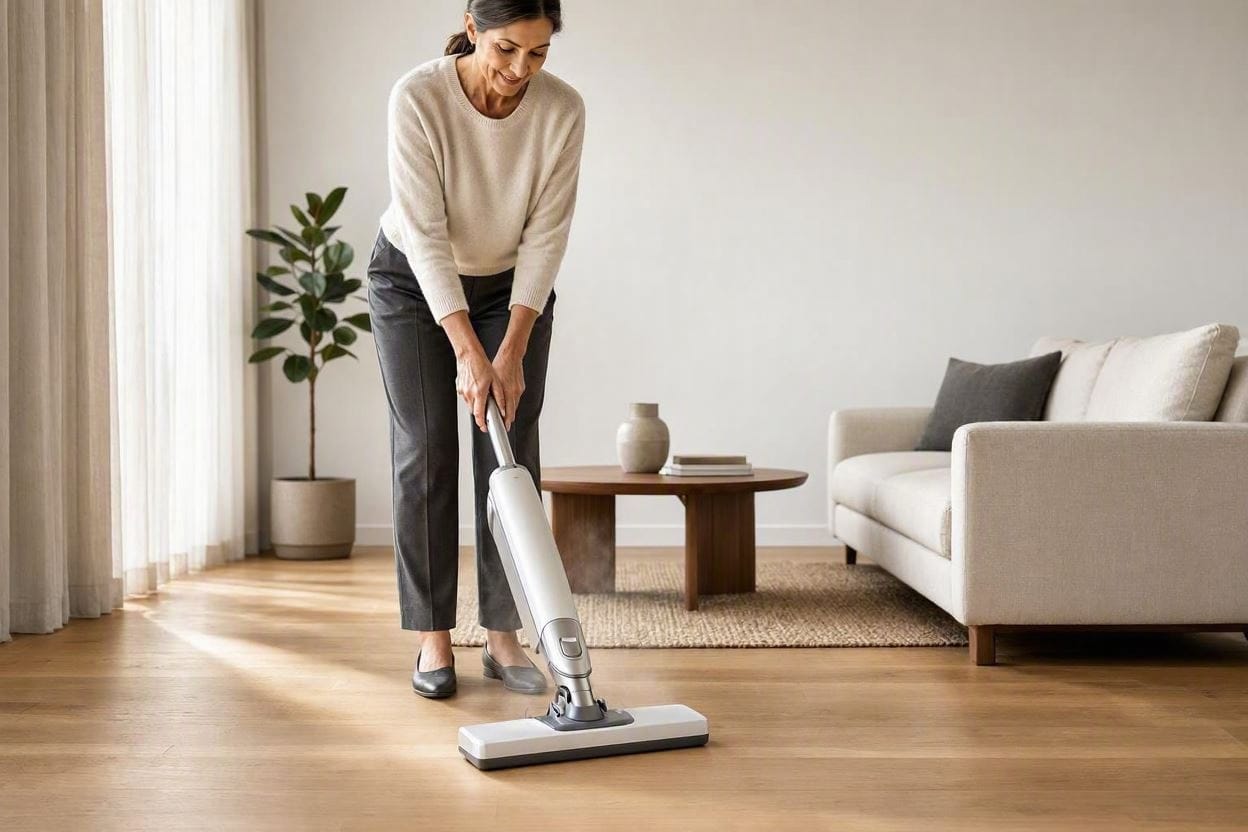
That is exactly why steam mops are so appealing. Unlike vacuum-based cleaners that rely on a high-RPM motor to create suction, a steam mop cleans primarily through heated water vapor and a microfiber pad. That basic difference makes steam mops noticeably quieter than most vacuums, wet-dry floor cleaners, and carpet extractors. Even product comparisons outside the quiet-living niche consistently note that steam mops are generally quieter because they are not built around a loud suction motor. steam mops are generally quieter than vacuum mops
That does not mean every steam mop is whisper-silent. Some still click, hiss, knock, or vibrate more than they should. But if your goal is to clean sealed hard floors without waking a baby, annoying a neighbor through shared walls, or ruining the peace of the house, a good steam mop is one of the easiest low-noise upgrades you can make.
Here are the best quiet steam mops in 2026, along with what actually makes one model calmer and less irritating than another.
The Acoustic Physics of Steam Mops
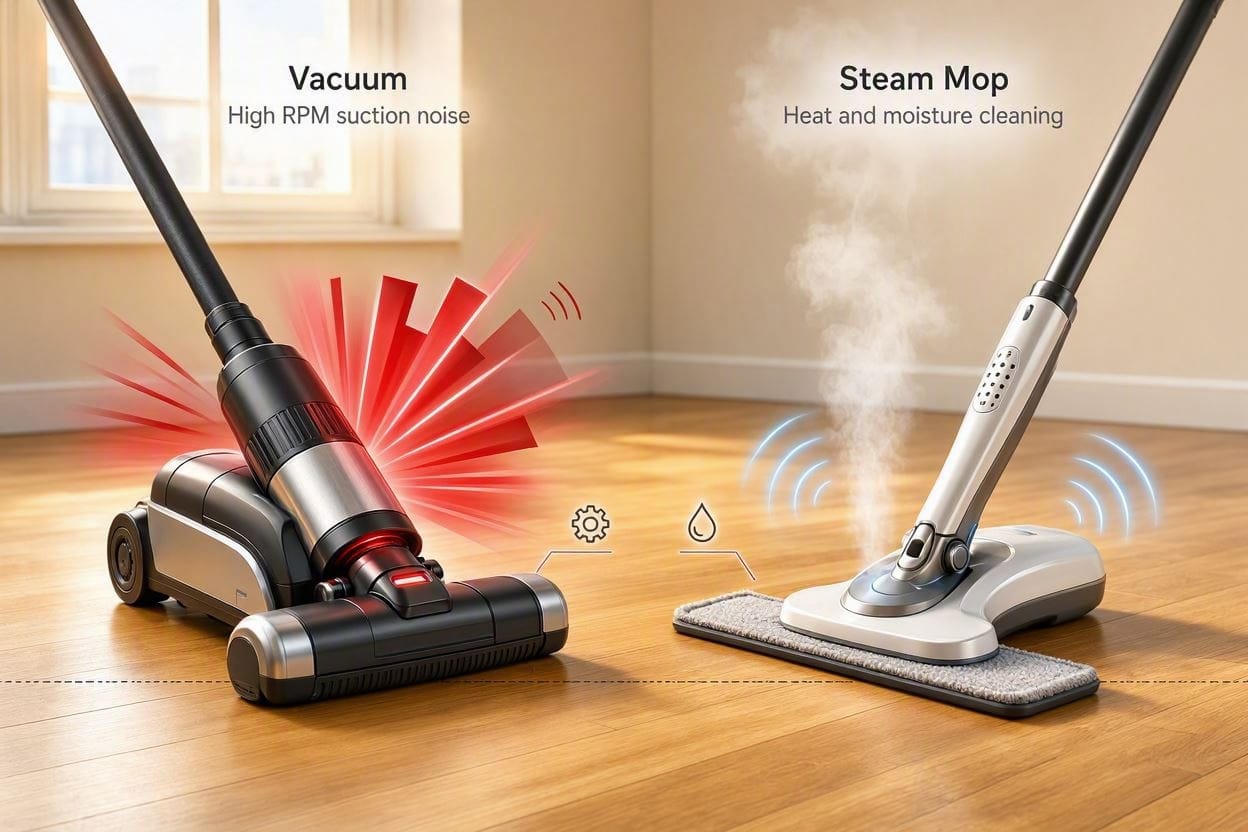
To understand why steam mops are usually quieter than other floor-cleaning machines, you need to look at where the noise normally comes from.
- No high-speed suction turbine: A vacuum or carpet cleaner has to spin a motor fast enough to generate serious airflow. That creates the familiar high-pitched whine. A steam mop mostly avoids that entire noise source.
- Lower mechanical complexity: Steam mops typically have fewer aggressive moving parts than vacuum-mop hybrids, which means fewer opportunities for rattling, aerodynamic noise, and motor scream.
- Steam replaces brute-force airflow: Instead of sucking debris and liquid upward, a steam mop loosens grime with hot vapor and wipes it away through pad contact.
The remaining noise usually comes from three places: water heating, steam pulses, and plastic vibration. Some models also make knocking sounds when water runs low or after sitting for a while, which even manufacturer support pages acknowledge can happen on certain steam-and-vac combinations. steam mop knocking can happen when water runs low or after storage
That is why the best quiet steam mops are not just “steam mops.” They are steam mops with better chassis damping, smoother steam delivery, and fewer unnecessary mechanical gimmicks.
1. Bissell PowerFresh Steam Mop (The Best Overall Quiet Pick)
If you want the safest all-around option, the Bissell PowerFresh is the first model I would look at. It has been a long-running favorite because it does the basic job well without turning floor cleaning into a dramatic event.
Acoustically, the appeal is straightforward. It skips the loud suction architecture that makes many combo floor cleaners so irritating and sticks to a relatively simple steam-mop format. That means what you hear is mostly a soft mechanical hum, occasional steam release, and pad movement across the floor rather than a constant motor shriek.
It also helps that the PowerFresh is a mature design. In low-noise appliances, refinement matters. A machine that has had several product generations to iron out awkward rattles and clumsy ergonomics is usually easier to live with than a newer gimmick-heavy cleaner trying to do five jobs badly.
Bissell PowerFresh Steam Mop
- Acoustic Profile: Gentle heating and steam-release sounds without the aggressive high-pitched whine of suction-based cleaners.
- Key Feature: Straightforward steam-mop design that focuses on sealed hard floors instead of noisy all-in-one complexity.
- Best For: Most households that want a reliable, quieter alternative to vacuum-style hard-floor cleaners.
2. Shark Steam Mop (The Simple Lightweight Whisper)
The Shark Steam Mop earns its place because it does something many people underestimate: it stays simple. Simplicity is often good for acoustics. Fewer extra systems usually means fewer rattles, fewer abrupt noises, and less bulk vibrating through cheap plastic.
This kind of mop is especially attractive for apartments and smaller homes where you do not need a giant machine with multiple attachments and oversized water tanks. The lighter frame is easier to maneuver, and because you are not dragging around a heavier multi-function cleaner, the whole experience feels calmer and less disruptive.
For quiet cleaning, “less machine” is often the right answer. You want enough heat, enough pad contact, and enough usability to keep the floors clean – not a gadget that sounds like it is constantly trying to prove how powerful it is.
Shark Steam Mop
- Acoustic Profile: Light mechanical hum and soft steam output with minimal drama during normal use.
- Key Feature: Lightweight body and uncomplicated design that helps keep both handling and noise levels manageable.
- Best For: Apartments, smaller homes, and anyone who wants a no-fuss steam mop that does not dominate the room.
3. Black+Decker Steam Mop (The Practical Budget-Friendly Option)
If you want a quieter cleaning tool without spending premium money, the Black+Decker Steam Mop is a smart place to look. Budget appliances often get louder because manufacturers cut cost in exactly the wrong places – thin plastic housings, weaker assembly, and more vibration. But some simpler steam mops avoid the worst of that because they are not trying to power loud suction systems in the first place.
This model makes sense for buyers who want the core quiet-steam advantage without paying for a giant feature set they will barely touch. On sealed hard floors, that can be enough. You are trading fancy extras for a more straightforward, easier-to-live-with appliance.
That matters if your quiet-cleaning goal is practical rather than obsessive. You do not need perfection. You just need a machine that gets the floor clean without making the whole house feel assaulted.
Black+Decker Steam Mop
- Acoustic Profile: Quieter than most vacuum-based hard-floor cleaners thanks to its simple steam-first design.
- Key Feature: Budget-friendly access to low-noise hard-floor cleaning without unnecessary complexity.
- Best For: Shoppers who want the steam-mop noise advantage at a more affordable price point.
4. PurSteam 10-in-1 Steam Mop (The Versatile Quiet Cleaner)
The PurSteam 10-in-1 is appealing for households that want one machine to handle more than just the kitchen floor. Multi-use steam cleaners can be a mixed bag, but when they are built around steam instead of vacuum suction, they often stay reasonably civilized from a noise perspective.
That makes this kind of model especially useful if your idea of “quiet cleaning” includes sealed floors, grout lines, bathroom surfaces, and occasional handheld steaming tasks. You are getting more flexibility without necessarily inviting the shrill noise profile of a wet-dry vacuum.
The main thing to watch with multi-function units is whether the attachments feel solid or rattly. Quiet appliances are often ruined by loose accessory fit, thin housings, and wobbly construction. If the machine feels tight and well put together, the experience is usually much calmer.
PurSteam 10-in-1 Steam Mop
- Acoustic Profile: Mostly soft heating and steam sounds with less mechanical aggression than suction-driven combo cleaners.
- Key Feature: Multi-surface versatility for buyers who want one low-noise steam tool for several cleaning jobs.
- Best For: Homes that want quiet cleaning beyond just one room or one floor type.
5. Dupray Neat Steam Cleaner (The Premium Deep-Clean Upgrade)
If you want the most serious steam-cleaning capability and do not mind moving away from the classic upright-mop form factor, the Dupray Neat is a strong premium option. It is more of a canister-style steam cleaner than a barebones steam mop, but it earns a place here because premium steam machines can sometimes sound smoother and better damped than cheaper plastic upright units.
This is the sort of cleaner that makes sense for people who care about both cleaning performance and overall refinement. Better build quality often means less chassis buzz, fewer irritating resonances, and a calmer user experience over time.
It is not the cheapest or most minimal option. But if you want a steam cleaner that feels more substantial and less flimsy, premium construction can be worth it acoustically as well as functionally.
Dupray Neat Steam Cleaner
- Acoustic Profile: Smoother and more refined than many flimsy plastic cleaners, with noise centered around steam generation rather than suction whine.
- Key Feature: Premium steam-cleaning performance with a sturdier, more substantial build.
- Best For: Buyers who want a more serious low-noise steam-cleaning tool and do not mind a canister format.
What To Look For in a Quiet Steam Mop
Quiet steam mops are not all quiet for the same reason. If you want a model that feels genuinely peaceful to use, focus on these traits:
- Simple steam-only design: A basic steam mop is usually quieter than a vacuum-steam hybrid because it avoids the loudest type of motor entirely.
- Tight build quality: Loose plastic parts, shaky handles, and rattly accessories amplify noise even when the heating system itself is fairly calm.
- Smooth steam delivery: Better systems release steam more consistently instead of sputtering, clicking, or pulsing in an annoying way.
- Moderate weight and good balance: A mop that glides smoothly across the floor creates less scraping, thudding, and user frustration.
- Sealed hard-floor focus: Steam mops are best on tile, sealed hardwood, laminate, and similar surfaces. When people ask them to do jobs better suited to a carpet cleaner or wet-dry vacuum, disappointment usually follows.
That same logic shows up across your quiet-cleaning content. The less a machine depends on violent airflow and high-RPM suction, the easier it usually is to live with. That is one reason articles like quiet carpet cleaners and quiet robot vacuums need to talk so much about motor architecture and chassis damping.
Steam Mop vs Vacuum Mop: Which Is Quieter?
If noise is your main concern, the answer is usually simple: the steam mop wins.
A vacuum mop or wet-dry cleaner often has to spin a motor hard enough to create suction while also moving liquid and debris through an internal path. That almost always produces more mechanical noise than a machine that simply heats water and pushes steam through a pad. Multiple comparison guides in 2026 still describe steam mops as the quieter class of cleaner for exactly that reason. steam mops stay quieter because they do not rely on suction-heavy floor-cleaning hardware
That does not make them better for every mess. Vacuum-based cleaners are still more useful when you need actual debris pickup. But if you are maintaining already-swept hard floors and want the calmest possible machine, a steam mop is usually the better tool.
Who Should Buy a Quiet Steam Mop?
A quiet steam mop makes the most sense if you fit into one of these groups:
- Apartment dwellers who want a cleaner that is less likely to broadcast itself through floors and shared walls
- Parents of sleeping babies who need to clean a kitchen or entryway without starting a full-volume appliance
- Early risers or night cleaners who always seem to notice messes at the least socially acceptable time
- People sensitive to harsh appliance noise who find vacuums, extractors, and wet-dry cleaners overstimulating
- Homes with mostly sealed hard floors where a steam mop can handle regular maintenance beautifully
If you are especially sensitive to repetitive household noise, you probably already understand why calmer appliances matter from living with things like quiet stick vacuums or reading about what actually counts as a quiet appliance. A steam mop fits naturally into that same low-noise lifestyle.
The Best Quiet Steam Mop For Your Home
If you want the best blend of low-noise operation, simple usability, and broad household appeal, the Bissell PowerFresh is the safest overall pick. It captures the main advantage of steam mops perfectly: hard-floor cleaning without the motor scream that makes so many other machines exhausting to use.
If you want something lighter and more apartment-friendly, the Shark Steam Mop is a strong second choice. If value matters most, the Black+Decker Steam Mop gives you the core steam-mop quiet advantage without forcing you into premium pricing.
The larger point is simple. If your current cleaning routine feels acoustically hostile, switching to a steam mop is one of the easiest ways to make your home feel calmer. It will not be silent, but it can absolutely be the difference between “quick floor refresh” and “why does this sound like industrial maintenance?”
Frequently Asked Questions
Are Steam Mops Quieter than Vacuums?
Usually, yes. Steam mops are generally quieter because they clean with heat and moisture rather than relying on a loud high-speed suction motor.
Why Do Some Steam Mops Still Make Noise?
Most of the remaining noise comes from water heating, steam pulses, light chassis vibration, or occasional knocking when water runs low or the system has been sitting unused.
Can I Use a Steam Mop in an Apartment?
Yes, and it is often a smart choice because it is usually less disruptive than vacuum-based floor cleaners. Just make sure your floors are sealed and suitable for steam cleaning.
What Floors are Best for Steam Mops?
Steam mops are usually best on sealed tile, sealed hardwood, laminate, vinyl, and similar hard floors. Always check the flooring manufacturer’s care guidance first.
What Should I Avoid if I Want the Quietest Steam Mop?
Avoid vacuum-steam hybrids if low noise is your top priority. They tend to be louder because suction hardware adds the exact motor whine a basic steam mop avoids.

Ememobong is the lead researcher and editor at Quiet Dwelling. As a professional technical writer, he specializes in breaking down complex acoustic engineering concepts into simple, actionable steps. His goal is to help people build distraction-free environments for better sleep and deep work.