*This post contains affiliate links. If you use these links to buy something we may earn a commission at no extra cost to you.
The Nightmare of the Rattling Plastic Pump
If you own a cat, you likely know the struggle of keeping them hydrated. According to researchers at the Cornell Feline Health Center, cats have a low thirst drive by nature and are evolutionarily wired to prefer moving water over stagnant bowls, as running water signals freshness. So, being a good pet parent, you go online and buy a cheap, $20 plastic water fountain.
You plug it in, fill it up, and immediately realize you have made a terrible mistake.
The cheap plastic fountain sounds like a dying aquarium filter. There is a relentless, low-frequency electrical buzz echoing through your kitchen. When the water level drops by even half an inch, the pump starts sucking air, resulting in a horrific, high-pitched mechanical gurgle. Instead of a peaceful oasis for your pet, you have installed an auditory torture device in your home.
I learned this the hard way after throwing away three different fountains. The secret to a silent pet fountain isn’t just about buying a “quiet motor.” It requires understanding the physics of acoustic resonance and structural vibration.
The Science: Why Cheap Fountains Are So Loud
To understand why a $20 plastic fountain is so loud, we have to look at the two primary causes of the noise: Impact Vibration and Resonance.
First, the pump. Cheap fountains use low-grade AC water pumps that vibrate aggressively. These pumps usually sit directly on the hard plastic bottom of the water bowl. As we discussed in our guide on Airborne vs. Impact Noise, when a vibrating motor physically touches a hard surface, it transfers that kinetic energy directly into the structure. That vibration travels through the plastic fountain, down into your hardwood floor or kitchen counter, and turns your entire floor into a booming amplifier.
Second, the material. Thin, cheap plastic has virtually no acoustic mass. A hollow plastic box acts exactly like the body of an acoustic guitar—it catches the tiny vibration of the motor and amplifies it into a loud, hollow hum.
To get a silent fountain, you need a suspended brushless pump (which doesn’t vibrate) housed inside a material with heavy acoustic mass (like stainless steel or thick ceramic).
1. PETLIBRO Stainless Steel Fountain (Best Overall)
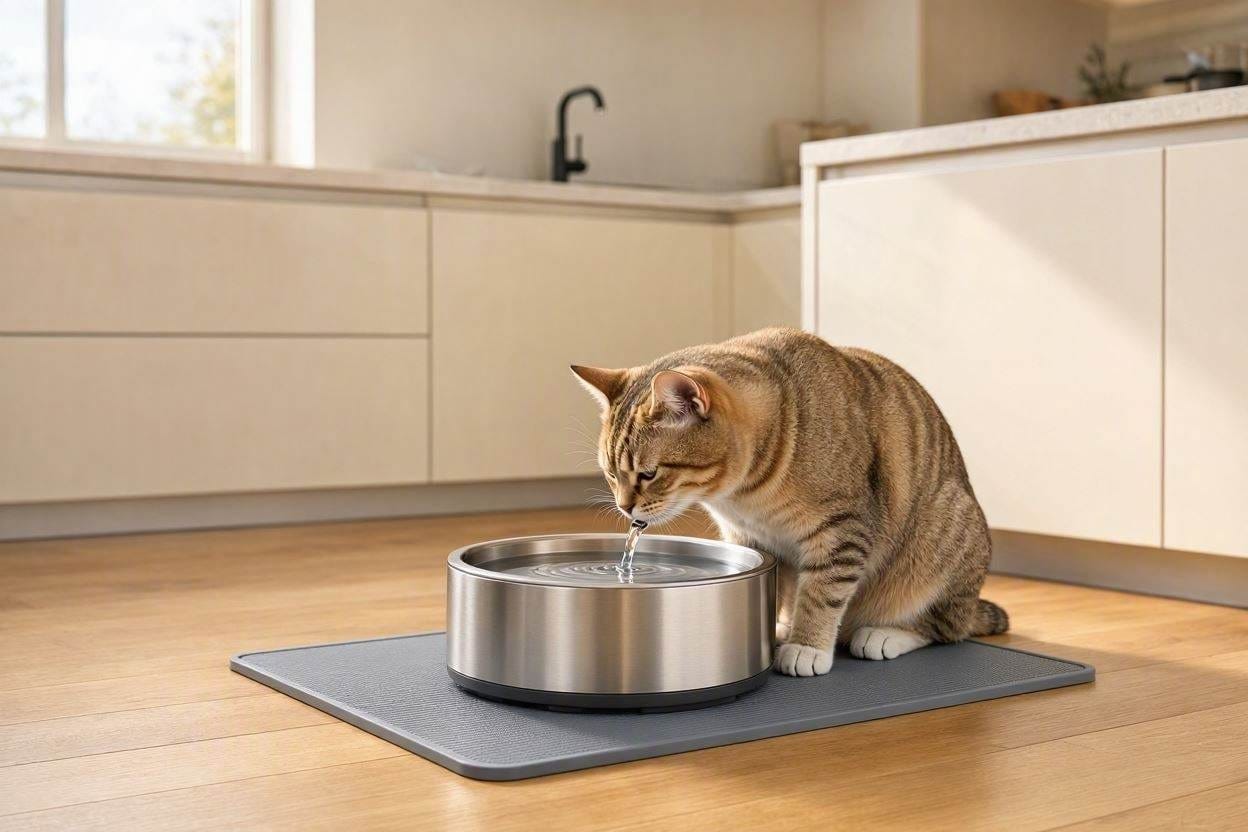
If you want the absolute gold standard of silent pet hydration, the PETLIBRO Stainless Steel model is a masterpiece of acoustic engineering.
It solves the plastic resonance problem by using high-quality 304 stainless steel. The metal is dense enough to deaden the internal sound of the water falling, keeping the acoustic profile under a virtually inaudible 23 decibels. (For context, the CDC equates 20-30 decibels to a quiet whisper or rustling leaves). Furthermore, PETLIBRO uses a patented, ultra-quiet brushless pump. The water glides smoothly down a specialized “spout” rather than dropping directly into a pool, completely eliminating loud splashing sounds.
The Pros
- Operates at <23 dB (quieter than a whisper).
- Stainless steel prevents feline chin acne and bacteria buildup.
- Multi-layer filtration system keeps the pump from clogging and whining.
The Cons
- You cannot easily see the water level without lifting the top off.
- Requires a dedicated wall outlet nearby.
Check PETLIBRO Price on Amazon
2. Uahpet Battery Operated Fountain (Best Wireless/Smart)
What if your ideal location for the water fountain doesn’t have an electrical outlet nearby? Or what if you just absolutely hate listening to running water 24/7, even if it is quiet?
The Uahpet fountain is entirely wireless and runs on a massive rechargeable battery that lasts up to 30 days. But its greatest acoustic feature is the built-in Motion Sensor. The pump stays 100% off and completely silent until your cat or dog walks within 6 feet of the unit. It gently turns on, allows them to drink, and then shuts off completely once they walk away. It is the ultimate stealth water fountain.
The Pros
- Motion sensor means absolute 0 dB silence 90% of the day.
- No cords to trip over or for pets to chew on.
- Incredibly easy to disassemble and clean.
The Cons
- You have to remember to charge the battery every 3-4 weeks.
- Made of plastic (though high-quality and BPA-free).
3. Pioneer Pet Raindrop Ceramic (Best Acoustic Mass)
If you want to solve the problem using pure acoustic physics, you need mass. The Pioneer Pet Raindrop fountain is made of heavy, thick ceramic. Because ceramic is incredibly dense, it acts as a massive physical sound block. It is physically impossible for the tiny internal pump to vibrate the heavy ceramic shell, meaning zero hum.
Instead of a splashing waterfall, the Raindrop uses a gentle “slide” design. The water bubbles up and glides smoothly down the ceramic slope. This creates a very soft, soothing trickling sound that easily doubles as a pleasant background pink noise generator for your home.
The Pros
- Heavy ceramic completely deadens motor vibration.
- Beautiful, high-end aesthetic looks like a luxury home accent.
- Dishwasher safe and extremely sanitary.
The Cons
- It is heavy and fragile; dropping it in the sink during cleaning will break it.
- Requires frequent top-offs to prevent the pump from sucking air.
How to Silence a Rattling Fountain (The Maintenance Secret)
Even the quietest $60 stainless steel fountain will suddenly turn into a screeching nightmare if you neglect it. 99% of the time, when a fountain starts getting loud, it is not broken—it is just dirty or low on water.
- The Low-Water Gurgle: Fountains are only silent when the pump is completely submerged. When the water level drops, the pump starts sucking in tiny air bubbles along with the water. These bubbles hit the spinning impeller and create a loud, hollow rattling noise. Fix: Keep the fountain topped off daily.
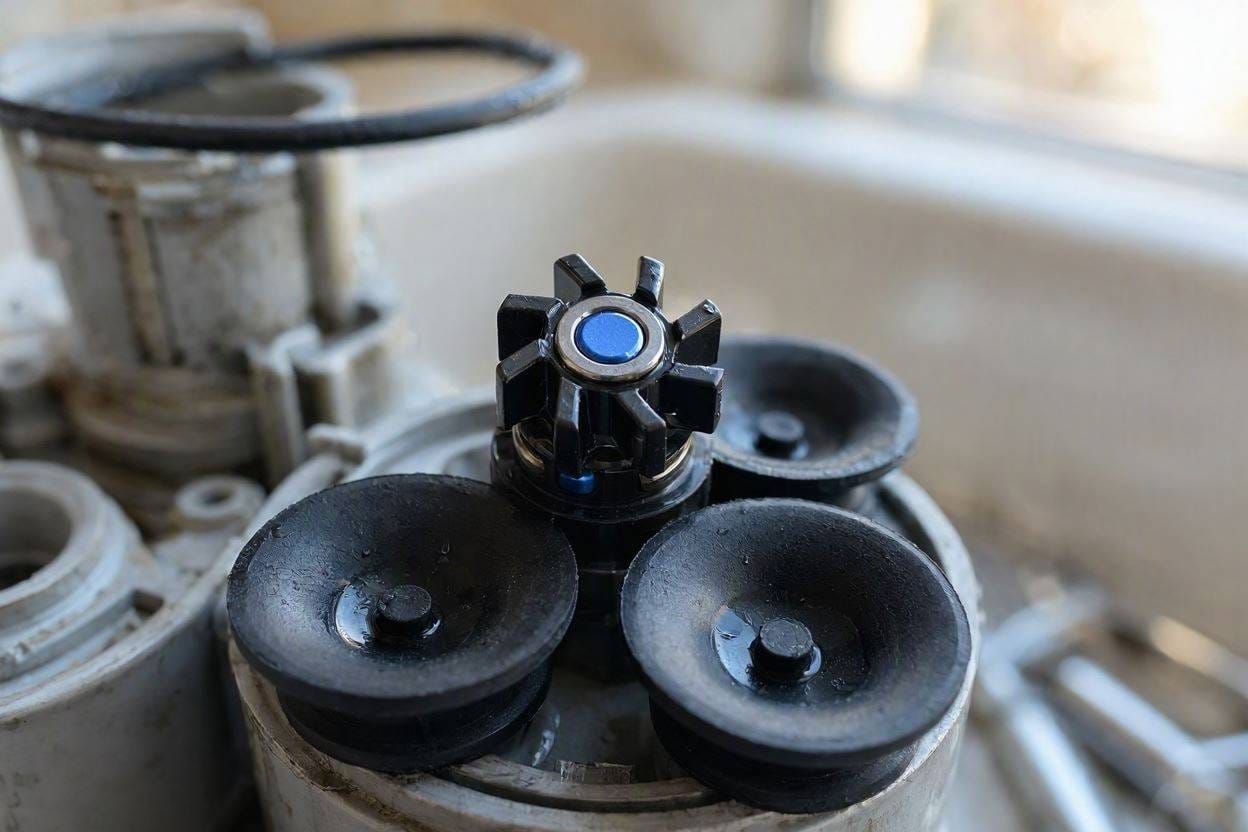
- The Slime Rattle: Over time, pet saliva and hard water minerals build up inside the tiny pump housing. This slime coats the magnetic impeller (the little propeller inside the pump), throwing it off-balance. When it spins off-balance, it rattles against the plastic casing. Fix: Once a month, take the pump apart, pull the impeller out with tweezers, and scrub the cavity with a Q-tip and white vinegar. It will return to absolute silence immediately.
- Decouple the Base: If your fountain is sitting on a hard tile or wood floor, the microscopic vibrations from the motor will transfer into the floorboards. Always place a thick, soft silicone mat underneath the fountain. This applies the acoustic principle of structural decoupling, trapping the kinetic energy before it turns your floor into an amplifier.
Frequently Asked Questions (FAQ)
Do Pets Actually Prefer Moving Water?
Yes. Evolutionarily, wild cats and dogs avoid stagnant pools of water because they are breeding grounds for bacteria and parasites. The sound and sight of moving water signal to your pet’s brain that the water is fresh and safe to drink. This is why many cats will beg to drink from a dripping bathroom sink rather than a stagnant bowl.
Can a Pet Fountain be 100% Silent?
Because a fountain requires a motorized pump to push water against gravity, absolute 0 dB silence is physically impossible unless the unit is turned off (like the Uahpet motion-sensor model). However, a high-quality brushless pump operating under 30 dB is functionally silent to human ears from more than 3 feet away.
How Often Do I Need to Change the Filters?
To keep the water sanitary and the pump running quietly, you should change the carbon filter every 2 to 4 weeks, depending on how many pets use the fountain. If you notice the water flow getting weak or the pump getting louder, it usually means hair and debris have clogged the sponge pre-filter and need to be rinsed out.

Ememobong is the lead researcher and editor at Quiet Dwelling. As a professional technical writer, he specializes in breaking down complex acoustic engineering concepts into simple, actionable steps. His goal is to help people build distraction-free environments for better sleep and deep work.