
*This post contains affiliate links. If you use these links to buy something we may earn a commission at no extra cost to you.
It is 3:00 AM. You get out of bed to use the master bathroom. Hoping to clear out the humidity after a quick, warm wash of your face, you flip the switch for the ceiling exhaust fan.
Instantly, a mechanical roar fills the room. It sounds like a lawnmower engine has been mounted directly above your shower. The vibration rattles the drywall, wakes up your partner in the next room, and completely shatters your relaxing, sleepy state of mind.
Most builder-grade bathroom fans are installed for one reason: they are incredibly cheap. They use clunky AC motors and cheap plastic housings that rattle aggressively against your ceiling joists. But an exhaust fan is non-negotiable—if you don’t run it, trapped moisture will quickly turn your beautiful bathroom ceiling into a breeding ground for black mold.
You need to move air without making noise. By upgrading to a modern unit equipped with a DC brushless motor, you can clear heavy steam from your bathroom while maintaining a whisper-silent environment. I’ve evaluated the acoustic ratings of the top hardware on the market to find the absolute best quiet bathroom exhaust fans.
The Science of Silence: Sones vs. Decibels
When you shop for quiet appliances like mini fridges or washing machines, you usually look for Decibels (dB). However, the bathroom ventilation industry measures noise using a completely different metric called Sones.
While decibels measure raw sound pressure, Sones are a linear measurement of how the human ear actually perceives loudness.
- 4.0 Sones: The sound of a typical, cheap builder-grade bathroom fan. (Loud, rattling, highly annoying).
- 2.0 Sones: The sound of a quiet modern refrigerator running.
- 1.0 Sone: The sound of a quiet refrigerator heard from a few feet away.
- 0.3 Sones or less: Virtually silent. You have to strain your ears to hear if the fan is actually turned on.
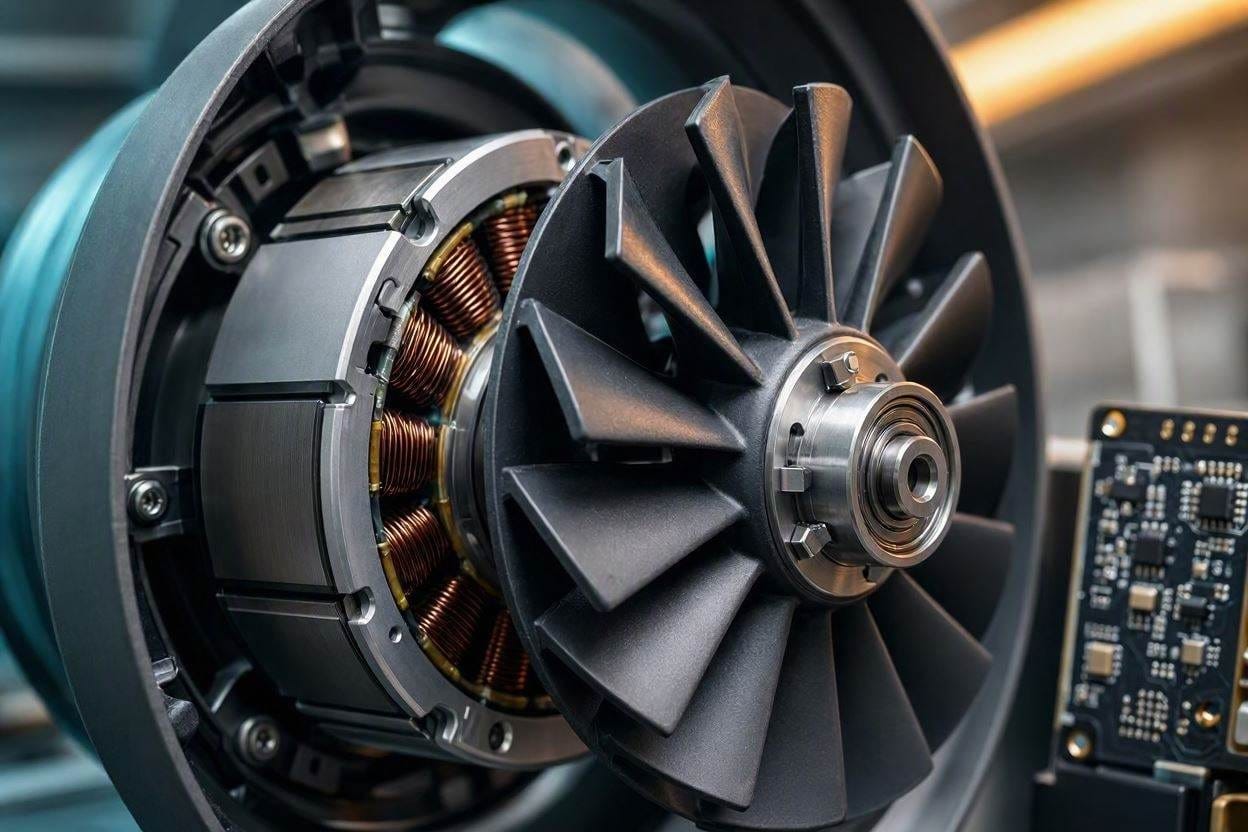
To get a fan below 1.0 Sones, manufacturers abandon cheap AC (Alternating Current) motors and use Brushless DC (Direct Current) Motors. As we discussed in our guide to quiet ceiling fans, DC motors use frictionless magnets. They eliminate the low-frequency electrical buzzing and humming that vibrates through your ceiling drywall.
1. Panasonic WhisperCeiling DC (The Undisputed King)
If you ask any professional electrician or HVAC installer what the best bathroom fan on the market is, 9 out of 10 will immediately say the Panasonic Whisper series. It is the absolute gold standard for acoustic stealth.
It utilizes an incredibly advanced SmartFlow™ DC motor. When it is running, it registers at less than 0.3 Sones. It is so quiet that Panasonic had to include a tiny LED indicator light on the grille just so homeowners would know it is actually turned on.
The “SmartFlow” technology means a microchip inside the fan constantly senses the static pressure in your ductwork. If it senses resistance (like a long, winding exhaust pipe), it automatically spins slightly faster to guarantee your bathroom clears of steam without you ever having to adjust it.
The Pros
- Literally whisper-silent (<0.3 Sones).
- SmartFlow tech guarantees moisture is removed regardless of duct length.
- Pick-A-Flow speed selector lets you choose 50, 80, or 110 CFM upon installation.
The Cons
- Premium price tag for premium engineering.
- The mounting box is quite large; ensure you have enough clearance in your ceiling joists.
Check Panasonic WhisperCeiling Price on Amazon
2. Broan-NuTone QTXE110 (The Easy Retrofit)
If you don’t want to hire an electrician and are looking for a reliable, quiet replacement that is easy to pop into an existing ceiling hole, Broan-NuTone is an excellent choice.
The QTXE line is specifically engineered for quiet operation, coming in at a highly respectable 0.3 Sones. While it doesn’t use the fancy smart-sensing DC motor of the Panasonic, it uses a massive, well-balanced centrifugal blower wheel. Because the wheel is larger, it can spin slower to move the same amount of air (110 CFM). Slower spinning means drastically less wind-shear noise.
The Pros
- Very quiet 0.3 Sone rating.
- Often fits seamlessly into the ceiling cutouts left by older Broan models.
- Galvanized steel housing resists moisture and rattling.
The Cons
- Lacks the auto-sensing power adjustments of DC motors.
- The grille design is a bit traditional/dated compared to modern flat panels.
3. Delta BreezSignature with Light (Best Multi-Function)
If you have a smaller bathroom and your exhaust fan also serves as your primary overhead light, you need a multi-function unit. Many fans with built-in lights are prone to loud, obnoxious buzzing when hooked up to a dimmer switch.
The Delta BreezSignature uses a highly advanced brushless DC motor that operates flawlessly under 0.3 Sones. It features a beautifully integrated, dimmable LED light panel. Because the motor is isolated and frictionless, dimming the light will not cause the motor’s magnetic field to vibrate and hum.
It also features a built-in humidity sensor option, meaning it will silently turn itself on if the bathroom gets too steamy, and turn itself off when the air is clear.
The Pros
- Brushless DC motor for <0.3 Sone silence.
- Dimmable LED light does not cause electrical interference/buzzing.
- Energy Star certified; uses vastly less electricity than AC models.
The Cons
- Wiring a dual light/fan/sensor setup can be complex for a DIY beginner.
- The bright white LED light is very cool-toned (not a warm yellow).
How to Make Your Current Bathroom Fan Quieter
If you cannot afford a brand new $150 Panasonic unit right now, there are three acoustic tricks you can use to silence your existing rattling fan:
- Clean the Grille and Blades: Dust build-up acts like tiny weights on the fan blades. When they get heavy, the fan becomes unbalanced and shakes the metal housing violently. Pull the plastic cover down, vacuum the dust out, and wipe the blades clean to restore acoustic balance.
- Decouple the Plastic Grille: Often, the loud buzzing you hear is just the cheap plastic cover vibrating against the drywall ceiling. Apply a tiny strip of high-density foam weatherstripping tape to the inside rim of the plastic cover. This acts as a shock absorber, silencing the plastic-on-drywall rattle.
- Tighten the Mounting Screws: Over years of use, the kinetic vibration of the motor will slowly unscrew the bolts holding the fan to your ceiling joists. Grab a screwdriver and tighten every visible screw to lock the metal chassis firmly into place.
Frequently Asked Questions (FAQ)
Can a Bathroom Fan Be TOO Quiet? (The Privacy Issue)
This is a fascinating psychological question! In a master ensuite bathroom, you absolutely want a 0.3 Sone whisper-quiet fan so you don’t wake your sleeping partner. However, in a hallway half-bath or powder room used by guests, many homeowners actually prefer a slightly louder fan (around 1.5 to 2.0 Sones). The mechanical hum acts as an excellent white noise masking generator, providing auditory privacy for your guests so they don’t feel self-conscious.
What Does CFM Mean, and How Much Do I Need?
CFM stands for Cubic Feet per Minute. It measures how much air the fan can physically move. The golden rule of thumb for residential bathrooms is 1 CFM per square foot of room. If your bathroom is 80 square feet, you need an 80 CFM fan. If you buy a massive 150 CFM fan for a tiny bathroom, you will create a harsh, whistling wind-tunnel effect through the bottom of your door, ruining your quiet environment.
Does the Ductwork Affect the Noise?
Massively. If your fan connects to a 3-inch ribbed, flexible foil duct that bends sharply right above the fan, the air will hit that curve and create a massive amount of turbulent wind-shear noise. For the quietest operation, exhaust fans should always be connected to smooth, rigid 4-inch or 6-inch metal ducting with long, sweeping curves.

Ememobong is the lead researcher and editor at Quiet Dwelling. As a professional technical writer, he specializes in breaking down complex acoustic engineering concepts into simple, actionable steps. His goal is to help people build distraction-free environments for better sleep and deep work.