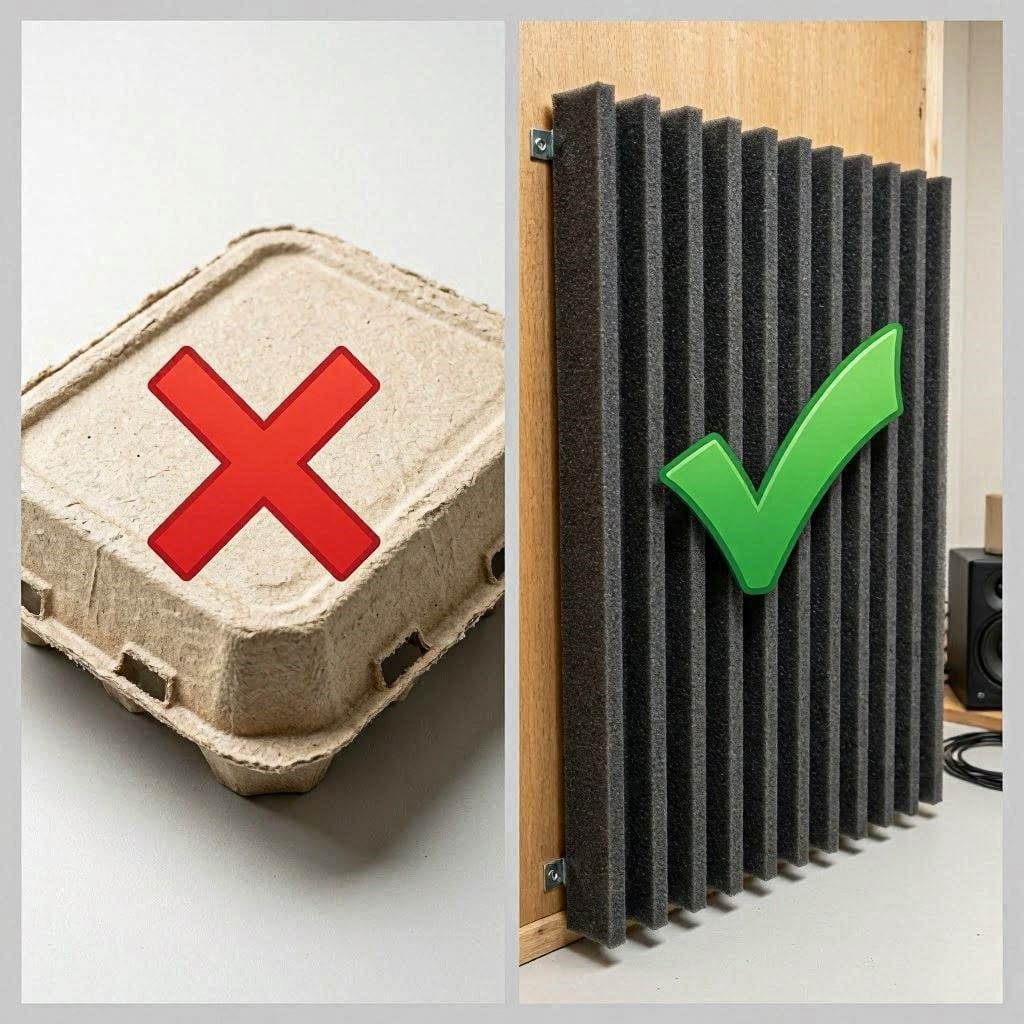
When you need a cheap DIY solution to silence a loud room, you have almost certainly asked yourself: do egg cartons work for soundproofing? It is the oldest trick in the book. If you search online forums or look at amateur garage band setups, you will see walls completely covered in recycled cardboard egg crates.
The logic seems to make sense. Egg cartons have a very similar bumpy, 3D shape to the expensive acoustic foam panels used in professional recording studios. Because they look similar, people assume they must perform similarly. But before you start stapling your breakfast trash to your bedroom walls, you need to know the truth.
So, we have to look at the cold, hard science of acoustics to answer the question: do egg cartons work for soundproofing?
The short, scientifically backed answer is No. Egg cartons do absolutely nothing to block noise, and they are a massive, highly flammable fire hazard.
In this guide, we will break down the fundamental physics of why cardboard fails to stop sound, explain the critical difference between blocking and absorbing noise, and show you the real materials you need to reclaim your quiet dwelling.
The Physics: Do Egg Cartons Work for Soundproofing Against Voices?
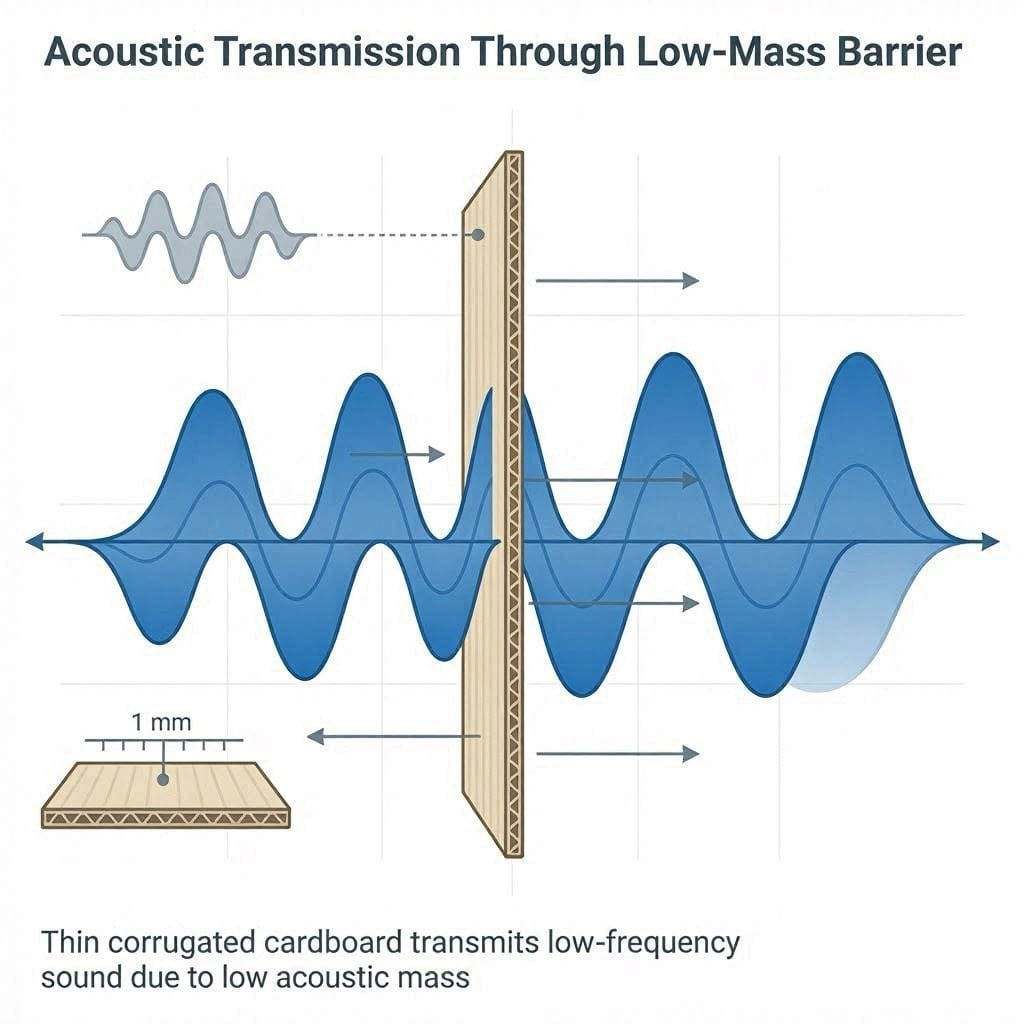
To understand why this famous DIY hack is a complete failure, we must look at how sound travels. Sound is a physical, mechanical wave of kinetic energy. When a heavy sound wave (like a deep male voice, a barking dog, or a television) hits your wall, it forces the solid drywall to physically vibrate. That vibration transfers the sound directly into your room.
To stop a physical wave of energy, you must obey the Law of Mass. According to foundational principles established by the Acoustical Society of America, it requires heavy, dense structural mass to stop acoustic energy from vibrating a barrier.
This is exactly why the answer to “do egg cartons work for soundproofing” is a resounding no:
- Zero Structural Mass: Egg cartons are made of thin, pressed paper pulp or lightweight polystyrene. They weigh less than an ounce. They add absolutely zero heavy density to your wall.
- Kinetic Bypass: When a massive sound wave hits a thin layer of cardboard, the kinetic energy passes straight through the paper, vibrates the rigid drywall underneath, and enters your ears. The egg carton does absolutely nothing to slow down the physical force of the wave.
If you want to understand exactly how much heavy mass is required to stop standard voices, read our complete guide to understanding STC (Sound Transmission Class) ratings.
Do Egg Cartons Help with Echoes? (Sound Absorption)
If they don’t block noise, why do so many people still use them? It comes down to a massive public misunderstanding about the difference between Soundproofing (blocking sound from entering a room) and Sound Absorption (stopping internal echoes).
People assume that because egg cartons have a bumpy, uneven shape, they act like acoustic diffusers.
While the irregular shape does slightly scatter high-frequency sound waves (like a cymbal crash or a sharp hand clap), cardboard lacks the deep, porous fiber structure required to actually absorb the acoustic energy. Real acoustic panels are made of dense mineral wool or open-cell foam, which forces sound waves into a microscopic maze of friction, converting the echo into heat. You can learn exactly how this is measured in our guide to understanding NRC ratings.
Cardboard is too rigid to trap sound. It will slightly muffle the harsh “ring” of an empty room, but it performs terribly compared to actual acoustic treatments. To fully understand this critical distinction, you must read our master guide on Soundproofing vs. Sound Absorption.
The Hidden Danger: The Ultimate Fire Hazard
Not only is the answer to “do egg cartons work for soundproofing” a scientific failure, but executing this DIY project is actually incredibly dangerous.
Professional acoustic foam and mineral wool panels are manufactured with strict fire-retardant chemicals to ensure they meet building safety codes. Recycled egg cartons are made of dry, porous paper pulp. If you cover a wall in egg cartons, you are essentially covering your room in highly flammable kindling.
A single spark from a wall outlet, an overheated computer, or a dropped candle can instantly ignite an egg carton wall, causing a catastrophic fire to spread across the room in seconds. Under no circumstances should you ever use untreated cardboard as a permanent wall covering.
If Cardboard Doesn’t Work, What Does?
Whenever a client asks us do egg cartons work for soundproofing, we immediately redirect them to safe, scientifically proven methods that rely on the 4 Principles of Soundproofing: Mass, Decoupling, Damping, and Absorption.
If you are on a tight budget and need to improve your room’s acoustics safely, here are the real materials you should use:
For Soundproofing (Blocking Noise): Mass Loaded Vinyl
If you need to stop neighbors from hearing you, you need mass. Mass Loaded Vinyl (MLV) is a heavy, dense, limp-rubber membrane that adds dead-weight to your walls, stopping sound transmission dead in its tracks. Read more in our guide: What is Mass Loaded Vinyl?
For Sound Absorption (Stopping Echoes): Acoustic Mineral Wool
If you are building a budget recording studio and just want to stop the echo, skip the cardboard. Buy a pack of dense acoustic mineral wool (like Rockwool) and build your own fabric-wrapped panels using cheap lumber. It is fire-safe and absorbs 100x more echo than an egg carton.
For Budget Alternatives: Heavy Moving Blankets
If you absolutely cannot afford building materials, hanging heavy-duty, thick moving blankets over your walls and windows is vastly superior to cardboard. The thick fabric layers provide genuine high-frequency sound absorption and are significantly safer to hang in a bedroom.
Frequently Asked Questions (FAQ)
Why Do Egg Cartons Look Exactly Like Acoustic Foam?
Acoustic foam companies design their products with “egg-crate” or wedge shapes to increase the total surface area of the panel. A larger surface area allows the porous foam to catch and absorb sound waves from more angles. Egg cartons share the shape, but they completely lack the porous, open-cell material required to do the actual absorbing.
Can I Use Styrofoam Egg Cartons Instead of Paper Ones?
No. Styrofoam (polystyrene) is a closed-cell foam. It is completely rigid and repels sound rather than absorbing it. Sound waves will bounce directly off styrofoam, creating an even worse echo in your room. Furthermore, styrofoam is highly toxic when burned.
Do Egg Cartons Work to Block Out Street Traffic Noise?
No. Street traffic (especially the low-frequency rumble of engines) carries massive kinetic energy. Those low-frequency waves will pass straight through the exterior wall of your house, through the drywall, and through the egg carton without losing any power. To block traffic, you need heavy structural density, like 5/8-inch drywall or laminated acoustic window glass.

Ememobong is the lead researcher and editor at Quiet Dwelling. As a professional technical writer, he specializes in breaking down complex acoustic engineering concepts into simple, actionable steps. His goal is to help people build distraction-free environments for better sleep and deep work.