*This post contains affiliate links. If you use these links to buy something we may earn a commission at no extra cost to you.
It is 11:30 PM. The house is completely dark and peaceful. You are drifting into a deep sleep when suddenly, your partner or teenager comes home. The garage door opener triggers, and the entire house begins to violently shake. A harsh, grinding metallic roar rips through the floorboards, followed by a massive THUD as the heavy door slams into the concrete.
If your master bedroom, a nursery, or a home office is located directly above or adjacent to your garage, you know this “midnight earthquake” all too well. Every time the door opens, your heart rate spikes and your sleep cycle is ruined.
Most builder-grade homes are equipped with the cheapest, loudest chain-drive garage door openers on the market. These outdated machines use heavy AC motors that jolt awake, sending massive structural vibrations straight into your floor joists. You cannot simply “absorb” this noise with foam; you must replace the mechanism causing the kinetic vibration.
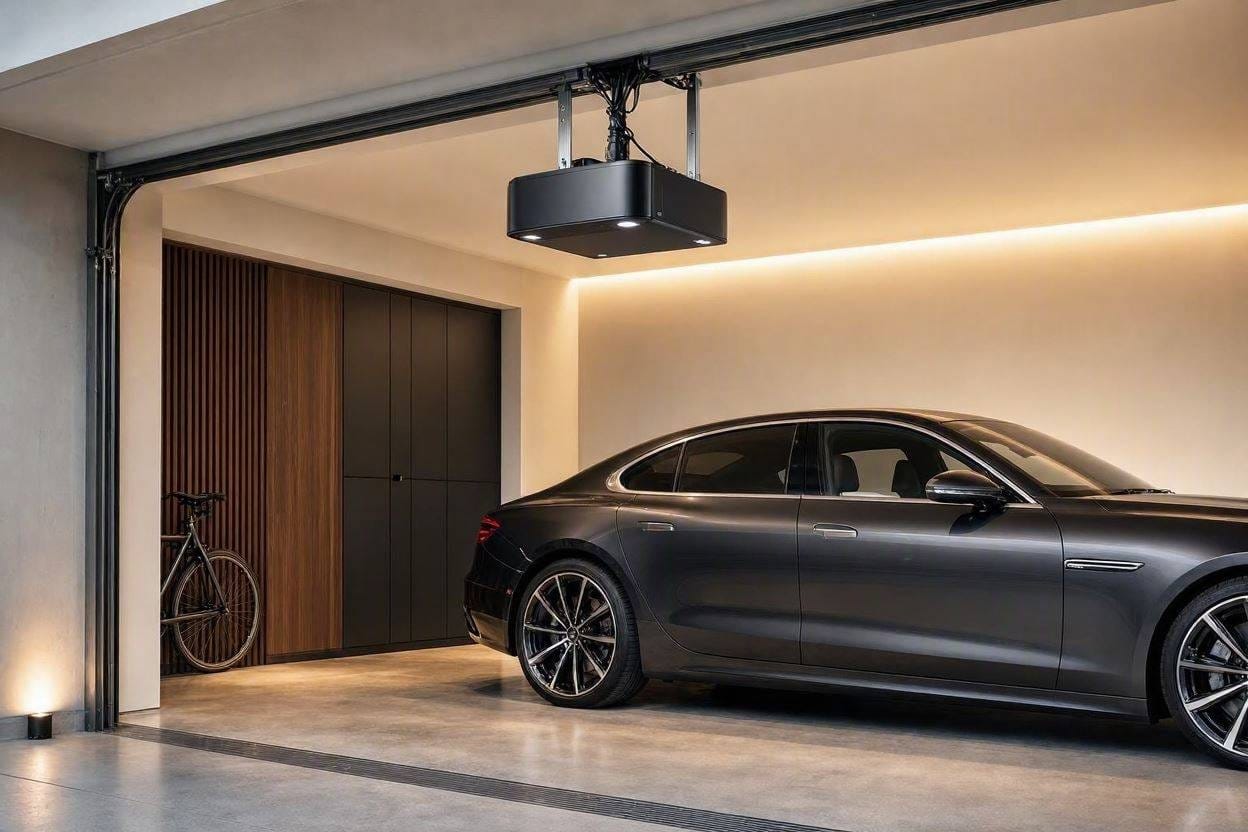
I have researched and evaluated the latest structural home tech to find the absolute best quiet garage door openers. By utilizing steel-reinforced rubber belts and DC motors, these modern marvels will lift a 300-pound door so silently, you won’t even know someone came home.
The Science of the Shake: Why Belt Drives & DC Motors Win
To fix the noise problem, we have to understand that a garage door opener creates two distinct types of acoustic chaos: Airborne Noise (the motor whining) and Impact Noise (the physical vibration of the house). You can read our master guide on Airborne vs. Impact Noise to fully grasp how these vibrations travel, but here is the short version:
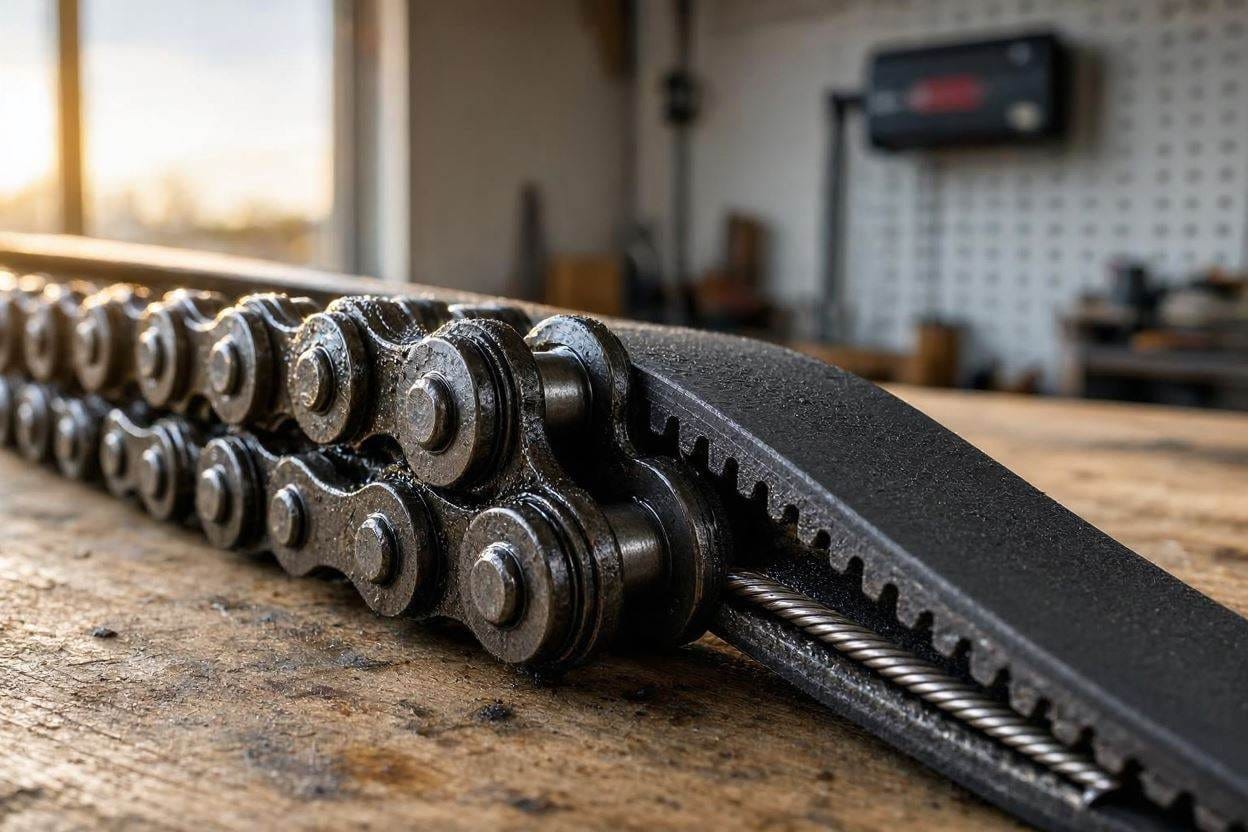
If you have a cheap chain-drive opener, it uses a heavy metal bicycle chain dragging across a metal rail. That metal-on-metal friction creates a horrific airborne screech. You must upgrade to a Belt Drive. These use thick, steel-reinforced polyurethane rubber belts. Rubber against metal is practically frictionless, meaning the airborne noise disappears entirely.
But the real secret to a quiet house is the DC Motor.
Older garage openers use AC (Alternating Current) motors. An AC motor is brutally stupid: it turns on at 100% full power instantly, violently jerking the heavy door off the ground, which sends a shockwave into your ceiling joists. It then drops the door onto the concrete with a massive thud.
Modern premium openers use DC (Direct Current) Motors. A DC motor allows the internal computer to control the speed dynamically. It features “Soft Start and Soft Stop” technology. It gently pulls the door up, accelerates smoothly, and then slowly decelerates as the door closes, pressing it gently onto the concrete. The jarring structural impact is completely eliminated.
1. Chamberlain B6765T Secure View (Best Overall)
If you are looking for the absolute gold standard in quiet garage door automation, Chamberlain’s flagship belt-drive model is nearly flawless.
It utilizes an ultra-quiet DC motor paired with a steel-reinforced rubber belt. Standing inside the garage, the loudest sound you will hear is the actual metal door hinges rolling on the tracks—the motor itself is a whisper-soft, futuristic hum. If you are sleeping in the master bedroom directly above the garage, the soft-start/stop technology ensures the floorboards will not bounce or creak when the door opens.
Beyond acoustics, it is an incredibly smart device. It features a built-in camera, motion-activated LED lighting (no more loud buzzing from old fluorescent bulbs), and integrates flawlessly with the myQ app so you can open the door silently from your phone.
The Pros
- Belt drive and DC motor completely kill ceiling vibrations.
- Built-in battery backup means it still works perfectly during a power outage.
- myQ app integration with a built-in wide-angle camera.
The Cons
- The built-in camera requires a monthly subscription for video cloud storage.
- Premium pricing tier.
Check Chamberlain B6765T Price on Amazon
2. Genie StealthDrive Connect (The Stealth Pick)
Genie explicitly named this model the “StealthDrive” because acoustic stealth is its primary selling point. It is a direct competitor to Chamberlain, offering a 1.25 HPC (Horsepower Comparable) DC motor paired with a steel-reinforced belt.
What makes the Genie stand out is its incredibly lightweight, modular rail system. Because the rail pieces lock together so tightly and the motor head is so well-balanced, it produces virtually zero resonant hum. If you pair this opener with upgraded nylon door rollers, you will achieve an almost eerie level of garage silence.
The Pros
- Specifically engineered and marketed to be whisper-quiet.
- Extremely lightweight motor head makes DIY installation much easier.
- Aladdin Connect smartphone integration built right in.
The Cons
- The wall console is quite basic compared to Chamberlain’s LCD screens.
- Lacks a built-in camera system.
3. Chamberlain RJO70 Wall Mount (The Ultimate Fix)
If you sleep directly over the garage and you are a highly sensitive sleeper, even the quietest ceiling-mounted belt drive might still send a faint vibration up into your floor. If you want absolute, 100% structural acoustic perfection, you must use the principle of Decoupling.
As we highlight in our guide to the four principles of soundproofing, the only way to stop vibration is to break the physical connection. The Chamberlain RJO70 is a “Jackshaft” opener. It does not hang from your ceiling joists. It does not have a rail. It does not have a belt or a chain.
Instead, this motor mounts securely to the wall next to your garage door and attaches directly to the torsion bar. By taking the heavy motor off your ceiling, you completely eliminate upward impact vibration. It frees up overhead space and provides the ultimate stealth operation.
The Pros
- Completely decouples the motor from the ceiling joists.
- Zero rails, chains, or belts to whine or vibrate.
- Frees up massive amounts of ceiling space for garage storage.
The Cons
- Requires an electrical outlet to be located near the torsion spring.
- Most expensive option on the market.
How to Silence Your Existing Garage Door (3 Cheap DIY Hacks)
What if you cannot afford a brand new $300 motor right now? A massive portion of garage noise actually comes from the door itself, not just the opener. Here are three incredibly cheap acoustic hacks to silence your existing setup:
- Upgrade to Nylon Rollers: Your garage door rolls up the metal track on cheap, hard steel wheels. Metal scraping on metal is an acoustic nightmare. For roughly $20, you can buy a pack of sealed-bearing nylon garage rollers. Swapping your steel wheels for soft nylon wheels will instantly cut the track noise by 75%.
- Install Rubber Vibration Isolators: Your current motor hangs from the ceiling using slotted steel angle iron. You can buy rubber acoustic vibration isolators (which look like small rubber hockey pucks with bolts through them) and install them between the motor frame and the ceiling bracket. The rubber acts as a shock absorber, deadening the structural vibration.
- Use the Right Lubricant: Never use WD-40 on your garage door tracks; it attracts dust and turns into sticky sludge, making the door groan and squeal. Buy a can of dedicated white lithium grease and spray every hinge, roller bearing, and torsion spring. The squeaking will vanish instantly.
Frequently Asked Questions (FAQ)
Are Belt Drive Openers Weaker than Chain Drives?
No, this is an old myth. Modern polyurethane belts used in garage door openers are reinforced with flexible steel cords (similar to the steel belts inside a car tire). They are incredibly durable and are fully capable of lifting heavy, insulated double-car garage doors without stretching or snapping.
Will Adding Insulation Panels to My Garage Door Make it Quieter?
While foam insulation panels are excellent for temperature control, they are very lightweight. Because they lack dense mass, they will not drastically block airborne sound from leaving the garage. However, adding foam panels will dampen the hollow “tin can” rattling of the thin aluminum panels as the door rolls up, making the physical door sound much more solid and quiet.
What Does HPC Mean on a DC Motor?
HPC stands for “Horsepower Comparable.” Traditional AC motors are measured in actual Horsepower (like 1/2 HP or 3/4 HP). Because DC motors use a completely different electrical draw to lift the door, they cannot be rated in true horsepower. Instead, manufacturers use HPC or HPS (Horsepower Similar) to tell you that the quiet DC motor has the equivalent lifting force of a traditional loud AC motor.

Ememobong is the lead researcher and editor at Quiet Dwelling. As a professional technical writer, he specializes in breaking down complex acoustic engineering concepts into simple, actionable steps. His goal is to help people build distraction-free environments for better sleep and deep work.