*This post contains affiliate links. If you use these links to buy something we may earn a commission at no extra cost to you.
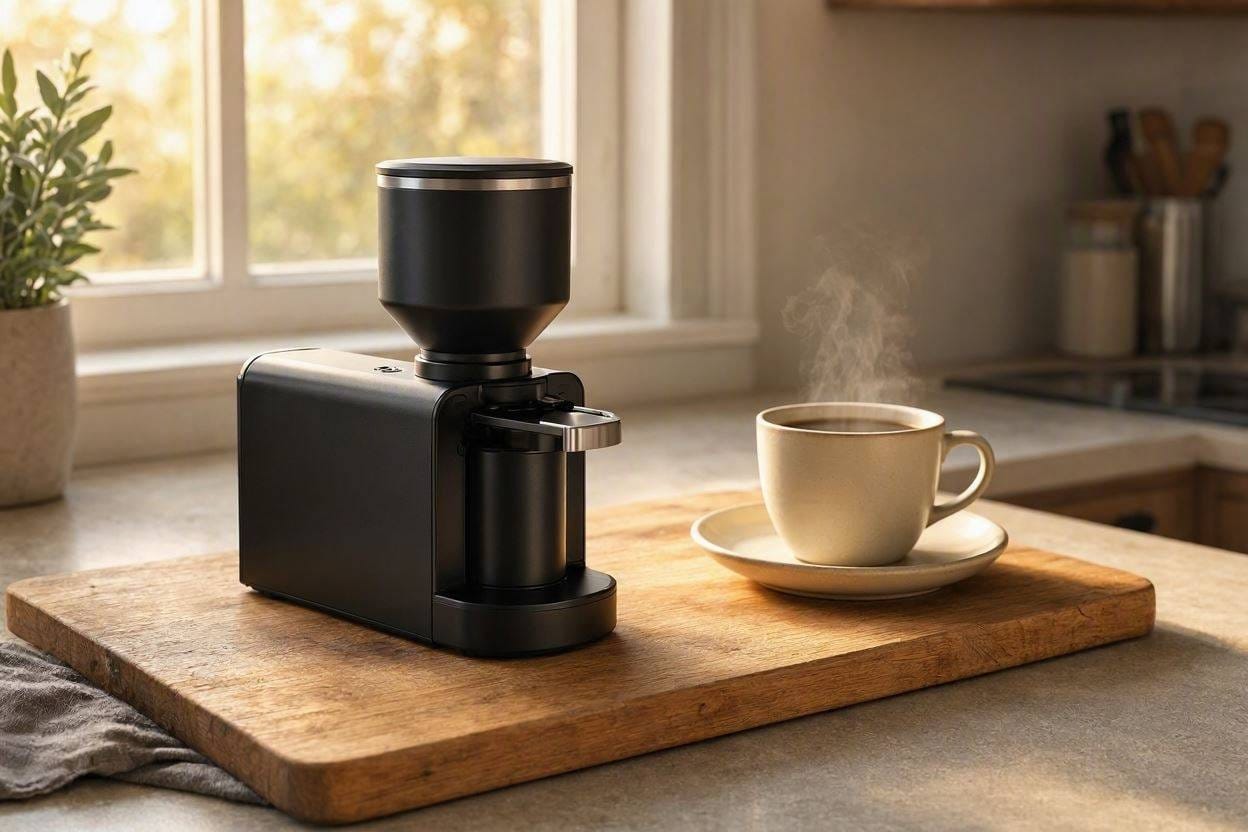
It is 6:00 AM. The house is completely silent. Your partner and your kids are fast asleep in the next room, and all you want is a fresh, delicious cup of coffee to start your day.
You pour your expensive, freshly roasted beans into your grinder and push the button. Instantly, the tranquility of the morning is shattered. A violent, high-pitched screeching roar fills the kitchen, sounding like a lawnmower trying to grind up a bucket of gravel. The dog barks, the baby wakes up crying, and your peaceful morning routine is ruined.
If you love good coffee, you already know that buying pre-ground, stale coffee from the grocery store is not an option. You must grind fresh. But the auditory assault of a cheap grinder isn’t just annoying—it regularly registers at 85 to 90 decibels, which triggers instant stress responses in a quiet house.
I have spent the last few years testing kitchen appliances to build the ultimate quiet dwelling. By moving away from cheap blades and focusing on low-RPM burr technology, you can get barista-level coffee without the auditory trauma. Here are the absolute best quiet coffee grinders that will preserve your peace (and your marriage).
The Science of the Screech: Blade vs. Burr
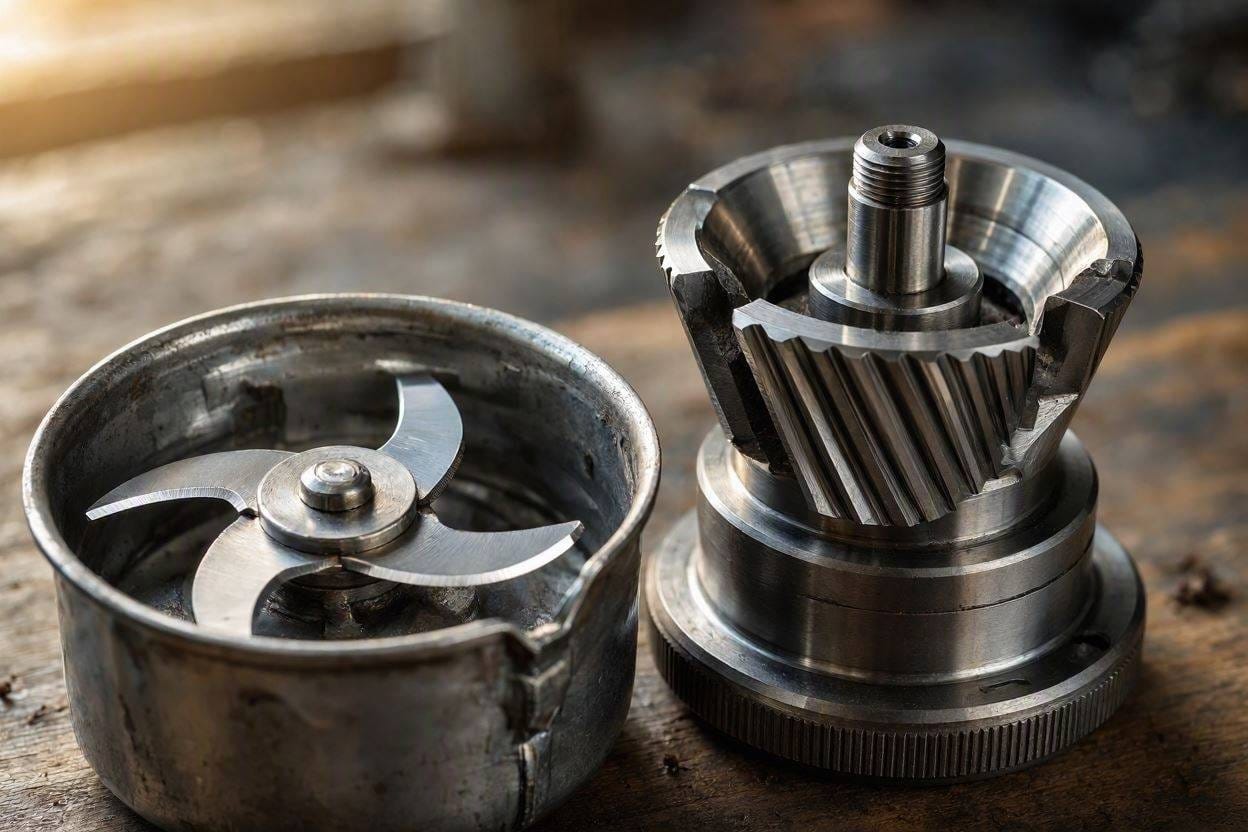
To fix the noise problem, we have to understand what causes it. If you bought a $25 coffee grinder at the local big-box store, you bought a Blade Grinder.
A blade grinder operates exactly like a blender. A dull metal blade spins at an insanely high speed (often 20,000+ RPMs) and violently whacks the hard coffee beans until they shatter into smaller pieces. This high-speed, chaotic impact creates massive amounts of high-frequency noise. It also makes terrible coffee, because the beans are shattered unevenly, leading to a bitter brew.
If you want a quiet kitchen, you must upgrade to a Burr Grinder. Burr grinders do not chop. They use two heavy pieces of machined steel (the burrs) to funnel the beans and gently crush them to a precise size.
The quietest grinders on the market combine two specific features:
- Low-RPM Motors: Instead of spinning at 20,000 RPMs, premium grinders use high-torque motors that spin the burrs at a slow, deliberate speed (often under 500 RPMs). Slower spinning means drastically less mechanical friction and motor whine.
- Acoustic Insulation: High-end manufacturers surround the motor housing with dense sound-dampening materials. The noise is trapped inside the heavy chassis, dropping the decibel output from a deafening 85 dB to a smooth, muffled 65 dB.
(Related Reading: Trying to silence the rest of your morning routine? Check out our guide to the best quiet microwaves with mute buttons).
1. Fellow Opus Conical Burr (Best Overall)
The Fellow brand has taken the specialty coffee world by storm with its incredibly sleek, minimalist designs. But beyond looking beautiful on your counter, the Fellow Opus is an absolute stealth machine.
It utilizes a high-torque motor paired with massive 40mm conical burrs. Because it grinds the coffee so efficiently at a lower speed, it completely eliminates the high-pitched screaming noise associated with cheaper electric grinders. Instead of a scream, it produces a very low, muffled “crunching” hum.
What makes it our top pick is its versatility. Most quiet grinders are strictly built for either coarse drip coffee or ultra-fine espresso. The Opus can easily grind for both, offering 41 precision settings, making it the perfect all-in-one quiet solution.
The Pros
- Low-pitch, muffled grinding sound that won’t travel through walls.
- Incredible versatility (grinds for French Press all the way down to true Espresso).
- Anti-static technology keeps your counter completely clean.
The Cons
- The inner adjustment ring for micro-adjustments can be confusing at first.
- Smaller bean hopper capacity compared to commercial units.
Check Fellow Opus Price on Amazon
2. Eureka Mignon Silenzio (The Premium/Espresso Pick)
If you are serious about espresso, you likely already know that espresso grinders are historically the loudest appliances in the house. Eureka, a premium Italian manufacturer, explicitly engineered this machine to solve that problem. “Silenzio” literally translates to “Silence.”
The Eureka Mignon Silenzio features a heavy, thick aluminum casing that houses thick rubber anti-vibration mounts. The motor is physically decoupled from the chassis, meaning the internal mechanical vibration cannot escape into the air. It utilizes heavy 50mm flat steel burrs that slice through beans with shocking efficiency.
If your budget allows it, this is the closest you can get to professional cafe-quality espresso grounds while maintaining absolute library-level acoustic hygiene in your kitchen.
The Pros
- Explicitly engineered for sound dampening (heavy chassis and isolation mounts).
- Stepless adjustment dial provides infinite precision for pulling espresso shots.
- Hand-built in Florence, Italy with commercial-grade durability.
The Cons
- High premium price tag.
- Adjusting from fine espresso back to coarse French Press takes a lot of dial-turning.
3. 1Zpresso JX Manual Grinder (The 100% Silent Pick)
If you live in a tiny studio apartment or sleep in the same room where your coffee is made, an electric motor might still be too risky. You need the 100% silent guarantee of a manual hand grinder.
Before you roll your eyes at the idea of manually cranking a handle at 6:00 AM, hear me out. The 1Zpresso JX is not your grandfather’s cheap hand grinder. It features a massive 48mm stainless steel burr set housed in an aerospace-grade aluminum body. Because the burrs are so sharp and large, it takes less than 30 seconds of effortless cranking to grind a full dose of coffee.
There is zero motor hum, zero electrical whining, and zero vibration. The only sound is the incredibly satisfying, faint crunch of beans. It is deeply therapeutic, entirely silent, and produces coffee quality that rivals $500 electric machines.
The Pros
- 100% zero electric noise (guaranteed not to wake anyone up).
- Unmatched grind consistency for the price point.
- Highly portable; perfect for camping or traveling without waking neighbors.
The Cons
- Requires 30 to 45 seconds of physical effort every morning.
- Not practical if you are brewing large pots of coffee for 4+ people.
The Mousepad Hack: Stopping Countertop Vibrations
Even if you buy a premium, hushed grinder like the Fellow Opus, you might turn it on and hear a deep, structural rumbling noise echoing through your kitchen cabinets. This is caused by Impact Noise.
When a heavy motorized appliance sits directly on a hard granite or laminate countertop, the microscopic vibrations from the motor transfer directly into the wood of the cabinetry below. The hollow cabinets act exactly like the body of an acoustic guitar, amplifying the vibration into a loud, booming bass note that travels easily through walls.
To fix this, you must apply the principle of structural decoupling (a concept we detail heavily in our guide to Airborne vs. Impact Noise).
The Fix: Take a thick, neoprene computer mousepad or a folded microfiber kitchen towel and place it directly underneath your coffee grinder. The soft, dense material acts as an acoustic shock absorber, trapping the kinetic vibration of the motor before it can enter the hard countertop. The booming rumble will instantly disappear, leaving only the quiet crunch of the beans.
Frequently Asked Questions (FAQ)
Why is My Coffee Grinder So Much Louder with Light Roast Beans?
This is a fascinating bit of coffee physics! Dark roast beans are roasted longer, which breaks down their internal cellular structure, making them incredibly brittle and easy to crush. Light roast beans are roasted for less time, meaning they retain their dense, hard structural integrity. Crushing a hard, dense light roast bean requires significantly more motor torque and physical force, resulting in a noticeably louder, higher-pitched grinding sound.
Does Pre-Grinding Coffee the Night Before Solve the Problem?
Acoustically? Yes. But from a culinary perspective, it is a disaster. According to the Specialty Coffee Association, roasted coffee beans trap volatile aromatic compounds and oils. Within 15 minutes of grinding, oxygen rapidly degrades these compounds, causing the coffee to lose up to 60% of its flavor and aroma. Grinding the night before guarantees a stale, flat cup of coffee.
Are Flat Burrs Quieter than Conical Burrs?
Generally, conical burrs are slightly quieter. Conical burrs rely on gravity to pull the beans down through the cutting path at a lower RPM. Flat burrs require centrifugal force to push the beans outward across the cutting surface, which usually requires the motor to spin at a higher RPM, resulting in slightly more high-frequency motor noise.

Ememobong is the lead researcher and editor at Quiet Dwelling. As a professional technical writer, he specializes in breaking down complex acoustic engineering concepts into simple, actionable steps. His goal is to help people build distraction-free environments for better sleep and deep work.