*This post contains affiliate links. If you use these links to buy something we may earn a commission at no extra cost to you.
We all know the sheer panic of lying in bed at 2:00 AM, desperately trying to fall asleep, while the world refuses to be quiet. A dog barks down the street. Your partner starts snoring. The upstairs neighbor drops something heavy on the floor.
In a desperate attempt to drown out the noise, you grab your smartphone, open YouTube or Spotify, and play a “10-Hour Rain Sounds” track. But an hour later, you wake up frustrated. The sound is tinny and harsh. Worse, your brain subconsciously notices the exact moment the 90-second audio track loops, jarring you out of your sleep cycle.
I learned the hard way that a smartphone is the absolute worst tool for sleep acoustics. Tiny phone speakers physically cannot produce the deep, low-frequency sound waves required to actually mask disruptive household noises. If you want to protect your sleep architecture, you need a dedicated, physical sound machine.
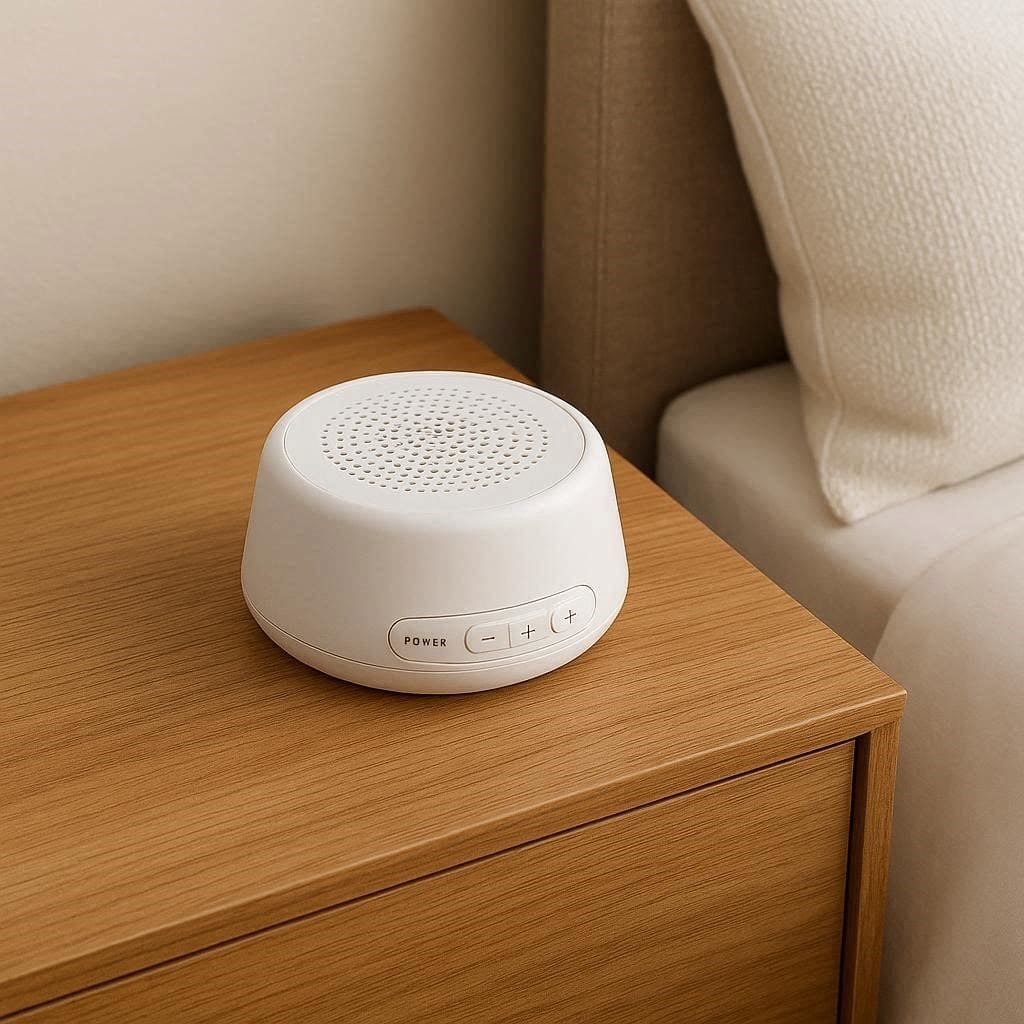
I have tested the top acoustic sleep devices on the market. By utilizing real mechanical fans and high-fidelity digital drivers, these machines create a flawless, non-looping blanket of sound. Here are the absolute best white noise machines that will finally let you sleep through the night.
The Science of Sound: How Acoustic Masking Works
To understand why a dedicated machine is so much better than your phone, we have to look at the clinical science of Acoustic Masking.
You aren’t actually woken up by the loudness of a sound; you are woken up by the sudden contrast. If your bedroom is dead-silent (sitting at around 20 decibels), and a car door slams outside at 45 decibels, that sudden 25-decibel spike hits your brain’s amygdala like an alarm bell. It triggers the release of cortisol, pulling you instantly out of deep sleep.
According to the Sleep Foundation, white noise works by raising the “noise floor” of your bedroom. By introducing a steady, continuous wall of sound at around 40 decibels, that sudden 45-decibel car door slam is barely noticeable. The sharp spike is mathematically buried inside the blanket of white noise.
However, to successfully mask deep sounds like heavy footsteps or thunder, you need a machine capable of producing deep, low-frequency sound waves. We detail the physics of this extensively in our master guide on The Colors of Noise (Pink vs. White vs. Brown Noise). Small phone speakers physically cannot produce these deep, protective bass frequencies.
1. Yogasleep Dohm Classic (The Mechanical Masterpiece)
If you absolutely hate the sound of digital static and want the most organic, natural sound possible, the Yogasleep Dohm (formerly Marpac) has been the gold standard since 1962.
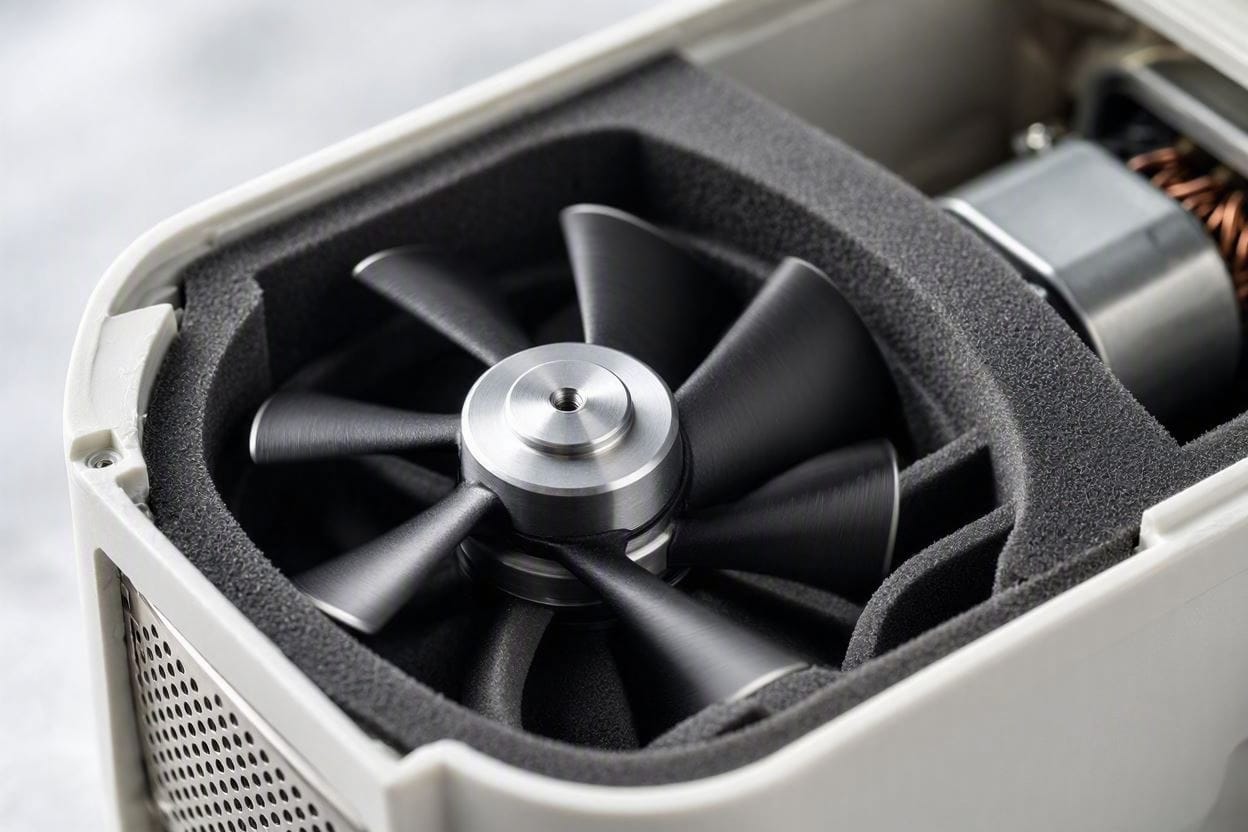
This is not a digital speaker. The Dohm is a Mechanical Sound Machine. Inside the heavy plastic casing is a real, physical fan blade spinning at high speeds. It pushes air through acoustic slots in the casing, creating the authentic, soothing sound of rushing air. Because it is a physical fan, there is absolutely zero digital looping. It is mathematically impossible for the sound to repeat or stutter.
You adjust the pitch and volume not with a digital button, but by physically twisting the outer plastic cap, which opens and closes the air vents to change the aerodynamics of the sound.
The Pros
- 100% natural, organic sound of rushing air (zero digital static).
- Absolutely no audio looping to distract your brain.
- Built like a tank; these machines routinely last over a decade.
The Cons
- It only makes one sound (rushing air). No rain, waves, or forest sounds.
- It cannot get as deafeningly loud as a digital speaker.
2. Hatch Restore 2 (The Premium Smart Pick)
If you want the ultimate, scientifically backed sleep environment, the Hatch Restore 2 is an incredibly beautiful piece of bedroom technology. We recently highlighted this model in our guide to the best quiet alarm clocks, but its primary function is world-class sound masking.
The Hatch features a high-fidelity digital speaker that produces deeply rich Pink Noise and Brown Noise. Because the speaker driver is so large, it effortlessly generates the heavy, low-frequency bass needed to completely block out snoring partners or thudding footsteps.
What makes it premium is the integration of light. As the sound machine plays, it can emit a soft, red-hued sunset glow to encourage melatonin production. In the morning, it acts as a sunrise alarm clock, gently waking you up with light and soft chimes instead of a jarring, stressful buzzer.
The Pros
- Phenomenal, deep bass response for true Pink and Brown noise.
- Sunrise alarm clock completely eliminates morning stress/panic.
- Gorgeous, linen-wrapped aesthetic looks like premium decor.
The Cons
- Premium price tag for a nightstand device.
- To unlock the full sound library (meditations/stories), you need a paid app subscription.
3. LectroFan Classic (The Best Budget/Travel Pick)
If you travel frequently for work and find yourself sleeping in noisy hotels next to ice machines and elevators, the LectroFan Classic is a lifesaver. It is incredibly compact but outputs a staggering amount of volume.
Unlike the Dohm, the LectroFan is 100% digital. However, it uses a proprietary algorithm that dynamically generates the sound in real-time, meaning there is absolutely zero looping. It features 10 different fan sounds and 10 different ambient noise profiles (from bright white noise to deep brown noise). Because it can get incredibly loud without distorting, it is perfect for drowning out aggressive, loud environments.
The Pros
- Dynamically generated digital audio guarantees zero audio loops.
- Incredibly loud maximum volume for extreme sound masking.
- Compact, lightweight design is perfect for throwing in a suitcase.
The Cons
- The digital speaker can sound slightly less “warm” than a true mechanical fan.
- The buttons are hard to see and press in the dark.
The Placement Hack: Where to Put Your Machine
Buying the best machine is only half the battle; where you put it determines if it actually works.
Most people make the mistake of placing the sound machine on the nightstand directly next to their head. This forces you to turn the volume down so it doesn’t hurt your ears, which severely weakens the “acoustic blanket” covering the room. Furthermore, if you check our guide on how many decibels is safe for sleep, blasting a speaker two feet from your ear all night can cause auditory fatigue.
The Fix: You must place the sound machine between you and the source of the noise. If the noise is coming from the street, place the machine on the windowsill. If the noise is coming from the hallway, place it by the door. By placing it closer to the source, the machine physically diffuses the invading sound wave before it ever reaches your bed. You get maximum masking power while keeping the volume near your pillows at a safe, gentle level.
Frequently Asked Questions (FAQ)
Is it Safe to Use a White Noise Machine in a Baby’s Nursery?
Yes, but you must be incredibly careful with the volume. A baby’s developing ear canal amplifies sound much more than an adult’s. Pediatricians recommend keeping the ambient noise in a nursery strictly under 50 decibels, and the machine should be placed at least 7 feet away from the crib. Read our full guide on how to safely soundproof a nursery for more details.
Can a Quiet Air Purifier Work as a White Noise Machine?
Absolutely! This is one of our favorite acoustic hacks. A high-quality quiet air purifier running on a medium fan setting acts as a brilliant, mechanical pink noise generator. It provides a dense wall of soothing sound to mask traffic while simultaneously scrubbing dust and allergens from your bedroom air.
Why Do I Wake Up When My YouTube White Noise Track Loops?
The human brain is an incredible pattern-recognition machine. Even when you are deeply asleep, your auditory system is scanning for anomalies. A 10-hour YouTube track is usually just a 3-minute track looped over and over. When the track restarts, there is often a microscopic millisecond drop in audio, or a slightly weird digital splice. Your brain instantly flags this unnatural pattern as a threat, triggering a micro-arousal that wakes you up.

Ememobong is the lead researcher and editor at Quiet Dwelling. As a professional technical writer, he specializes in breaking down complex acoustic engineering concepts into simple, actionable steps. His goal is to help people build distraction-free environments for better sleep and deep work.