
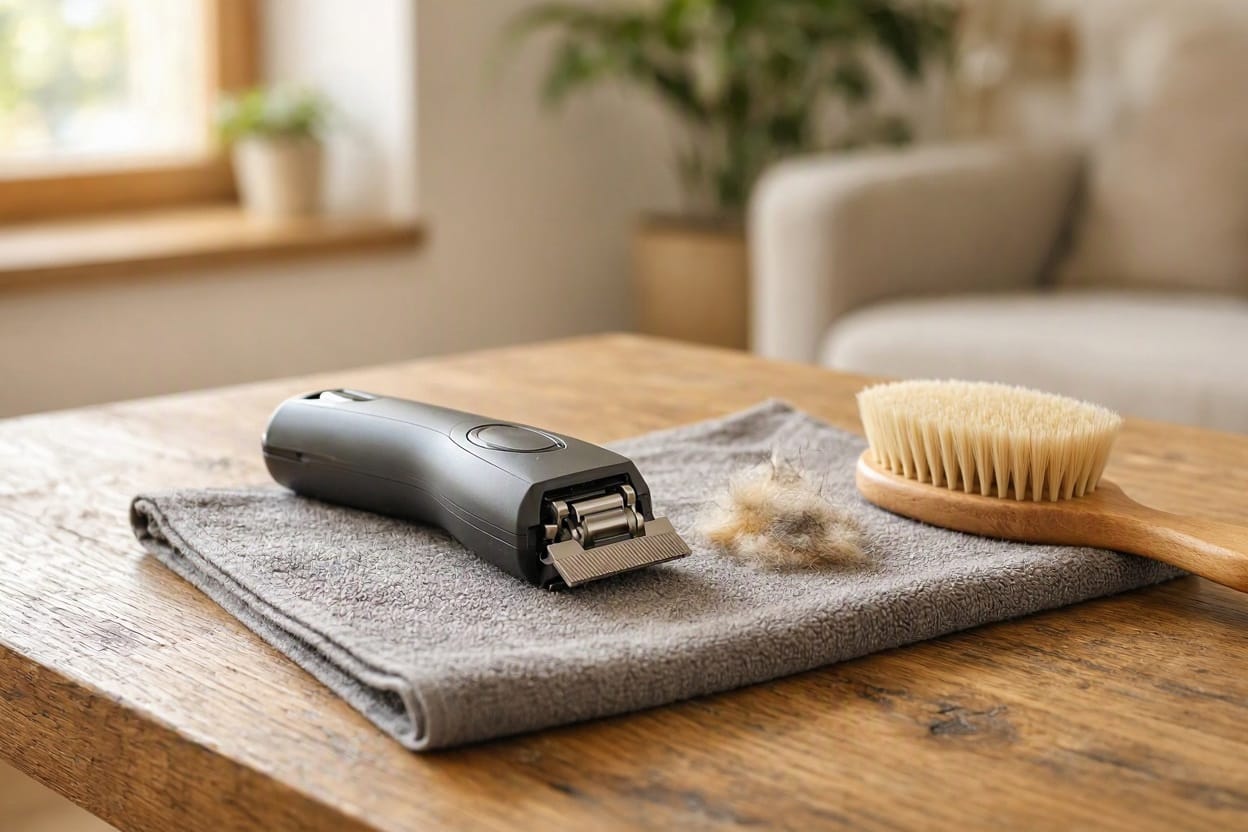
If you have ever tried to groom a nervous dog at home, you already know the sequence. You get the clippers out, the dog hears them switch on, and the whole operation collapses before it has started. The animal bolts, you chase, and what should have been a ten-minute job becomes an ordeal for both of you.
Most people put this down to the dog being difficult. That is the wrong diagnosis, and it leads to the wrong fix. Dogs are not reacting to the idea of grooming — they are reacting to a specific sound at a specific volume, and in many cases to the vibration they can feel through the blade against their skin.
That means the problem is solvable, and it is solved with acoustics rather than with patience alone. Understanding what is actually making the noise tells you which clipper to buy and how to use it.
Why Clippers Are So Loud — And Why It Matters More For Dogs
Three things combine to make grooming clippers unusually disruptive.
They are loud in absolute terms. Clippers sit in a higher range than most household appliances, and the sound is close to the animal’s head rather than across the room. Distance matters enormously for perceived volume, and there is no distance here.
Dogs hear differently. A dog’s hearing extends far higher in frequency than a human’s and is considerably more sensitive across its range. A clipper that sounds merely buzzy to you can be genuinely loud and startling to an animal sitting inches from it. Dogs also pick up the high-frequency components of blade chatter that your ears largely filter out.
It combines sound with vibration. This is the part most owners never consider. The blade is in direct contact with the dog’s skin, and it delivers a mechanical vibration through that contact. For many dogs, it is the felt vibration that triggers the panic, not the airborne sound — which is why a “quieter” clipper can still terrify an animal if its blade vibrates hard.
Different animals have different sensitivities, and this is worth testing carefully rather than assuming. Some dogs tolerate a big loud clipper while a small quiet one alarms them, and vice versa. Your dog’s individual response is the only data that matters for your pet.
Excessive noise has documented effects on animal welfare as well as human health — and on the human side, the World Health Organization identifies sleep disturbance and cardiovascular effects among the established consequences of chronic noise exposure. World Health Organization
The Sources Of Clipper Noise, By Sound
Diagnose by ear. Each source points to a different decision.
The whine — the motor
Clippers run one of two ways, and the difference is the single biggest factor in noise.
Rotary motors spin a shaft continuously. They are generally quieter and smoother, and they are the type used in most professional-grade clippers.
Magnetic or pivot motors use an electromagnet driving an armature back and forth, and they buzz at mains frequency. This is the classic clipper sound — and it is inherently louder and more irritating than a rotary equivalent.
If you are choosing a clipper specifically for a nervous animal, motor type is the first specification worth checking, and it matters more than the decibel figure on the box.
The chatter and rattle — the blade and guide comb
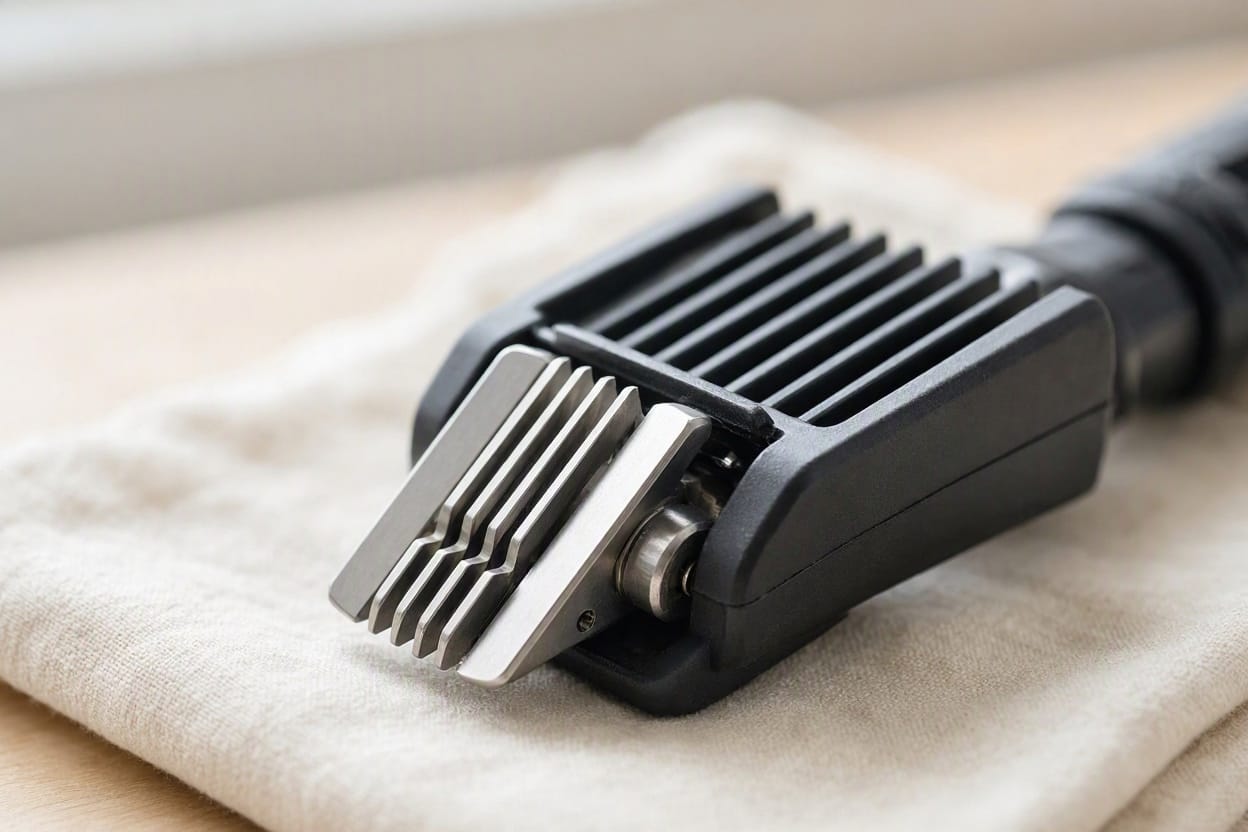
This is the most overlooked source and, for many dogs, the most distressing. The blade is two serrated plates sliding against each other thousands of times a minute, held together by spring pressure. Anything that changes that contact produces noise:
- A blade that is too loose chatters against its base plate.
- A dull blade drags, requiring more pressure and producing a rougher sound.
- A blade that is adjusted too tight loads the motor and increases its whine.
- Plastic guide combs that are not clipped down properly rattle on the blade.
Blade chatter is high frequency, intermittent and sharp — exactly the type of sound that alarms animals. It is also frequently the loudest single element of the whole machine.
The rattle — loose components and vibration on surfaces
Set a running clipper down on a table and it will often sound louder than it did in your hand, because the surface beneath it is resonating. Loose blade screws, a rattling switch, or a battery cover with play all add noise.
This is the same structure-borne amplification we describe in how to block low frequency noise — vibration passing into a large flat surface, which then radiates it.
The hum — the vibration transmitted to the animal
Distinct from airborne noise, and often the decisive factor. The blade assembly vibrates mechanically, and that vibration travels directly into the skin. It is felt rather than heard, and no amount of sound isolation changes it — only better blades, correct adjustment and the right motor type do.
What Usually Does Not Work
- Holding the dog still. Restraint increases anxiety rather than reducing it, and it does nothing to change the sound the animal is trying to escape. Address the noise and the restraint becomes unnecessary.
- Buying on noise rating alone. Every clipper is, at some level, “quiet.” A decibel figure does not tell you whether the blade chatters, whether the motor is rotary or magnetic, or how much vibration reaches the skin — and those three factors matter more.
- Dulling the blade deliberately. A dull blade drags rather than cuts, demands more pressure, runs hotter and produces more vibration. It makes everything worse.
- Wrapping the clipper in fabric. This blocks the cooling vents on a motor that is already working hard, and it is a genuine overheating risk. Do not.
- Grooming straight onto a hard table. Placing the clipper down on a bare surface while it runs adds a resonance that the animal hears and feels. A towel underneath is free and helps.
The Best Order To Reduce Clipper Noise
Work down. The first two steps cost nothing and often make the largest difference.
Step 1 — Get the blade right
Blades are the most common cause of a clipper that suddenly sounds awful, and the fix is usually adjustment or replacement rather than a new machine.
- Clean and oil the blade. Hair and dried oils in the blade assembly create drag, chatter and heat. Clean it after every use and oil it as the manufacturer specifies.
- Check blade tension. Consult your clipper’s guidance — a blade that is too loose chatters, one that is too tight loads the motor.
- Replace dull blades. A sharp blade cuts with less pressure, runs cooler and vibrates less. If a blade is years old and has done a lot of work, replacement is genuine noise reduction.
- Seat guide combs properly. A comb that is not clipped down fully rattles against the blade. Push it home until it clicks.
Step 2 — Change how you use it
Free, and often more effective than any purchase.
- Turn the clipper on away from the dog. Let the animal hear it from across the room first, at a distance, before it comes near. Building tolerance to the sound is far easier than surviving it at close range.
- Use it intermittently. Running continuously for twenty minutes is very different from short bursts with breaks. Break the session, and the sound stops being a sustained assault.
- Keep the blade moving. A stationary blade pressed against skin vibrates in one place and is felt most strongly. Moving blades transmit less felt vibration per area.
- Work with a calm animal, not against a frightened one. If the dog is panicking, stop and try again later. Repeated short positive sessions build tolerance; one long traumatic session destroys it.
- Put a towel under the work surface. It stops the surface resonating when you set the running clipper down.
- Consider a second person. A calm familiar hand on the dog while you work reduces stress, which in turn reduces the animal’s reactivity to the sound.
Step 3 — Choose the right machine
If you are buying, or replacing a clipper that your animal cannot tolerate, these are the specifications that actually matter:
- Rotary motor, not magnetic. The single largest factor in both airborne noise and vibration. Rotary is smoother and quieter across the board.
- Cordless. Not for sound reasons primarily — corded clippers are often powerful — but because a cordless unit lets you work anywhere, without the trailing cable adding drag and tension.
- A proper cutting head, not a plastic comb over a fixed blade. Better blade assemblies chatter less and are adjustable.
- Weight and balance. A clipper that sits comfortably in your hand demands less grip pressure, which means steadier, smoother passes with less blade contact noise.
- Reputation for smooth operation. Read specifically for comments about vibration and blade noise, not just cutting performance. Owners describe those two things very consistently.
If you already know the animal is highly sound-sensitive, it is worth considering a professional groomer in the short term while you build tolerance at home — a groomer has the experience to work quickly and calmly, which is often kinder than a long difficult session. A quieter domestic setup is the goal, not a race.
Step 4 — Manage the room
- Work on a soft surface. A towel or a rubber grooming mat under the animal absorbs some of the reflected high-frequency chatter that hard floors bounce back.
- Soften the space. Rooms with hard floors, bare walls and no soft furnishings amplify exactly the crisp, high-frequency sound that alarms animals. Adding textiles reduces that. This is the absorption side of acoustics, and the distinction matters — see soundproofing vs. sound absorption.
- Add steady background sound. A gentle broadband masking sound raises the floor so the clipper’s specific frequencies stand out less. A quiet bedroom fan or a white noise source in the same room genuinely helps some animals settle. Our comparison of pink noise vs. white noise explains which character suits which kind of noise.
- Work away from hard reflective surfaces. Grooming right beside a tiled wall or a glass door reflects the sound straight back at the animal. Move to a softer part of the room.
The Honest Caveat
No clipper is silent. A blade must move rapidly against another blade to cut hair, and that produces sound and vibration no matter what motor drives it. What you can realistically achieve is a clipper your animal tolerates — and in most cases that comes down to a rotary motor, a sharp well-adjusted blade, and a gradual introduction rather than a sudden one.
And if your dog is genuinely distressed rather than merely reluctant — trembling, trying to bite, or panicking — that is worth taking seriously. Some animals are highly sound-sensitive for reasons that predate your grooming attempts, and the kindest answer is a professional groomer or a veterinary conversation rather than persistence at home. Grooming is not worth traumatising an animal over.
Frequently Asked Questions
Why are Dog Clippers So Loud?
Three factors stack up: the motor, the blade assembly and the closeness to the animal. Magnetic motors buzz at mains frequency and are inherently noisier than rotary ones, the blade plates chatter against each other at very high frequency, and the whole thing operates inches from the dog’s ears. Dogs also hear far higher frequencies than people do, so they perceive more of it than you do.
Are Quiet Dog Clippers actually Quieter?
Yes, but what makes them quieter matters. The biggest gains come from using a rotary motor rather than a magnetic one, and from a well-made blade assembly that chatters less. A decibel figure on its own tells you little, because it does not describe the blade chatter or how much vibration reaches the animal’s skin — and for many dogs, the felt vibration is the actual problem.
Why is My Dog Scared of the Clippers?
Usually the sound and the vibration together rather than either alone. The noise is close to the animal’s ears and contains high frequencies it hears far better than you do, and the blade delivers a mechanical vibration directly into the skin. For some dogs the vibration is the trigger, which is why a quieter clipper can still frighten an animal if its blade vibrates hard.
How Do I Make My Clippers Quieter?
Start with the blade: clean and oil it after every use, check that the tension matches the manufacturer’s guidance, replace a dull blade, and make sure any guide comb is clipped fully home. Those steps cost nothing and often account for the noise. If the motor is magnetic rather than rotary, no adjustment will fix the underlying buzz — that is a machine choice.
Can I Use Human Hair Clippers on My Dog?
They will cut, but they are the wrong tool. Human clippers are designed for softer, less dense hair and for skin that does not move. Dog coat is denser and the animal’s skin is looser, so human clippers drag, overheat and require more pressure — which means more noise, more vibration and a higher risk of nicking the skin. Use equipment designed for the job.
Why Do My Clippers Rattle or Chatter?
Chatter almost always means the blade assembly. Likely causes are a loose blade that needs adjusting, hair or dried oil built up between the plates, a dull blade dragging rather than cutting, or a guide comb that is not seated properly. Clean it, oil it, check the tension, and replace the blade if it is worn.
Should I Groom My Nervous Dog at Home or Use a Professional?
If the animal is genuinely distressed, a professional groomer is often kinder in the short term — they have the experience to work quickly and calmly with a sound-sensitive animal. Building tolerance at home is worth doing in parallel, but slowly: let the dog hear the clipper switched on from across the room, use it in short sessions, and stop before the animal becomes frightened. Grooming is not worth traumatising a pet over.

Ememobong is the lead researcher and editor at Quiet Dwelling. As a professional technical writer, he specializes in breaking down complex acoustic engineering concepts into simple, actionable steps. His goal is to help people build distraction-free environments for better sleep and deep work.