
*This post contains affiliate links. If you use these links to buy something we may earn a commission at no extra cost to you.
Your bedroom should be the ultimate acoustic sanctuary—a place where your brain can completely disconnect from the chaos of the outside world. Unfortunately, modern residential construction often prioritizes cost over acoustic isolation. If you live near a busy road, share a wall with a noisy neighbor, or have neighborhood dogs that bark through the night, your sleep architecture is under constant attack.
According to research published by the National Institutes of Health (NIH), environmental noise fragmentation prevents the brain from entering deep, restorative REM sleep. Even if a passing siren or a slamming door doesn’t fully wake you up, it pulls you out of deep sleep cycles, leading to chronic fatigue, elevated cortisol levels, and heightened daytime stress.
You cannot control the noise happening outside your home, but you can absolutely control how much of it penetrates your bedroom walls. By understanding the physics of sound transmission and implementing strategic acoustic upgrades, you can dramatically lower the decibel level of your room. Here is the comprehensive guide to soundproofing your bedroom.
Step 1: Fortify the Windows (The Weakest Acoustic Link)
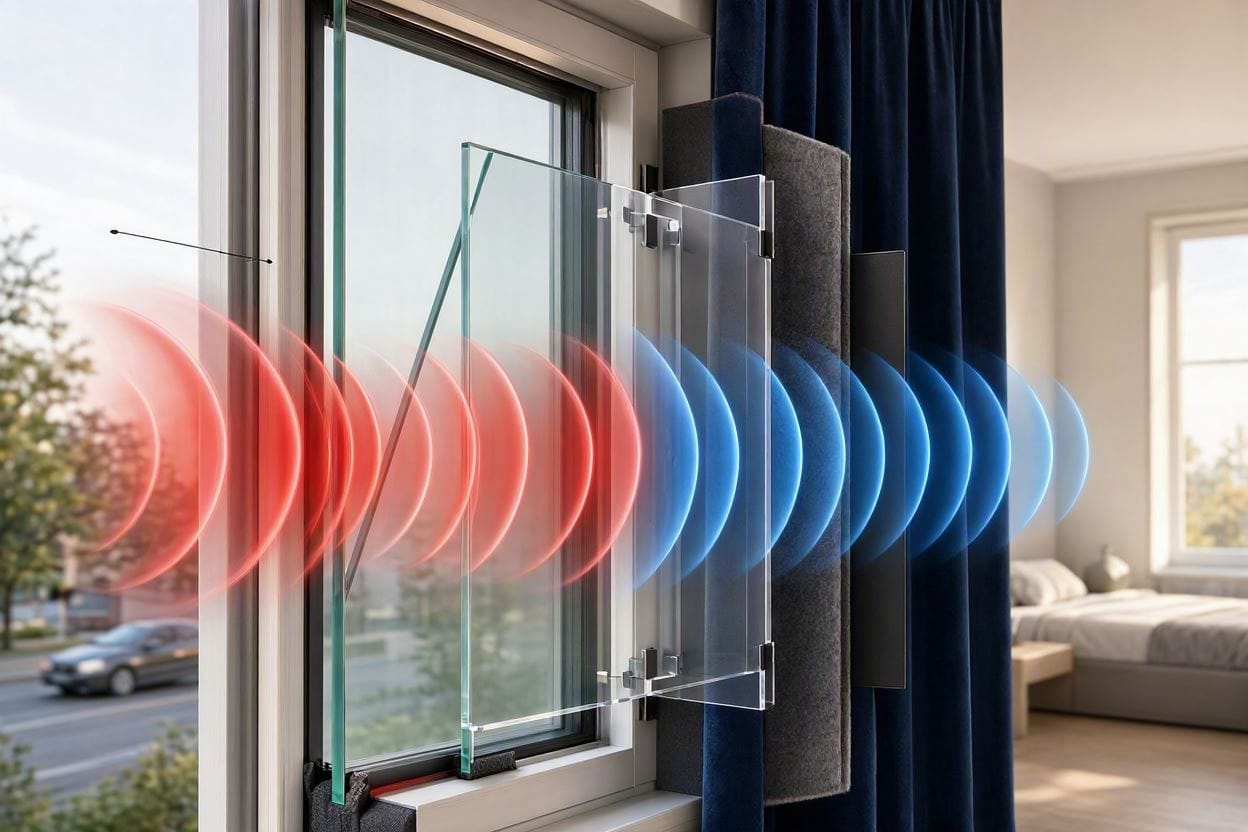
In acoustic engineering, materials are assigned a Sound Transmission Class (STC) rating. A standard insulated drywall partition has an STC rating of around 35 to 40. A standard single-pane glass window, however, has an abysmal STC rating of roughly 20. Sound waves behave like water—they will always find the path of least resistance. In your bedroom, that path is almost always the glass.
Short of spending thousands of dollars ripping out your window frames to install triple-glazed acoustic glass, your best defense is a layered approach combining air-sealing and mass addition.
Air-Seal the Frame
Before you buy anything, inspect the perimeter of your window frame. If you can feel a draft, sound is pouring through that exact same gap. Use a high-quality acoustic caulk (which remains flexible and doesn’t crack over time) to seal the exterior joints between the window frame and the drywall. For the moving parts of the window sash, apply thick, high-density weatherstripping tape. This completely decouples the vibration of the glass from the frame.
Add Mass-Loaded Curtains
Once the frame is sealed, you need to add dense mass in front of the glass to catch and dampen high-frequency sound waves (like sirens and shouting) before they bounce into the room.
NICETOWN 3-Pass Heavy Microfiber Acoustic Curtains
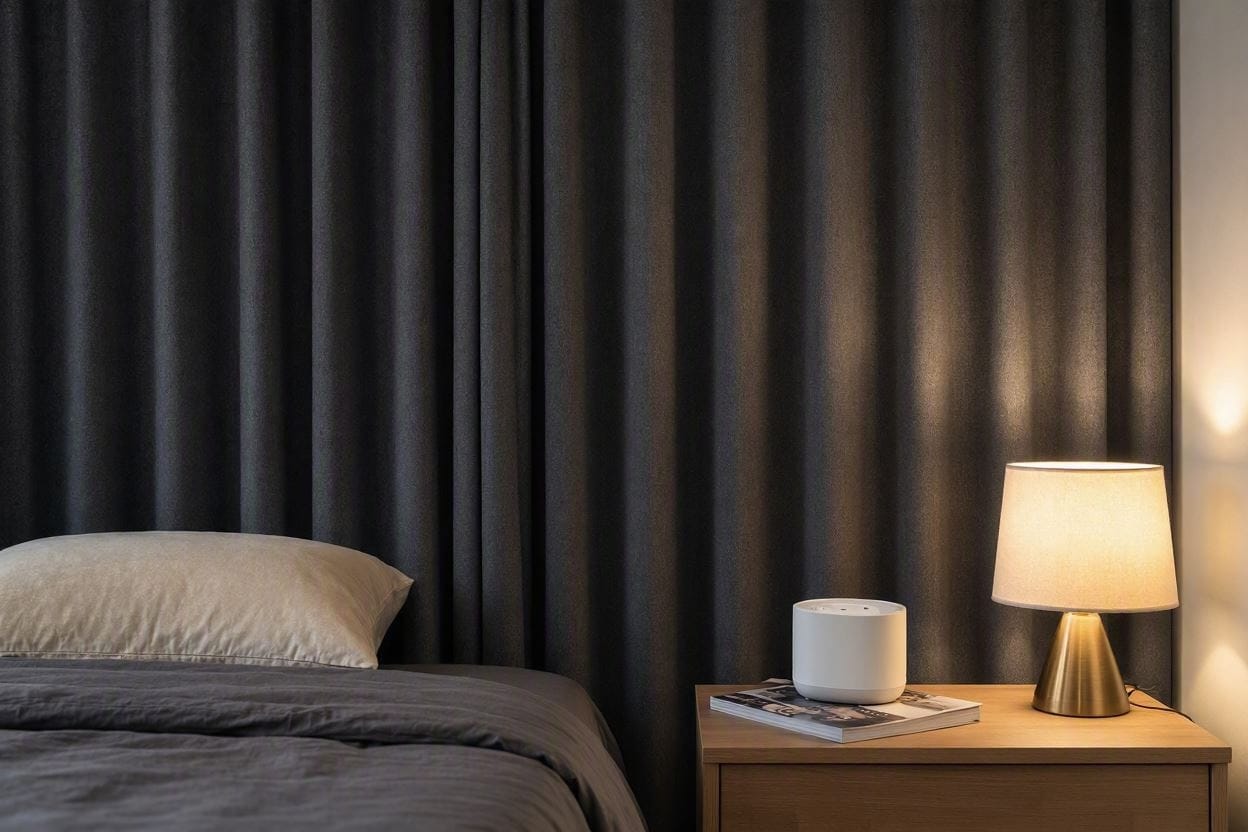
Do not confuse these with cheap blackout curtains. These feature a proprietary triple-weave fabric with a sewn-in, detachable felt fabric liner specifically engineered for acoustic dampening. The heavy physical mass of the curtain absorbs sound waves as they pass through the glass, drastically reducing high-frequency pitch.
- Reduces perceived environmental noise by up to 2.5 times.
- Provides 100% true blackout capabilities for better melatonin production.
- Installation Tip: Hang the curtain rod 6 inches above the window and let the fabric pool slightly on the floor to prevent noise from leaking out the bottom.
Step 2: Seal the Bedroom Door (Blocking Interior Noise)
If your primary noise complaint comes from inside your house—such as a partner watching television in the living room, roommates talking in the kitchen, or a loud HVAC unit—your exterior windows aren’t the problem. Your interior door is.
The vast majority of residential interior doors are “hollow-core,” meaning they are just two thin sheets of veneer stretched over a cardboard honeycomb. They possess almost zero acoustic mass. As we detailed in our comprehensive guide on how to soundproof a hollow-core door, upgrading to a solid wood slab is the ultimate fix. However, if you are renting or on a budget, you must address the perimeter gaps.
Holikme High-Density Silicone Under Door Draft Sweep
The half-inch gap beneath your bedroom door allows massive amounts of acoustic energy to flow freely from the hallway. This heavy-duty silicone sweep adheres directly to the bottom of the door, creating a flush, airtight seal against hardwood or carpet.
- Creates an airtight acoustic and thermal seal in under 3 minutes.
- Blocks out hallway light bleed, which is critical for deep sleep.
- Will not scratch or damage hard flooring when opening and closing.
Step 3: Implement Active Acoustic Masking (The Final Defense)
Even if you perfectly seal your windows and doors, extremely low-frequency sounds—like the rumbling bass of a passing garbage truck, thunder, or heavy footsteps from an upstairs neighbor—will still penetrate your room. This is because bass frequencies are powerful enough to vibrate the actual wooden studs inside your walls (a phenomenon we explored deeply in our guide on the health effects of low-frequency noise pollution).
Since you cannot block structural vibration without rebuilding the room, your final defense is Acoustic Masking. By introducing a constant, engineered, and soothing sound frequency into the bedroom, you effectively raise the room’s “noise floor.” When your brain gets used to this constant blanket of sound, sudden spikes in noise (like a barking dog) fail to reach the threshold required to wake you up.
Adaptive Sound Technologies LectroFan High Fidelity
Unlike cheap sound machines that play a repetitive, looping track (which your brain will eventually detect and fixate on), the LectroFan dynamically generates sound in real-time. It features 10 distinct fan sounds and 10 precise ambient noise variations, allowing you to perfectly match the frequency of the specific noise that is keeping you awake.
- Generates pure pink, white, and brown noise non-repeating frequencies.
- Incredibly powerful internal speaker capable of drowning out loud traffic.
- Compact footprint fits easily on small nightstands.
Frequently Asked Questions
Will Acoustic Foam Panels Soundproof My Bedroom Walls?
No. Acoustic foam is designed strictly for sound absorption (killing echo inside a room). Because foam is lightweight and porous, it lacks the physical mass required to block heavy sound waves from traveling through a wall. To block neighbor noise, you need to add mass to the wall, such as Mass-Loaded Vinyl (MLV) or a second layer of acoustic drywall.
Is Brown Noise or White Noise Better For Blocking Out Traffic?
For deep, rumbling sounds like highway traffic or heavy footsteps, brown noise is highly recommended. Brown noise emphasizes lower-frequency sounds (similar to a deep, rushing waterfall), making it significantly better at masking heavy bass waves than the higher-pitched hiss of standard white noise.
Does Rearranging Bedroom Furniture Help Reduce Noise?
Yes. If you share a wall with a noisy neighbor, simply moving your bed to the opposite wall can reduce the perceived volume of the noise. Additionally, placing a large, dense piece of furniture—like a bookshelf fully loaded with books or a heavy wooden wardrobe—against the shared wall adds an extra layer of acoustic mass between you and the noise source.
Final Verdict
Protecting your sleep architecture requires a multi-layered approach. Start by addressing the biggest acoustic leaks: apply weatherstripping to your windows and hang heavy NICETOWN Acoustic Curtains to muffle street noise. Next, seal the gap beneath your bedroom door with a silicone sweep to lock out interior house chatter. Finally, deploy a LectroFan White Noise Machine to blanket the room and mask any lingering low-frequency vibrations. By combining these three elements, you can turn any loud apartment or house into a deeply restful sanctuary.

Ememobong is the lead researcher and editor at Quiet Dwelling. As a professional technical writer, he specializes in breaking down complex acoustic engineering concepts into simple, actionable steps. His goal is to help people build distraction-free environments for better sleep and deep work.