
*This post contains affiliate links. If you use these links to buy something we may earn a commission at no extra cost to you.
Modern interior design loves minimalism. Hardwood floors, expansive glass windows, and sleek, low-profile leather furniture look incredible in architectural magazines. Unfortunately, they are an absolute nightmare for your home’s acoustics.
When a room is filled with hard, flat surfaces, sound waves have nowhere to go. Every conversation, television show, and footstep violently ricochets around the room, creating a hollow, cavernous “flutter echo.” If you live in a shared space, this echo amplifies the noise and makes the house feel significantly louder than it actually is.
You don’t need to glue ugly studio foam to your living room walls to fix this. By strategically upgrading to sound-absorbing furniture, you can naturally deaden the echo while making your home look incredibly stylish.
The Physics of Acoustic Furniture
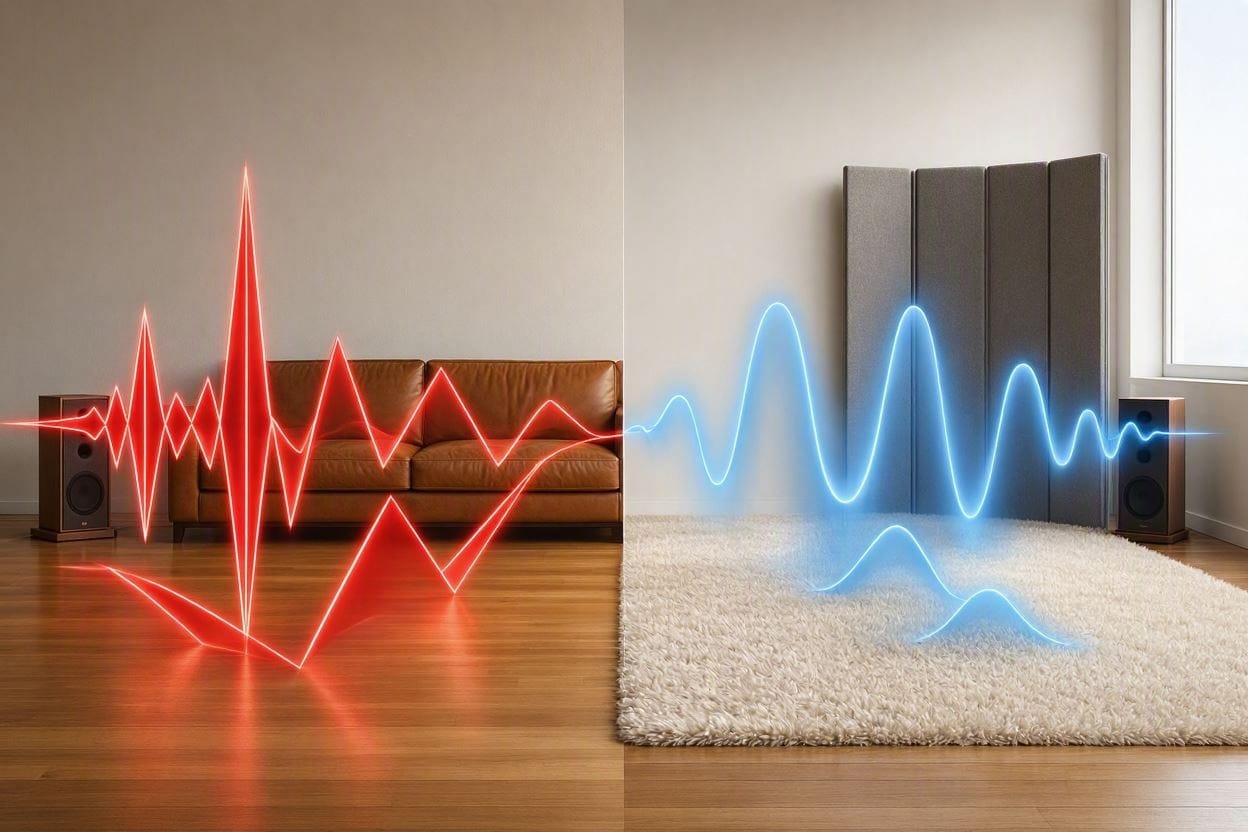
In architectural acoustics, a material’s ability to absorb sound is measured by its Noise Reduction Coefficient (NRC). An NRC of 0.0 means the object reflects 100% of sound (like a glass mirror). An NRC of 1.0 means it absorbs 100% of sound.
According to standard acoustic principles, soft, porous, and heavily textured materials boast the highest NRC ratings. When sound waves enter the fibers of a thick rug or a velvet sofa, the acoustic energy is converted into a microscopic amount of heat through friction, effectively killing the echo. As we noted in our comprehensive apartment soundproofing guide, introducing heavy textiles is the fastest way to upgrade your room’s sound profile.
1. The Floor: High-Pile Acoustic Rugs
The floor is the largest reflective surface in any room. If you have tile, laminate, or hardwood, you must cover the high-traffic areas. However, a thin, flat-weave rug will do almost nothing to absorb sound.
Safavieh Milan Shag Collection (2-Inch Thick Pile)
To effectively trap sound waves, you need depth. This premium shag rug features a massive 2-inch thick pile. The deep, twisted fibers act as millions of tiny acoustic traps, absorbing mid-to-high frequency echoes from televisions and conversations.
- Massive 2-inch pile depth provides superior acoustic absorption.
- Incredibly soft underfoot, making it perfect for living rooms and bedrooms.
- Pro Tip: Pair this with a high-density felt rug pad underneath to double the noise reduction.
2. Open Spaces: Acoustic Room Dividers
Open-concept floor plans are gorgeous, but they allow sound to travel freely from the kitchen right into the living room. Breaking up the physical air space is critical for controlling noise bleed.
ReFocus Freestanding Acoustic Room Divider
Instead of a hard wooden screen that just reflects noise, this freestanding divider is constructed from high-density, recycled PET sound-absorbing fabric. It boasts an NRC rating of 0.85, meaning it absorbs 85% of the sound that hits it.
3. Upholstery: Ditch the Leather
A sleek leather couch looks incredibly sophisticated, but acoustically, leather is a highly reflective surface. Sound bounces right off of it. If you want a quieter room, you need to transition to heavy, porous fabrics.
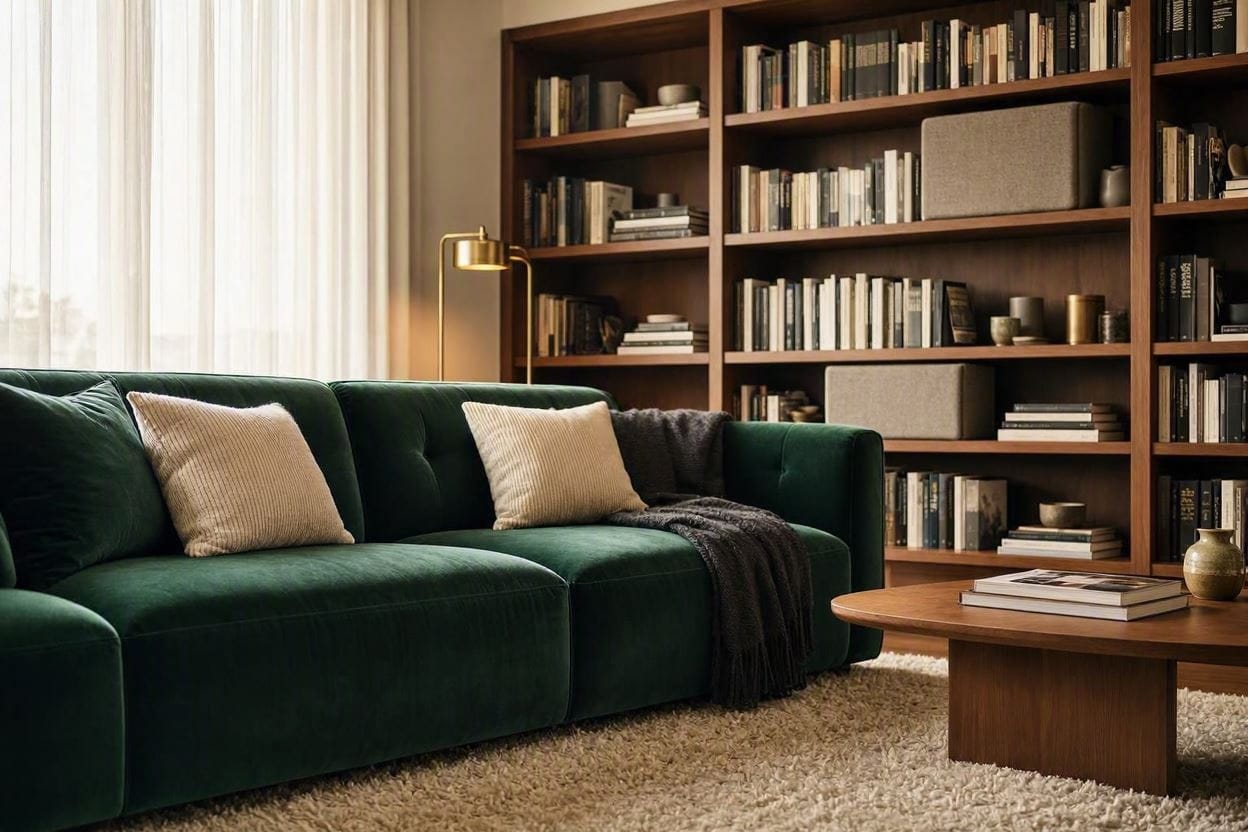
When shopping for sofas, armchairs, and ottomans, look specifically for Microfiber, Chenille, or Velvet. These fabrics feature thousands of tiny, raised threads that catch and hold acoustic energy. A large, plush velvet sectional acts as a massive acoustic bass trap right in the middle of your living room.
Frequently Asked Questions
Will a Bookshelf Help Soundproof a Room?
A heavy, fully stocked bookshelf is one of the best pieces of acoustic furniture you can own. It works through diffusion. Because books are different sizes and depths, they break up incoming sound waves and scatter them in different directions, instantly destroying the flutter echo.
Does Furniture Block Noise From Neighbors?
No. Soft furniture absorbs echo inside your room. It will not stop the structural vibration of heavy footsteps from the apartment above you, which we detail in our physics of acoustic transmission guide. To block neighbors, you need construction-level decoupling.
Do Curtains Actually Absorb Sound?
Standard sheer curtains do not. However, thick, multi-layered acoustic curtains made from velvet or heavy microfiber can significantly soften the harsh reflections bouncing off your glass windows.

Ememobong is the lead researcher and editor at Quiet Dwelling. As a professional technical writer, he specializes in breaking down complex acoustic engineering concepts into simple, actionable steps. His goal is to help people build distraction-free environments for better sleep and deep work.