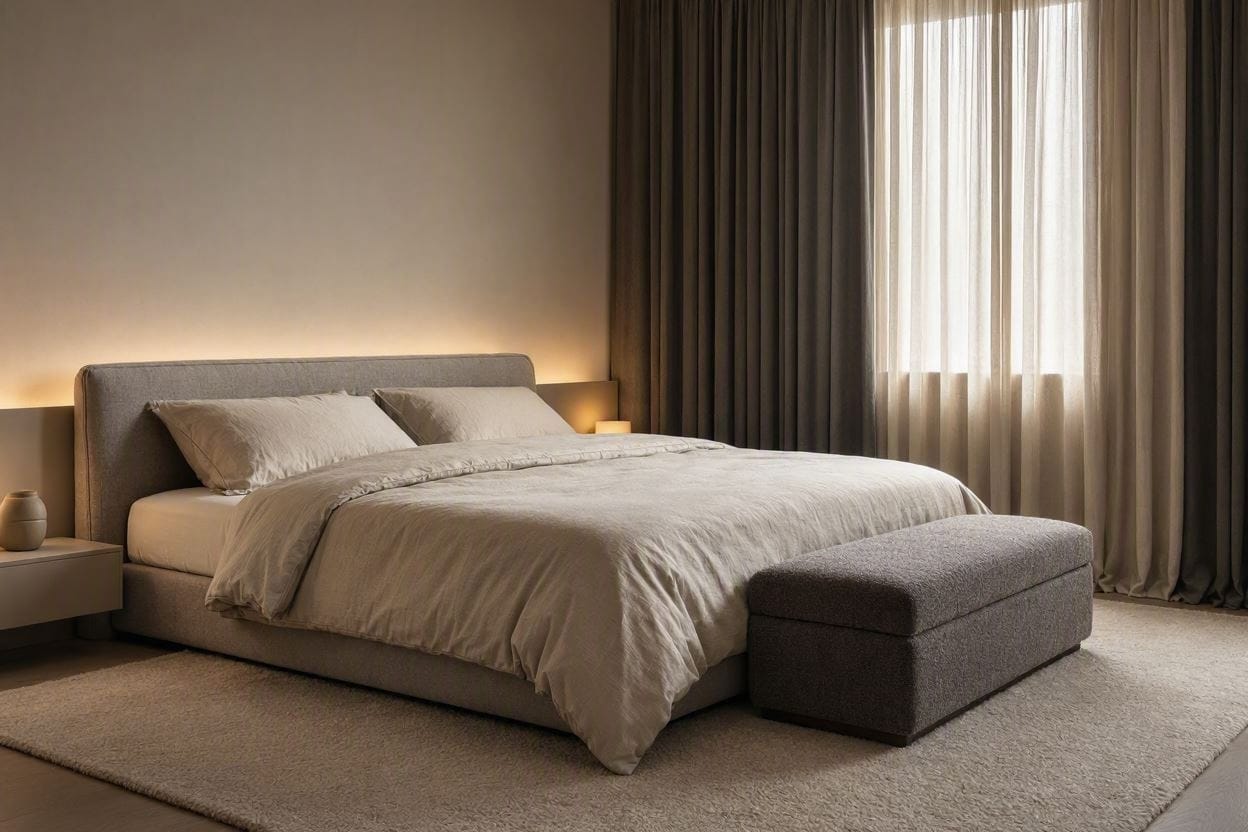
If your bedroom never feels truly calm at night, the problem is usually not just “noise” in the abstract. It is a collection of small acoustic insults that keep your brain from fully settling down: traffic hissing through the window, a hallway door rattling in its frame, a humming AC unit, a neighbor’s bass line, or even the hollow echo of your own room making everything feel sharper than it should.
And unfortunately, sleep does not require a sound to be especially loud for it to be disruptive. Bedroom noise can reduce sleep quality even when it seems mild during the day, which is why sleep experts and acoustic researchers keep returning to the same point: if you want better sleep, the sound of your room matters more than most people realize. Sensitive sleepers also appear to be especially affected by poor room acoustics, not just obvious outside noise. room acoustics can influence sleep quality in healthy sleepers
The good news is that making a bedroom quieter is usually very doable. You do not need to rebuild your walls or turn the room into a padded bunker. Most bedrooms improve dramatically when you tackle the biggest sound leaks first, soften the harshest reflective surfaces, and stop a few specific noise sources from sabotaging the room every night.
Start By Figuring Out What Kind of Noise You Actually Have
Before you buy anything, identify the type of noise that is ruining your sleep. The solution changes depending on the source.
- Outside noise: traffic, barking dogs, motorcycles, generators, late-night voices, or rain against thin windows
- Inside-house noise: doors closing, footsteps, appliances, plumbing, TVs, or other people living normal lives at inconvenient times
- In-room noise: AC hum, fan rattles, chargers buzzing, clocks ticking, bedframe squeaks, or the room itself sounding hollow
This matters because people often use the wrong fix for the wrong problem. For example, acoustic foam can reduce echo inside a room, but it will do almost nothing meaningful for traffic noise coming through a window. That is one of the most common bedroom acoustics mistakes people make. acoustic foam does little to stop noise coming through walls or windows
Seal the Weakest Points First: Windows and Doors
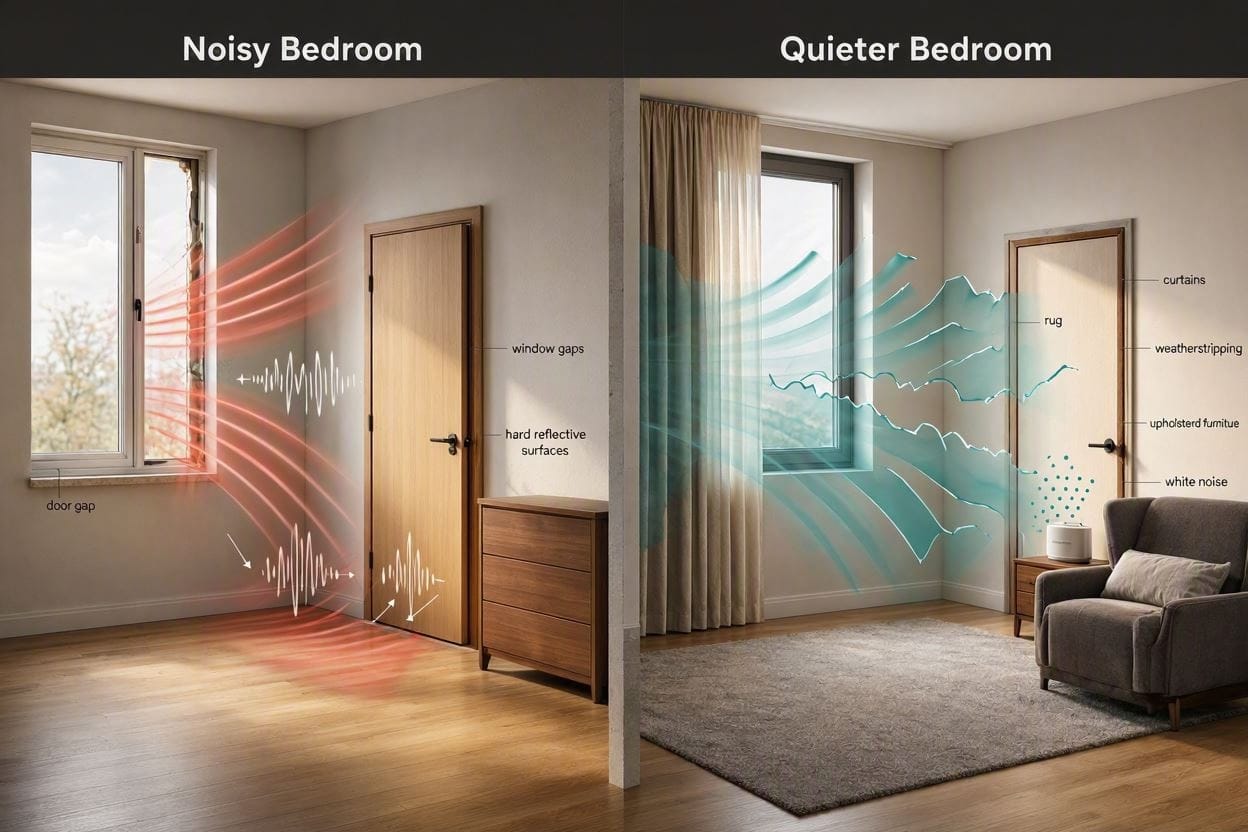
If outside noise is the main problem, windows and doors are usually the first place to look. Sound behaves a lot like air. If air can leak through a gap, sound usually can too. That is why even a surprisingly small opening around a window sash or under a door can make a bedroom feel much noisier than it should.
Start with the obvious weak points:
- Weatherstrip loose window edges where air sneaks in
- Seal cracks with acoustical caulk around window trim or wall joints
- Add a door sweep or draft stopper if you have a large gap under the bedroom door
- Tighten the door stop contact so the door closes snugly instead of loosely rattling in the frame
Sleep-focused guidance often recommends insulating windows and sealing gaps for exactly this reason. insulating windows and reducing openings can help limit noise during sleep It is not glamorous, but gap sealing is one of the highest-return bedroom fixes you can make.
If you want a deeper breakdown of why these small air leaks matter so much, it connects directly to what we covered in Does Weatherstripping Block Noise? and How To Soundproof A Window.
Upgrade the Soft Furnishings: Curtains, Rugs, and Upholstery
Once the gaps are sealed, the next step is to make the room less acoustically harsh. Bedrooms with bare floors, thin blinds, empty walls, and minimal furniture can sound sharper than they need to. Even when the outside noise level stays the same, a room with too many hard surfaces often makes disturbances feel worse because reflections keep the sound bouncing around.
Three upgrades usually help the most:
- Heavier curtains: especially over large windows, where glass reflects sound and thin blinds do almost nothing
- A rug with a decent pad: especially if you have hardwood, tile, or laminate
- Upholstered pieces: padded headboards, fabric benches, accent chairs, or even extra pillows can soften the room’s sound
This is one reason bedrooms with more textile layering often feel calmer. They are not soundproof, but they are less echo-prone and less bright acoustically. If you have already read How To Reduce Echo In A Living Room Without Making It Ugly, the principle is similar here – just adapted for sleep instead of conversation.
Stanford Lifestyle Medicine also points to thicker curtains, better windows, and silicone earplugs as practical bedroom changes when outside noise keeps interrupting rest. thick curtains and other noise-reduction measures can support better sleep
Move the Bed Away From the Worst Noise Path
This sounds almost too simple, but it can matter more than people expect. If your bed is pressed directly against the noisiest wall in the room – like the one shared with a neighbor, a hallway, or the street-facing exterior – you are placing your ears at the worst acoustic position in the entire room.
Whenever possible, move the bed:
- Away from the window wall if traffic or outdoor noise is the main problem
- Away from a shared wall if neighbors are the issue
- Away from HVAC vents or rattling equipment if machine noise is the problem
Sleep advice around bedroom noise often includes exactly this kind of layout change, because distance matters. Even moving your head position a few feet away from the main sound leak can make nighttime disturbances feel less direct. bed placement away from outside-facing walls can help reduce sleep disturbance
Tame the Machines Inside the Bedroom
Not all sleep disruption comes from outside. Sometimes the room is sabotaging itself.
Common in-room offenders include:
- Buzzing chargers and adapters
- Ticking clocks
- Clicking ceiling fans
- Rattling AC units
- Whining air purifiers
- Squeaky bed frames
Bedrooms are especially sensitive to these noises because everything is quieter at night, and repetitive mechanical sounds stand out hard once your brain is trying to fall asleep. Practical bedroom soundproofing guides often mention small technical devices and low-level appliance hum as overlooked sleep disruptors. small in-room devices can be underestimated bedroom noise sources
This is where your existing appliance content becomes useful. If the real culprit is a machine, the fix may be maintenance or replacement rather than room treatment. Articles like Quietest Bedroom Fans For Sleeping and Best Quiet Air Purifiers For Sleeping are natural next steps when the problem is the device itself.
Use White Noise Strategically, Not Desperately
If you cannot fully block the sound, the next best move is often to make it less noticeable. That is where white noise, pink noise, or a consistent fan sound can help. The goal is not to make the room louder for the sake of it. The goal is to create a stable acoustic backdrop that makes sudden spikes – like a door slam, barking dog, or passing motorcycle – less jarring.
This works especially well for irregular noise. A steady masking sound can keep the brain from reacting as sharply to random disturbances. That is one reason adaptive white noise machines are often recommended as part of better sleep environments. adaptive white noise can help manage nighttime disturbances
If you want to go deeper, this ties directly into our guides on Pink Noise vs. Brown Noise vs. White Noise, Best White Noise Machines For Deep Sleep, and White Noise Machines Vs Fans.
Know What “Quiet Enough” Actually Means
A lot of people assume a bedroom has to be perfectly silent to be sleep-friendly. In practice, what matters more is whether the room is calm, steady, and low in sudden intrusions. Some sleep guides describe around 25 to 30 dB as a very quiet bedroom, with higher levels becoming more noticeable and more likely to interfere with sleep. around 25 to 30 dB is often described as a very quiet bedroom
You do not need to obsess over exact measurements if you do not own a proper meter. But as a rough rule, if your room feels calm enough that soft speech, distant traffic, and appliance hum do not keep pulling your attention, you are getting close to the right zone.
That said, if the room keeps waking you up, the noise is too high for your body, regardless of what the number says.
When Earplugs Make Sense
If you are renting, living near traffic, or stuck with a building problem you cannot fix right away, earplugs can be a very practical backup. They are not a substitute for improving the room itself, but they are often the fastest relief when the noise source is beyond your control.
Silicone or foam earplugs are especially useful for:
- Temporary sleep disruption during travel or renovations
- Shared living situations where total quiet is unrealistic
- Early-morning outdoor noise that starts before you are ready to wake up
That said, not everyone finds them comfortable, and some sleepers feel too cut off when using them. If that is you, a quieter room plus steady masking noise is often easier to live with long term.
The Best Order To Quiet a Bedroom
If your bedroom feels noisy and you want the biggest improvement without wasting money, this is the order I would use:
- Identify the main noise source – outside, inside the house, or inside the room
- Seal window and door gaps first
- Add heavier curtains and a rug to soften the room
- Move the bed away from the worst sound path if possible
- Fix or replace noisy bedroom devices
- Add white noise or earplugs if the remaining noise is unpredictable
This sequence works because it addresses the biggest weaknesses first. Most bedrooms do not need one dramatic solution. They need several small fixes layered intelligently.
Final Thoughts
If you want to make a bedroom quieter for better sleep, do not start by buying random “soundproofing” products and hoping one of them performs a miracle. Start with the boring but effective stuff: seal the gaps, soften the room, move the bed if needed, and stop the in-room machines from adding their own nonsense to the night.
The best sleep bedrooms are not always perfectly silent. They are simply stable, soft, and acoustically forgiving. Once the room stops feeling like every little sound has a direct line to your nervous system, sleep usually becomes much easier.
Frequently Asked Questions
What is the Best Way to Make a Bedroom Quieter?
The best place to start is usually sealing window and door gaps, then adding heavier curtains, a rug, and softer furnishings. If the noise is coming from a device inside the room, fixing or replacing that device may matter even more.
Do Acoustic Foam Panels Help in a Bedroom?
They can help reduce echo inside the room, but they do very little to stop traffic, neighbor noise, or other sounds coming through walls and windows.
Are Curtains Enough to Block Bedroom Noise?
Usually not on their own, but heavy curtains can still help by softening reflections and reducing some high-frequency intrusion around windows. They work best as part of a layered approach.
Should I Use White Noise or Earplugs For Sleep?
It depends on the kind of noise you are dealing with. White noise is great for masking irregular disturbances, while earplugs are useful when you need stronger reduction and do not mind wearing them overnight.
How Quiet Should a Bedroom Be For Good Sleep?
A very quiet bedroom is often described in the 25 to 30 dB range, but what matters most is whether the room feels calm and free of sudden intrusive sounds that keep waking you up.

Ememobong is the lead researcher and editor at Quiet Dwelling. As a professional technical writer, he specializes in breaking down complex acoustic engineering concepts into simple, actionable steps. His goal is to help people build distraction-free environments for better sleep and deep work.