
Mornings are strange. They are the one part of the day when your nervous system is still waking up, still soft, still easy to knock off balance. That makes them uniquely vulnerable to noise. A blaring alarm, a blender running at 6:40 a.m., a bathroom door clicking shut, a partner rummaging through drawers, traffic surging outside the window – all of it lands harder in those first thirty minutes than it would at any other time.
And this is not just a comfort issue. Your auditory system stays alert even while you sleep, and noise can trigger stress hormone release through pathways your conscious mind never controls. Research on noise-induced cortisol response shows that noise exposure can raise stress hormones even below the waking threshold. noise can trigger stress hormone release even without waking you Morning noise has also been linked to feeling tired and unrested when getting up, in addition to measurable increases in heart rate. noise exposure is linked to waking up tired and less rested
Translation: the first sounds of your day genuinely shape how the rest of it feels. That is why building a quiet morning routine is less about luxury and more about protecting your baseline. You are not being fussy. You are giving your nervous system a chance to start well.
The good news is that most noisy mornings are not caused by one catastrophic sound. They are caused by a stack of small, avoidable ones. Fix a handful of them and the whole morning changes character.
Step 1: Change How You Wake Up
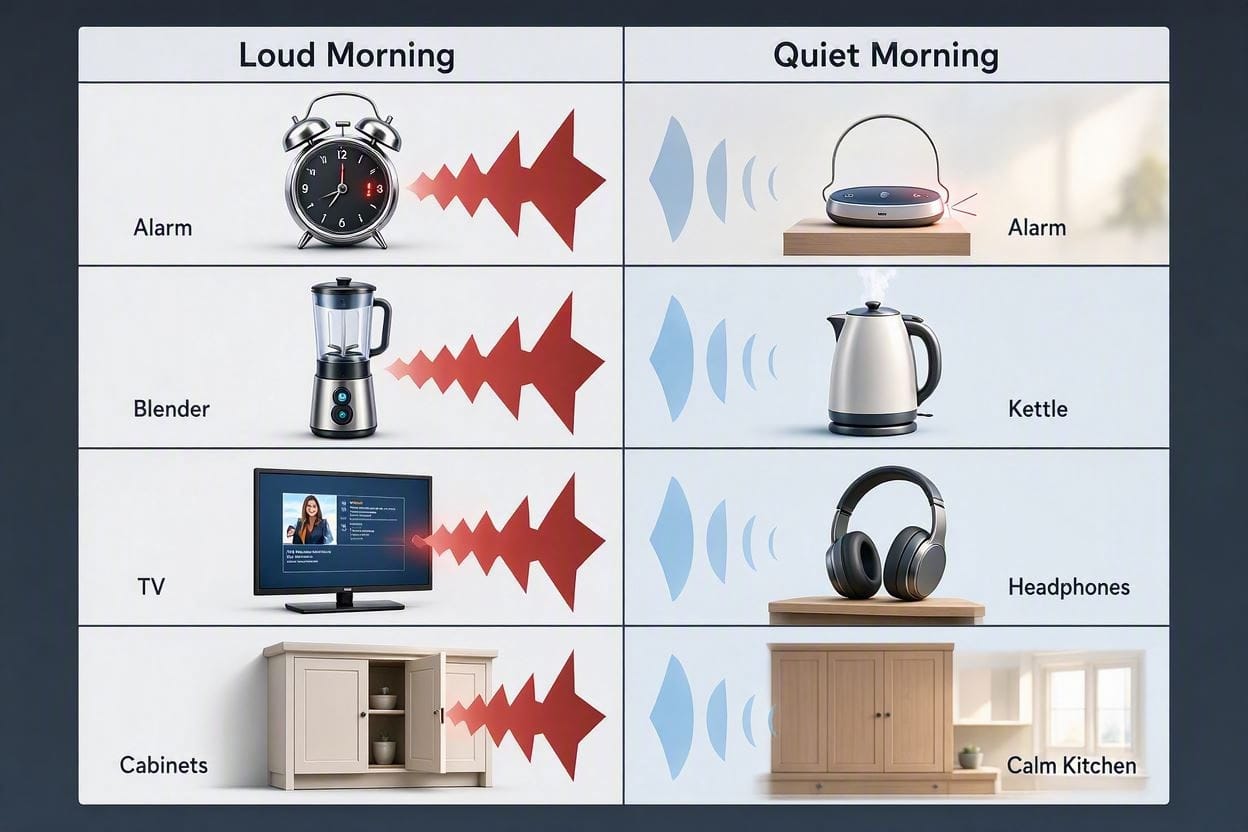
Nothing sets the tone better or worse than your alarm. A standard alarm clock jolts you awake with a sharp, high-pitched beep or a sudden burst of radio chatter. That spike is exactly the kind of sound that triggers a startle response and an immediate shot of cortisol before you have even opened your eyes.
Better options:
- A sunrise alarm clock that wakes you with gradually brightening light instead of sound
- A vibrating wrist alarm that wakes only you without disturbing anyone else in the house
- A gentle, slowly rising alarm tone that ramps volume instead of starting at full blast
- A smart speaker set to a low, gradual volume if you have one already
This is one of the easiest changes to make and one of the most noticeable. If you have ever read our guide to quiet alarm clocks, this is exactly the problem they are designed to solve.
Step 2: Deal With Your Noisiest Appliance Before Anything Else
Every home has one appliance that sounds harmless in the daytime and slightly violent at 6:30 a.m. Coffee grinders, blenders, kettles with loud boil alerts, and microwaves with piercing beeps are the usual suspects.
The fix is not always replacement. Sometimes it is about timing and sequence.
- Grind coffee the night before and store it in an airtight container
- Choose a quieter kettle with a soft boil or a mute option
- Mute your microwave if your model allows it
- Use a manual grinder or hand press if your household wakes at different times
- Move loud appliances away from shared walls if you live in an apartment
A quieter coffee grinder is a genuinely meaningful upgrade for early risers because burr grinders tend to produce that high-pitched whine that carries through an entire house. If your routine centers on coffee, we covered this in more detail in Best Quiet Coffee Grinders.
The same logic applies to your kettle. If you want a full breakdown, our guide to quiet electric kettles is a good place to start.
Step 3: Handle the Bathroom Without Broadcasting It
Bathroom noise is the most underrated culprit in shared homes. Water rushing through pipes, a loud extractor fan, cabinet doors clicking, and the echoing quality of a tiled room all combine to create a surprisingly sharp acoustic experience.
Practical fixes that actually help:
- Close the bathroom door fully before running water or turning on the fan
- Soften the room with a bath mat, a rug, and a towel on the floor to reduce echo
- Replace a loud exhaust fan if it roars every time you flip the switch
- Wrap pipes if water knocking is a recurring problem in your building
- Keep cabinet doors and drawers closed gently rather than letting them snap shut
That last one sounds trivial, but it is not. Repetitive sharp sounds are what drive noise annoyance more than volume does. If you want to understand why, our article on why repetitive household noise feels so stressful explains the mechanism.
Step 4: Use Headphones or Earplugs Strategically
Not every noisy home can be fully quieted. If you share walls, live near a road, or have small children, some external noise is simply part of your morning. That is where personal protection becomes practical rather than dramatic.
- Wear headphones during your quiet time for meditation, a podcast, or soft music
- Use earplugs if you want genuine silence while you read or stretch
- Use noise-canceling earbuds if you need to focus on work or prayer first thing
- Keep a pair near your bed so you do not have to hunt for them when you need them
This is also where mindful morning routines in shared housing often benefit from wearing headphones instead of playing audio out loud, especially if other people are still asleep. using headphones instead of speakers helps protect a shared morning routine For more options, our guide to noise-canceling earplugs for deep work doubles well for early mornings.
Step 5: Build a Sequence, Not Just a Set of Rules
The most effective quiet morning routines are not lists of banned activities. They are sequences. You do the quiet things first and the loud things last, once everyone who needs sleep has started stirring anyway.
A practical sequence might look like this:
- Wake gently with light or a vibrating alarm
- Drink water, stretch, or sit quietly for the first ten minutes
- Do your reading, journaling, or prayer while the house is still soft
- Then start the kettle, shower, or coffee once it is reasonable
- Save the loudest parts of the routine for last
Ordering matters because noise tolerance is not the only issue. Repetition matters too. A single loud sound is forgettable. The same loud sound happening every morning at the same time becomes a predictable stressor that your household starts dreading.
Step 6: Fix the Room Itself, Not Just the Habits
Sometimes the problem is not what you do in the morning. It is the room you do it in. A kitchen with tile floors, glass cabinets, and bare walls will make a normal kettle sound like a small alarm. A bathroom with all hard surfaces magnifies every door click.
Softening the space helps more than people expect:
- Add a rug or runner to the kitchen or hallway
- Hang curtains in rooms that face the street
- Bring in a fabric bench, cushions, or towels to absorb reflections
- Use a draft stopper on doors that face the noisiest part of the house
- Add a bookshelf or soft wall art to break up bare surfaces
This is the same principle we covered in How To Reduce Echo In A Living Room Without Making It Ugly and Why Empty Rooms Echo So Much. Hard, empty rooms simply broadcast sound more aggressively. Softening the space is often more effective than trying to enforce silence.
Step 7: Protect Your Sleep So Mornings Start Calmer
One overlooked truth about quiet mornings is that they actually begin the night before. If noise keeps breaking your sleep, you wake up with a nervous system already primed for stress, which makes the morning feel louder than it is.
Supporting your sleep environment helps in two ways. First, you wake up less depleted. Second, your sensitivity to sound drops when you are well rested.
- Run a white noise machine or fan overnight to mask intermittent sounds
- Seal bedroom gaps so outside noise does not intrude
- Keep the bedroom calm with soft furnishings and fewer hard surfaces
We covered this in far more depth in How To Make A Bedroom Quieter For Better Sleep, which pairs well with a quiet morning routine because the two problems share the same root cause.
The Real Goal: A Softer Start
A quiet morning routine is not about achieving perfect silence. In most homes, that is not realistic. What you are really building is a softer start – a first hour that does not immediately spike your stress response or make everyone in the house feel on edge.
That means fewer sharp sounds, fewer sudden jolts, and a deliberate order to your actions. It means thinking about the people sharing the space with you, whether that is a partner, a child, a roommate, or a sleeping baby on the other side of the wall.
And yes, it means accepting that a gentle kettle and a quiet grinder can genuinely change the character of an entire morning. Small acoustic improvements compound, especially when they happen every single day.
Frequently Asked Questions
What Makes a Morning Routine Quiet?
A quiet morning routine usually means waking gently, delaying loud appliances until later, using headphones instead of speakers, softening hard surfaces in the room, and sequencing your activities so the noisiest parts happen last.
Why Do Noisy Mornings Feel So Stressful?
Noise triggers a stress response through the amygdala, which releases cortisol even when you are not fully awake. In the morning, your nervous system is especially sensitive, so the same sound can feel harsher than it would later in the day.
How Do I Keep a Quiet Morning Routine When I Share a Home?
Focus on timing, not just volume. Do the quiet activities first, save loud appliances for later, use headphones rather than speakers, and communicate with the people you live with so no one feels blindsided by your schedule.
Does the Room Affect How Loud My Morning Feels?
Absolutely. Hard, empty rooms reflect sound and make normal household noises feel sharper. Rugs, curtains, towels, and soft furnishings absorb some of that reflection and make the same activities sound calmer.
What is the Single Biggest Change For a Quieter Morning?
For most people, it is changing how they wake up. A blaring alarm sets a stress tone before anything else happens. A light-based or vibrating alarm is one of the highest-impact swaps you can make.

Ememobong is the lead researcher and editor at Quiet Dwelling. As a professional technical writer, he specializes in breaking down complex acoustic engineering concepts into simple, actionable steps. His goal is to help people build distraction-free environments for better sleep and deep work.