
*This post contains affiliate links. If you use these links to buy something we may earn a commission at no extra cost to you.
Working from home offers incredible flexibility, but it also merges your professional environment with the chaotic acoustics of daily life. There is nothing more disruptive to a critical Zoom presentation than the sound of a dog barking, a television blaring in the next room, or a loud washing machine rattling the floorboards.
Furthermore, if your office features hard floors and bare walls, your microphone is likely picking up “flutter echo”—that hollow, cavernous sound that makes you sound like you are broadcasting from an empty bathroom.
Creating a broadcast-quality workspace requires a two-pronged approach: Soundproofing (keeping outside noises out) and Acoustic Treatment (making your voice sound rich and clear inside the room). Here is the step-by-step guide to acoustically optimizing your home office.
Step 1: Seal the Door (Your Biggest Acoustic Leak)
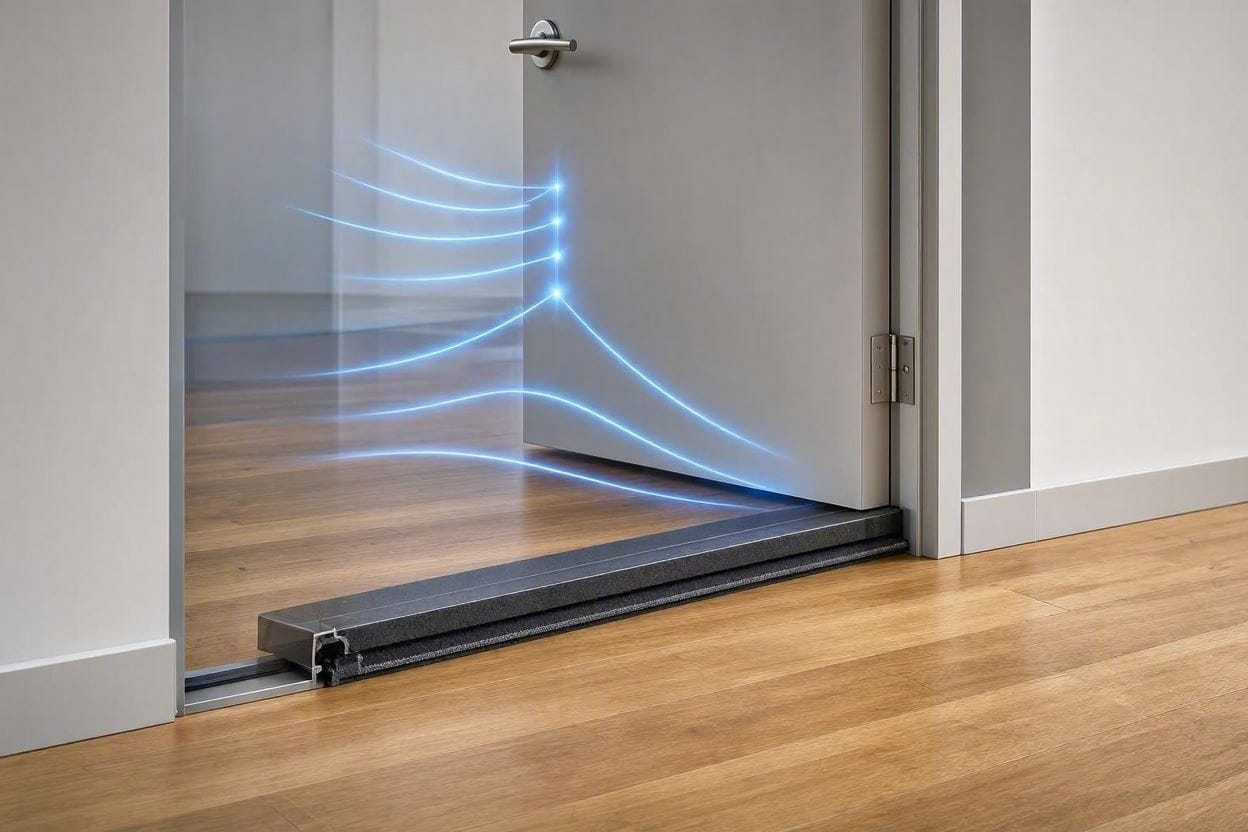
In the physics of sound transmission, noise acts like water—it will immediately flow through the path of least resistance. In 95% of home offices, that path is the massive air gap sitting right beneath your interior door.
You can have incredibly thick walls, but if there is a half-inch gap between your door and the floor, you will hear every conversation happening in the hallway. The fastest, most cost-effective way to upgrade your office is to seal the perimeter of the door.
Holikme Under Door Draft Sweep (High-Density Silicone)
A standard draft dodger isn’t dense enough to block low-frequency noise. This heavy-duty silicone sweep adheres directly to the bottom of your door, creating a flush, airtight seal against hard floors to block hallway chatter, pet noise, and kitchen clatter.
- Creates an airtight acoustic seal against hardwood or tile.
- Takes less than 3 minutes to install (peel-and-stick adhesive).
- Blocks out light and drafts alongside ambient noise.
Pro Tip: If your door feels incredibly light when you swing it, it is likely a hollow-core door, which offers almost zero acoustic mass. For a massive upgrade, read our full guide on how to soundproof a hollow-core door, or consider replacing it with a solid-wood slab.
Step 2: Add Acoustic Mass to the Windows
If your office faces a busy street, traffic noise and lawnmowers can easily pierce right through standard single or double-pane glass. Replacing windows is an incredibly expensive construction project, but you can achieve excellent noise reduction by hanging heavy, mass-loaded curtains.
NICETOWN 3-Pass Heavy Microfiber Acoustic Curtains
These are not standard blackout curtains. They feature a sewn-in, detachable felt fabric liner specifically designed to absorb high-frequency street noise and dampen acoustic vibrations traveling through the window pane.
- Reduces perceived street noise by up to 2.5 times compared to standard curtains.
- Triple-weave fabric provides essential acoustic mass.
- Perfect for softening hard wall reflections to improve microphone clarity.
Step 3: Kill the “Flutter Echo” (Acoustic Treatment)
Now that we have blocked the noise from coming in, we need to fix the sound inside the room. When you speak on a Zoom call, the sound waves from your mouth hit the hard drywall, bounce off the hardwood floor, and ricochet back into your microphone microseconds later. This is what creates that cheap, echoing audio.
According to the guidelines set by the Occupational Safety and Health Administration (OSHA) regarding workplace acoustics, introducing soft, absorptive materials reduces acoustic reverberation times. To achieve this in a home office, you need to soften the hard surfaces:
- The Floor: If you have hardwood or tile, lay down a thick, high-pile area rug directly beneath your desk. Add a dense rug pad underneath it for double the sound absorption.
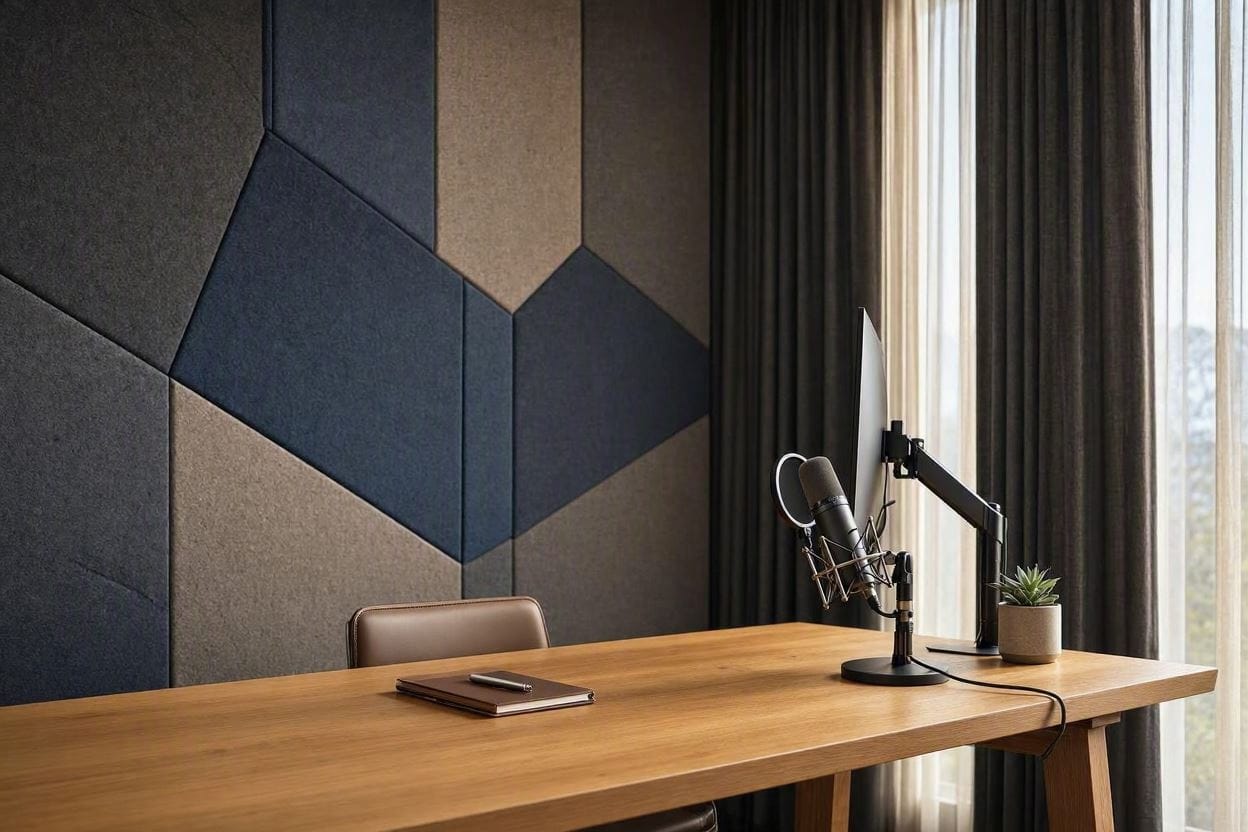
- The Walls: Place acoustic foam panels or beautiful wood-slat acoustic boards on the wall directly in front of you (behind your monitor) and on the wall directly behind your chair. This stops your voice from bouncing back and forth.
- The Furniture: A plush fabric sofa or an upholstered armchair will absorb significantly more sound than a metal filing cabinet or a glass table.
Step 4: Introduce Acoustic Masking (White Noise)
If you have implemented structural fixes but can still hear faint thuds from a low-frequency impact noise (like a washing machine or heavy footsteps upstairs), your final defense is acoustic masking.
Introducing a continuous, ambient sound—like a white noise machine or a dedicated desk fan—raises the noise floor of your office. This prevents your brain from latching onto sudden, distracting sounds. If you don’t want to buy dedicated hardware, you can easily run one of the best white noise machines or apps in the background near your door to scramble incoming hallway noise before it reaches your desk.
Frequently Asked Questions
Do Egg Cartons Work For Soundproofing an Office?
No. This is a common acoustic myth. Egg cartons lack the density to block sound (soundproofing) and lack the open-cell porous structure required to absorb sound (acoustic treatment). They are completely ineffective and pose a significant fire hazard.
Will Acoustic Panels Block the Sound of My Dog Barking?
No. Acoustic panels are designed to improve the sound quality inside the room by reducing echo and reverberation. They do not possess enough mass to block loud noises from entering the room. To block a barking dog, you must focus on adding mass to your doors and walls and sealing all air gaps.
What is the Best Microphone Setting For a Noisy Home Office?
In addition to room treatment, ensure you are using a dynamic microphone (which rejects background noise better than a condenser mic). Inside your Zoom settings, go to Audio and set “Suppress background noise” to “High.”

Ememobong is the lead researcher and editor at Quiet Dwelling. As a professional technical writer, he specializes in breaking down complex acoustic engineering concepts into simple, actionable steps. His goal is to help people build distraction-free environments for better sleep and deep work.